
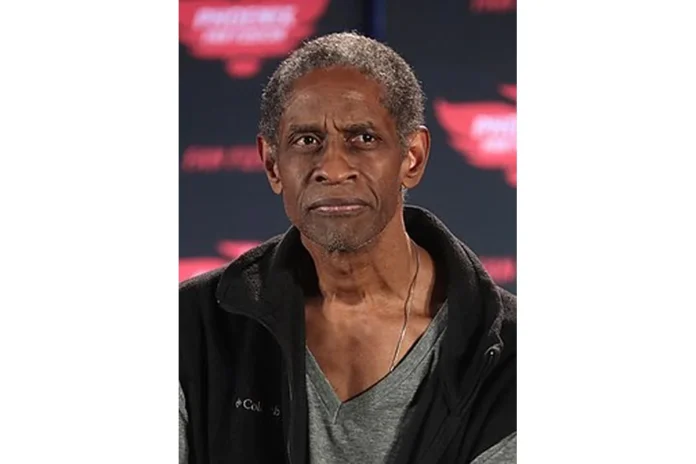
Tim Russ Bio
Timothy Darrell Russ, born on June 22, 1956, in Washington, D.C., is an American actor, musician, screenwriter, director, producer, and amateur astronomer whose career spans film, television, voice work, and writing. He is best known for his portrayal of Lieutenant Commander Tuvok on Star Trek: Voyager, a role that established him as a steady presence in one of the most recognized science fiction franchises in television history. Beyond that signature performance, Russ has built a varied résumé that includes the film Crossroads (1986), the comedy Spaceballs (1987), the action series The Highwaymen (1987–1988), the sitcom Samantha Who?, and the Nickelodeon comedy iCarly. His work as a director, writer, and producer within the Star Trek universe has further cemented his standing as a multitalented figure in Hollywood.
Early Life and Background
Timothy Darrell Russ was born in Washington, D.C., on June 22, 1956. His mother worked as a government employee and his father served as a U.S. Air Force officer, circumstances that took the family overseas for part of his childhood. Russ spent time in Turkey during his early years, an experience that broadened his worldview before the family settled back in the United States. He completed his senior year of high school at Rome Free Academy, graduating in 1974, after which he pursued higher education with a clear interest in the performing arts.
Russ went on to attend St. Edward’s University, where he earned a degree in theater arts and laid the foundation for his life in entertainment. He later enrolled at Illinois State University for graduate study, where his contributions were recognized with induction into the university’s Hall of Fame. These academic years gave him both the technical training and the confidence to step onto professional sets, and they remain an important chapter in the story of how he became the versatile performer he is today.
Path to Acting
Timothy Darrell Russ entered the entertainment industry in 1985, beginning with appearances in episodes of The Twilight Zone, including “Kentucky Rye” and “Voices in the Earth.” That same year he made a brief but memorable appearance in the Mel Brooks comedy Spaceballs, playing a trooper who combs the desert with a giant comb, a small role that introduced him to larger audiences. He soon took on a prominent part in the Charles Bronson action film Death Wish 4, demonstrating that he could handle serious dramatic material as well as broad comedy.
Russ’s fascination with the Star Trek franchise predated his professional career. In 1987, he auditioned for the role of Geordi La Forge on Star Trek: The Next Generation, and although that part went to another actor, the experience kept him connected to the franchise he had long admired. Within a few years, his deep knowledge of Vulcan lore and his steady screen presence earned him the role of Lieutenant Commander Tuvok on Star Trek: Voyager, the part that would define his career and lead to decades of work tied to the Star Trek universe.
Tim Russ Career
Early Career (1985–1989)
Timothy Darrell Russ’s earliest professional years were marked by quick movement between genres. His first credited screen appearances came in 1985 with The Twilight Zone, followed the next year by his turn as Robert Johnson in the drama Crossroads (1986). He also appeared in Spaceballs (1987) and took on the role of D. C. Montana in the television series The Highwaymen, which ran from 1987 to 1988. The character’s name was a deliberate nod to Star Trek writer D. C. Fontana, a small detail that hinted at Russ’s deep ties to the science fiction community.
During this same period, Russ continued to build his résumé with parts in Death Wish 4 and other film and television projects. He also screen-tested for Star Trek: The Next Generation in 1987, a moment that, while it did not result in a role, kept his name within the franchise’s orbit. These early credits showed a performer willing to move between comedy, drama, and action, a flexibility that would serve him well in the decades to come.
Breakthrough (1995–2009)
Timothy Darrell Russ’s breakthrough arrived with the casting of Lieutenant Commander Tuvok on Star Trek: Voyager, a role he would play across the series’ run and that made him a familiar face to science fiction audiences worldwide. He brought a disciplined physicality and a thoughtful delivery to the Vulcan officer, drawing on his long-standing interest in the character and the franchise’s lore. His performance became central to the show and led to repeated work in the Star Trek universe in the years that followed.
In 1995, Russ expanded his involvement with the franchise by co-writing the story for the Malibu Comics Star Trek: Deep Space Nine issues #29 and #30 with Mark Paniccia. He also voiced Tuvok in the video games Star Trek: Voyager – Elite Force and Star Trek: Elite Force II, and in 1998 appeared as Casey in the film East of Hope Street. In December 2007, Russ directed and starred in the fan series Star Trek: Of Gods and Men, with the remaining portions released in 2008, further establishing him as a creative force behind the camera.
Russ continued to diversify his television work during this period. In 1990, he appeared in an episode of Freddy’s Nightmares. From 2007 to 2009, he played Frank, the sarcastic doorman on the ABC sitcom Samantha Who?, and over six seasons he portrayed Principal Ted Franklin on Nickelodeon’s iCarly. He also made an appearance as a doctor on the series Hannah Montana, in the episode “I Am Hannah, Hear Me Croak.” He additionally directed and co-starred in the web series Star Trek: Renegades, showing his continued investment in franchise storytelling.
Notable Works and Milestones
Timothy Darrell Russ is most closely associated with his portrayal of Tuvok across Star Trek: Voyager, Star Trek: Of Gods and Men, Star Trek: Renegades, and later installments including the video game Star Trek Online, where he voiced the character in 2013 and 2014. He reprised the role of Captain Tuvok in Season 3 of Star Trek: Picard and appeared in The Rookie: Feds in 2022. His 2014 Emmy Award win for public service work highlighted a different side of his career and underscored his range as both a performer and a public figure.
Tim Russ Award Nominations
Publicly verifiable details about specific award nominations for Timothy Darrell Russ are limited, and the available sources do not provide a confirmed list of nominations across his career. Any specific nomination categories or years beyond his documented Emmy win are not detailed in the verified record, so a full nomination summary cannot be presented with certainty.
Tim Russ Awards Won
Timothy Darrell Russ won an Emmy Award in 2014 for his work on public service announcements created for the FBI’s Los Angeles Field Office. The campaigns addressed intellectual property theft and cyberbullying, and the recognition reflected his contribution to messaging on issues of public safety. The Emmy stands as a verified highlight of his career outside of his on-screen work in science fiction and comedy.
| Award | Wins | Year |
|---|---|---|
| Emmy Awards | 1 | 2014 |
Tim Russ Family
Timothy Darrell Russ was raised in a family with a strong public service background. His mother worked as a government employee and his father served as an officer in the United States Air Force. He has a daughter from a relationship with Jedda Roskilly, though further details about his immediate family have not been widely documented in verified sources.
Personal Life
Beyond his work in entertainment, Timothy Darrell Russ has pursued a lifelong interest in music and astronomy. He is a singer and musician who has continued to perform and record outside of his acting commitments. He is also a dedicated amateur astronomer and a member of the Los Angeles Astronomical Society, and in 2021 he was part of a small group of citizen astronomers who helped with the detection of the asteroid 617 Patroclus in preparation for NASA’s Lucy probe. As of February 2022, he owned a 10-inch Dobsonian telescope, an 8-inch Schmidt-Cassegrain telescope, and a Unistellar eVscope, instruments that reflect his deep personal commitment to the science.