
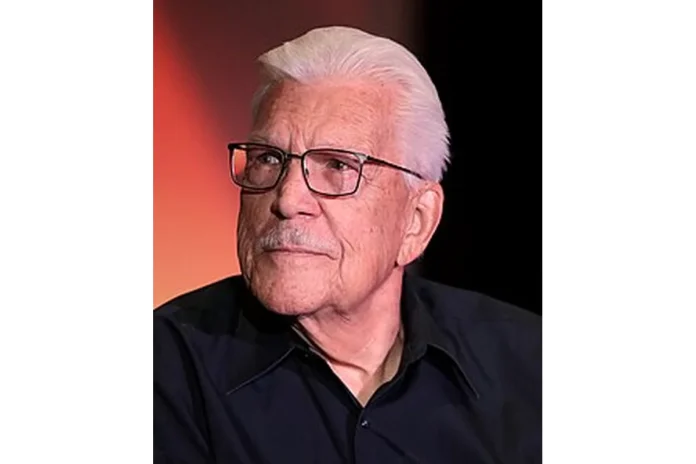
Tom Atkins Bio
Tom Atkins (born November 13, 1935) is an American actor known for his work in the horror and thriller film genres, often portraying tough police officers and authority figures. He has built a versatile career across film, television, and stage since the 1960s, collaborating with renowned writers and directors such as John Carpenter, George A. Romero, Stephen King, and Shane Black. Atkins is perhaps best known for his memorable roles in cult horror classics including The Fog (1980) and Halloween III: Season of the Witch (1982), as well as his performance in Lethal Weapon (1987).
Born and raised in Pittsburgh, Pennsylvania, Atkins spent decades in Hollywood while remaining closely tied to the Pittsburgh theatre community. He is also a familiar face to mainstream viewers through recurring television appearances, most notably as Lt. Alex Diehl on The Rockford Files. Across more than six decades of work, he has become a recognizable presence in both genre cinema and mainstream entertainment.
Early Life and Background
Tom Atkins was born on November 13, 1935, in Pittsburgh, Pennsylvania, USA. He grew up in a working-class household, and his father worked in a steel mill in Pennsylvania. As a young man, Atkins assumed that he would follow in his father’s footsteps and take a similar industrial job. He enlisted in the United States Navy, where he observed that officers lived comfortably because they had attended college. This realization pushed him toward higher education after his military service.
After leaving the Navy, Atkins enrolled at Duquesne University in Pittsburgh, where he was a member of the Gamma Phi fraternity. It was during college that he met a girl involved in a theatre group, which sparked his curiosity about acting. Atkins has said that he was already in his twenties when he first became interested in the craft, and he quickly grew to like it. His late start did not hold him back; it simply gave him a more mature perspective when he finally stepped on stage.
Path to Acting
Atkins initially had no desire to be an actor, but his university experience changed the course of his life. He studied at Duquesne University and began participating in campus theatre productions. After completing his studies, he committed to the profession and began his career in stage plays both on and off Broadway. His early stage work led to a notable Broadway credit in David Storey’s The Changing Room, for which he received the 1973 Drama Desk Award for Most Promising Performer.
Encouraged by his early theatrical success, Atkins eventually moved to Los Angeles to pursue a career in film and television. His first movie role was in The Detective (1968), which starred Frank Sinatra. Atkins later recalled that working with Sinatra was intimidating but also great, describing the legendary performer as very easy to work with. This debut opened the door to a string of television and film appearances throughout the late 1960s and 1970s.
Tom Atkins Career
Early Career (1963–1979)
Atkins began his professional acting career in 1963 with stage work on and off Broadway. After relocating to Los Angeles, he booked television roles and his first film credit in The Detective (1968) opposite Frank Sinatra. Throughout the 1970s, he built a steady résumé of small-screen work, including a memorable turn as Lt. Alex Diehl in seasons one and two of The Rockford Files (1974–1977) and a guest appearance on Hawaii Five-O in 1975.
He also appeared in numerous other television series and movies of the period, establishing himself as a reliable character actor. His ability to play authority figures with grit and humor made him a favorite of producers looking for tough, no-nonsense supporting players. By the end of the 1970s, Atkins had earned enough industry respect to be considered for major genre productions.
Breakthrough (1980–1989)
The 1980s marked the height of Tom Atkins’s career and cemented his status as a cult icon. He appeared in two films directed by John Carpenter: the 1980 ghost story The Fog and the 1981 science fiction thriller Escape from New York. He then took a leading role in the Carpenter-produced Halloween III: Season of the Witch (1982), the third installment of the Halloween franchise. He also worked with George A. Romero on the anthology Creepshow (1982), which was written by Stephen King.
Atkins portrayed Detective Ray Cameron in the 1986 cult horror film Night of the Creeps, a role he has called his very favorite. He told Classic-Horror magazine that it was the most fun film he ever worked on, praising young director Fred Dekker as very talented and the script as a loving send-up of 1950s horror. He also became well known to mainstream moviegoers for playing Michael Hunsaker in the Richard Donner film Lethal Weapon (1987), starring alongside Mel Gibson, Danny Glover, and Gary Busey. Additional 1980s credits included Maniac Cop (1988), further cementing his tough-guy screen persona.
Notable Works and Milestones
Among Atkins’s signature works are The Fog (1980), Escape from New York (1981), Creepshow (1982), Halloween III: Season of the Witch (1982), Night of the Creeps (1986), and Lethal Weapon (1987). He also continued to collaborate with Romero, appearing in the anthology Two Evil Eyes (1990) and the film Bruiser (2000). His 1973 Drama Desk Award for Most Promising Performer remains a defining early-career milestone.
Tom Atkins Family
Tom Atkins was first married to actress Garn Stephens from 1976 until their divorce in 1985. He later married Janis Lee Rodgers in 1986. He has one child. His father worked in a steel mill in Pennsylvania, and his upbringing in a working-class Pittsburgh family shaped his grounded, blue-collar screen image.
Personal Life
Atkins remains closely tied to his hometown of Pittsburgh, where he is a frequent performer in the local theatre scene. He is most famously associated with the one-man show The Chief at Pittsburgh Public Theater, in which he depicted the late founder of the Pittsburgh Steelers, Art Rooney. He also played the title role in Macbeth opposite Jean Smart as Lady Macbeth at the Public, and starred as Ebenezer Scrooge in A Musical Christmas Carol at the Pittsburgh Civic Light Opera.
Beyond Pittsburgh, Atkins has continued to take on film and television roles into his eighties. His recent credits include My Bloody Valentine 3D (2009), Drive Angry (2011) with Nicolas Cage, Encounter (2018) as Professor Westlake, Trick (2019), the series Creepshow (2023), and City on a Hill (2022). His enduring presence in genre entertainment has made him a beloved figure to multiple generations of horror and thriller fans.