
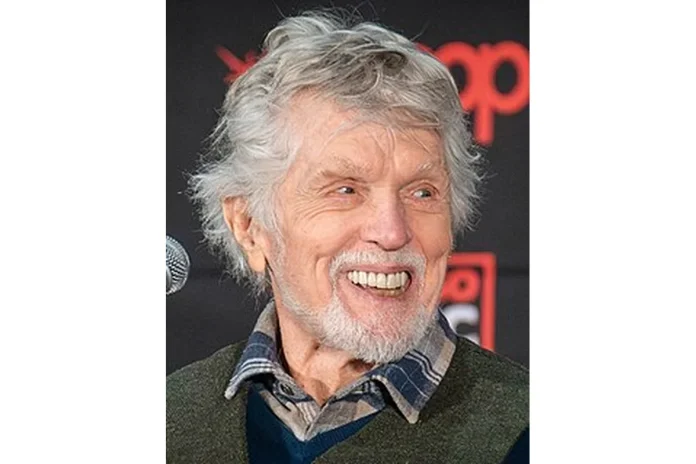
Tom Skerritt Bio
Thomas Roy Skerritt (born August 25, 1933) is an American actor and director whose career has spanned more than six decades and over 170 film and television credits since 1962. He first gained wide attention with a breakthrough role in Robert Altman’s M*A*S*H (1970) and went on to appear in a remarkable run of acclaimed films, including The Turning Point (1977), Alien (1979), The Dead Zone (1983), Top Gun (1986), and A River Runs Through It (1992). On television, he is best known for his Emmy-winning turn as Sheriff Jimmy Brock on Picket Fences (1992–1996) and his recurring role as Evan Drake on Cheers.
Beyond his screen work, Skerritt has also built a parallel career as a director and remains active in the industry. His long list of honors includes a National Board of Review award, a Primetime Emmy Award, and the International Press Academy’s Mary Pickford Award, which he received in 2022 in recognition of his artistic contributions to entertainment.
Early Life and Background
Thomas Roy Skerritt was born on August 25, 1933, in Detroit, Michigan, the youngest of three children. He is the son of Roy Skerritt, a businessman, and Helen Skerritt, a homemaker. Growing up in postwar Detroit shaped his early years and laid the groundwork for the disciplined path he would later follow.
In 1951, Skerritt graduated from Mackenzie High School in Detroit. Shortly after receiving his diploma, he enlisted in the United States Air Force, where he served for four years as a classifications specialist. Most of his enlistment was spent at Bergstrom Field in Austin, Texas, an experience that helped him transition from adolescence into adult life and prepared him for the structured world of professional performance.
After completing his military service, Skerritt returned to his education. He attended Henry Ford College and then Wayne State University before enrolling at the University of California, Los Angeles. Although he initially considered majoring in English, his interests shifted toward directing after he appeared in a college production of The Rainmaker. That role drew the attention of film professionals and led directly to his first feature film, prompting him to leave UCLA without completing his degree in order to pursue acting full time.
Path to Acting
Skerritt’s entry into film came in 1962 with War Hunt, produced by Terry Sanders. The film marked the start of what would become one of the most prolific careers of his generation. While building his résumé, he also picked up steady television work, guest-starring in popular shows such as My Favorite Martian, The Real McCoys, Bonanza, Gunsmoke, and Death Valley Days between the mid-1960s and early 1970s.
The early 1970s brought a mixture of opportunity and setback. Following a strong start to the decade, Skerritt was pushed into a string of obscure European westerns. According to his agent, Meyer Mishkin, it was Mishkin who secured Skerritt his pivotal co-starring role in The Turning Point (1977), a move that effectively revived his career and earned him a National Board of Review Best Supporting Actor award.
By the late 1970s, Skerritt had become a familiar face across genres. He appeared in Harold and Maude (1971), Fuzz, Big Bad Mama, Cheech & Chong’s Up in Smoke (1978), and Ice Castles (1978). His growing reputation as a versatile leading man set the stage for the most celebrated chapter of his film career.
Tom Skerritt Career
Early Career (1962–1969)
Skerritt’s professional career began in 1962 with War Hunt, and he spent the next several years dividing his time between television guest roles and small film parts. He appeared in shows such as ABC’s Twelve O’Clock High (1964–1967) and Gunsmoke (1965–1972), as well as multiple episodes of Death Valley Days, where he played a variety of historical figures including the young Roy Bean and Mark Twain. These early appearances allowed him to sharpen his craft and develop a reputation for dependability on set.
By the end of the 1960s, Skerritt had built a solid foundation in Hollywood and was ready for larger opportunities. His work in episodic television gave him a steady income and wide exposure, while his film work hinted at the dramatic range he would soon showcase on a much larger stage.
Breakthrough (1970–1979)
Skerritt’s breakthrough arrived in 1970 when Robert Altman cast him as Duke Forrest in M*A*S*H, a dark comedy set during the Korean War. The film became one of the defining works of the New Hollywood movement and immediately elevated Skerritt’s profile. He followed it with a memorable, unbilled appearance as “M. Borman” in Harold and Maude (1971), further showcasing his willingness to take on unusual material.
The second half of the decade brought his most celebrated dramatic roles. In The Turning Point (1977), he played a key supporting part that earned him a National Board of Review Best Supporting Actor award. He then starred as Captain Dallas in Ridley Scott’s science-fiction landmark Alien (1979), a performance that introduced him to a global audience and cemented his place in film history.
Notable Works and Milestones
Throughout the 1980s and early 1990s, Skerritt continued to deliver memorable performances in a wide range of films. He appeared as the villain in The Dead Zone (1983), played Commander Mike “Viper” Metcalf in Top Gun (1986), and portrayed a fly-fishing minister in Robert Redford’s A River Runs Through It (1992). Other notable projects included Poltergeist III (1988), Steel Magnolias (1989), and SpaceCamp (1986). On television, his Emmy-winning performance as Sheriff Jimmy Brock on Picket Fences (1992–1996) and his recurring role as Evan Drake on Cheers remain among his most beloved contributions to the medium.
Tom Skerritt Award Nominations
Across his long career, Tom Skerritt has earned recognition from many of the entertainment industry’s most respected organizations. His nominations include two Golden Globe Award nods for his work on Picket Fences, three Screen Actors Guild Award nominations, a Genie Award nomination, and an American Television Award nomination. These honors reflect both his range as a performer and the respect he has earned from critics, peers, and industry voters over six decades.
Tom Skerritt Awards Won
Tom Skerritt has collected several major awards throughout his career. In 1977, he won the National Board of Review award for Best Supporting Actor for his work in The Turning Point. He later earned a Primetime Emmy Award for Outstanding Lead Actor in a Drama Series for his portrayal of Sheriff Jimmy Brock on Picket Fences. He is also a Saturn Award winner and a Western Heritage Award winner. In 2022, the International Press Academy honored him with the Mary Pickford Award for Outstanding Artistic Contribution to the Entertainment Industry.
| Award | Wins | Year |
|---|---|---|
| National Board of Review – Best Supporting Actor (The Turning Point) | 1 | 1977 |
| Primetime Emmy Award – Outstanding Lead Actor in a Drama Series (Picket Fences) | 1 | 1993 |
| Mary Pickford Award (International Press Academy) | 1 | 2022 |
Tom Skerritt Family
Tom Skerritt is the youngest of three children born to Roy Skerritt, a businessman, and Helen Skerritt, a homemaker, in Detroit, Michigan. He is the father of five children in total. From his first marriage to Charlotte Shanks, which lasted from 1957 to 1972, he has three children. With his second wife, Sue Oran, he has a son, and with his current wife, Julie Tokashiki, he has a daughter.
Personal Life
Skerritt has been married three times. He was married to Charlotte Shanks from 1957 to 1972, to Sue Oran from 1977 to 1992, and to Julie Tokashiki from 1996 to the present. Outside of acting and directing, he is the founder and chairman of Heyou Media, a Seattle-based digital media company. His wide-ranging interests and continued presence in Hollywood reflect a career built on curiosity, discipline, and an enduring love of the craft.