
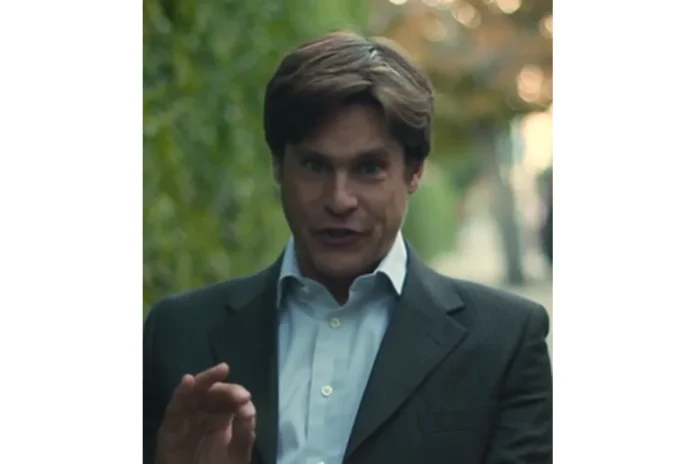
William McNamara Bio
William West McNamara, born on March 31, 1965, is an American film and television actor whose career spans more than three decades across feature films, prestige television, and network series. Known for his thoughtful screen presence and his willingness to portray real-life figures, he has built a steady résumé that includes work alongside directors such as Peter Bogdanovich and Jon Amiel, as well as appearances in some of the most recognizable crime and drama franchises on television. Beyond acting, William McNamara is widely recognized as an animal rights activist and vegan who uses his platform to advocate for wildlife and companion animals.
A native of Dallas, Texas, William McNamara first trained at the Lee Strasberg Institute in New York before transitioning into professional work in the late 1980s. His career has moved fluidly between independent films, studio releases, and episodic television, while his parallel work as a documentary producer has allowed him to combine his creative and humanitarian interests. He continues to take on screen roles and produce projects centered on animal welfare.
Early Life and Background
William West McNamara was born on March 31, 1965, in Dallas, Texas, where he spent his early years before pursuing secondary education outside the state. His father worked for the Ford Motor Company, while his mother pursued a career as an interior designer, giving the household a creative bent that complemented the practical rhythms of a corporate family. Growing up in Texas provided William McNamara with a broad cultural exposure that would later inform his choices as a performer.
For high school, he attended the Salisbury School, a private preparatory institution in Connecticut known for its rigorous academics and emphasis on character development. The experience marked his first extended time away from Texas and broadened his perspective as he began to consider careers beyond his home region. After graduating, William McNamara enrolled at Columbia University in New York City, where he continued his formal education while gravitating toward the city’s thriving arts scene.
It was at Columbia that his interest in performance sharpened, leading him to enroll at the Lee Strasberg Institute, also in New York. Studying under the method-acting tradition associated with Strasberg gave William McNamara a structured foundation in emotional recall and character analysis. This training became the launching pad for his professional life in front of the camera and on the stage.
Path to Acting
William McNamara’s path to acting began in earnest with his studies at the Lee Strasberg Institute, where he immersed himself in the technique that would shape his screen performances. New York’s theater culture provided an immediate testing ground, and he began seeking auditions while still completing his coursework. His combination of Southern roots, East Coast training, and method-based preparation made him a distinctive candidate for the kinds of character-driven roles that defined the late 1980s and early 1990s.
His earliest screen credits arrived soon after, and by 1987 he had secured his first professional work, marking the formal beginning of a career that would extend across film, television, and eventually documentary production. These initial steps were modest but meaningful, allowing William McNamara to build relationships with casting directors, agents, and fellow actors who would recur throughout his later work.
The combination of Lee Strasberg’s method training and the discipline of Columbia University gave him the patience to navigate the slow build typical of a young actor’s career. By the time he booked his first major studio roles, William McNamara had already accumulated years of preparation, and he transitioned from student work into the broader film and television industry with a clear sense of craft.
William McNamara Career
Early Career (1987–1990)
William McNamara launched his professional acting career in 1987, drawing on his training at the Lee Strasberg Institute to land early roles in film and television. His first notable feature appearance came with Stealing Home in 1988, a drama that paired him with established actors and introduced his work to a wider audience. The film marked a confident debut and signaled his readiness for larger projects.
He quickly followed that success with two 1990 releases: Texasville, Peter Bogdanovich’s long-awaited sequel to The Last Picture Show, and Stella, a character-driven drama starring Bette Midler. Working with directors of that stature early in his career helped establish William McNamara as a reliable screen presence capable of holding his own opposite major stars. These early projects laid the groundwork for the more diverse roles that would follow.
Breakthrough (1993–1999)
The middle of the 1990s marked a breakthrough period for William McNamara, as he balanced high-profile film work with recurring and regular television roles. In 1993, he portrayed real-life actor Ricky Nelson in Nightmares & Dreamscapes: From the Stories of Stephen King, a television anthology that required him to inhabit a recognizable historical figure. That same period brought guest appearances on NYPD Blue, the long-running police drama, where his dramatic instincts fit comfortably within the show’s procedural intensity.
His film career accelerated with Surviving the Game in 1994 and Copycat in 1995, the latter a critically noted thriller that paired him with Holly Hunter and Sigourney Weaver. Both films demonstrated his willingness to take on darker material and showed his range beyond the more lyrical projects of his earliest work. In 1995, he also took on the role of Montgomery Clift in Liz: The Elizabeth Taylor Story, a biographical television movie that further cemented his reputation for portraying real-world figures with sensitivity and research.
On the small screen, William McNamara held a regular role on the Showtime series Beggars and Choosers, which chronicled the high-stakes world of a Hollywood television network. He also appeared on Law & Order: SVU, contributing to one of the most durable franchises in television history. He was additionally featured in the television movies Doing Time on Maple Drive and Wildflower, the latter earning him a CableACE Award nomination, an early industry recognition of his television work.
Notable Works and Milestones
Among William McNamara’s signature works are Stealing Home, Texasville, Copycat, and Surviving the Game, four films that together trace his growth from a young leading man to a versatile supporting performer. His portrayals of Montgomery Clift in Liz: The Elizabeth Taylor Story and Ricky Nelson in Nightmares & Dreamscapes stand as dramatic milestones, while his television regular role on Beggars and Choosers and his appearances on NYPD Blue and Law & Order: SVU reflect his lasting presence in episodic drama. His CableACE Award nomination for Wildflower remains a notable recognition within his body of television work.
William McNamara Award Nominations
William McNamara received a CableACE Award nomination for his performance in the television movie Wildflower, an early-career recognition that highlighted his work in cable programming during the 1990s. This nomination reflects the kind of character-driven, small-screen storytelling that has defined much of his career, and it remains one of the verified industry acknowledgments associated with his filmography.
William McNamara Awards Won
There are no verified major award wins documented for William McNamara at this time. His career has instead been shaped by consistent work across film and television, a CableACE Award nomination, and his parallel contributions as a documentary producer focused on animal welfare.
William McNamara Family
William McNamara was raised in Dallas, Texas, by a father who worked for the Ford Motor Company and a mother who worked as an interior designer. His parents’ contrasting professional backgrounds, one rooted in industry and the other in creative design, gave him an early appreciation for both structure and visual storytelling. He attended the Salisbury School in Connecticut before continuing his education at Columbia University in New York.
Personal Life
Outside of his work as an actor, William McNamara is widely known as an animal rights activist and vegan. He first became involved in animal welfare by rescuing cats, dogs, and horses, and he has since expanded his efforts to international advocacy work. He has produced several documentaries on animal-related subjects, including the Nat Geo Wild series Animal Intervention, which examined the exotic animal industry in the United States. His ongoing travels on behalf of animal rights have made this advocacy work a defining element of his public identity.