
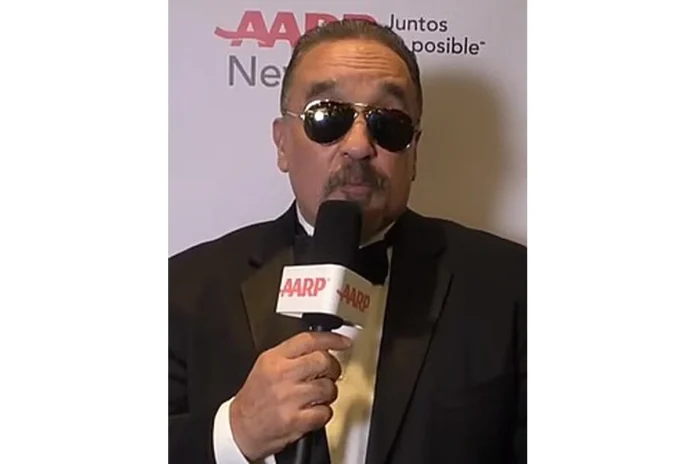
Willie Colón Bio
Willie Colón, born William Anthony Colón Román, was an American salsa musician, trombonist, singer, composer, producer, and social activist whose career helped define the sound of New York–style salsa for more than five decades. Rising to prominence as a teenager on the Fania Records label, he became one of the genre’s most successful figures, blending jazz, rock, and Caribbean rhythms into a body of work celebrated across Latin America and the United States. Beyond music, he was a longtime civic organizer, political figure, and cultural voice for the Puerto Rican diaspora, leaving a mark on New York City public life that rivaled his influence in the recording studio.
Willie Colón Early Life and Background
William Anthony Colón Román was born on April 28, 1950, in the South Bronx, New York City, to Puerto Rican parents. Growing up in a borough that was becoming the cultural capital of the Latino East Coast, he was surrounded from childhood by the sounds of Latin bands, jazz ensembles, and the everyday rhythms of working-class neighborhoods. He picked up the trumpet at a young age before later switching to the trombone, drawn to the instrument’s bold, sliding voice and to the all-trombone style of Mon Rivera and Barry Rogers, two musicians who helped shape his early sense of sound.
Colón also spent formative summers at his maternal grandmother’s sister’s farm on the outskirts of Manatí, Puerto Rico, on the road to neighboring Ciales. These extended stays deepened his connection to the island, an experience that would later inform the lyrical themes of migration, identity, and belonging found throughout his catalog. By the time he was a teenager, he was already performing in local groups, channeling the influence of his Caribbean and Bronx upbringing into a distinctive musical personality.
Path to Music
At the age of 15, Colón was signed to Fania Records, the label that would become the most important home for New York salsa. By 17, he had recorded his first album, which ultimately sold more than 300,000 copies and announced the arrival of a powerful new voice in the genre. The label’s main producer, Johnny Pacheco, paired him with singer Héctor Lavoe, and the two quickly became one of the defining duos of the salsa movement, transforming Colón from a talented newcomer into a central architect of the era’s sound.
His work from the late 1960s onward combined the rough-edged swagger of urban New York with traditional Caribbean rhythmic foundations, drawing on bomba, plena, bolero, merengue, and other forms. Albums such as Asalto Navideño (1971) brought a sophisticated diasporic awareness to salsa, treating the relationship between the Puerto Rican mainland and the island as a central artistic theme. As he expanded into composing, arranging, and producing, Colón became a guiding figure for an entire generation of New York Latin musicians.
Willie Colón Career
Early Career (1967–1970)
Colón’s professional career began in 1967 when, as a teenager, he entered the recording studio with Fania Records. His debut album marked an unusually confident start, and he soon followed it with a string of releases that positioned him as a trombonist with a striking, almost cinematic style. He also gained attention for the bold gangster imagery on his early album covers, a marketing choice that gave his records a recognizable visual identity well before such personas became common in popular music.
During this period, he built a tight creative partnership with Héctor Lavoe and toured extensively across the East Coast. Songs like “Aguanilé” became early standards, and the Colón–Lavoe combination began to dominate Fania’s roster, establishing a template for the romantic-meets-streetwise sound of salsa in the early 1970s.
Breakthrough (1971–1980)
Colón’s breakthrough came with the 1971 Christmas album Asalto Navideño, a project that reimagined traditional Puerto Rican holiday music through the lens of New York salsa. The album became a genre classic, praised for its playful handling of island traditions and its subtle commentary on the experience of Puerto Ricans living on the U.S. mainland. It remains one of his signature works.
He followed this success with a run of albums featuring new collaborators, including vocalist Ismael Miranda, expanding the range of styles in his catalog. The 1978 album Siembra, recorded with singer-songwriter Rubén Blades, became the best-selling album in the salsa genre, a record-setting release that further cemented Colón’s reputation as a commercial and creative force. Other major songs from the decade, including “Tiburón” and “El gran varón,” demonstrated his ability to merge storytelling, social commentary, and danceable rhythms, while his prolific production work at Fania helped launch the careers of several contemporaries.
Notable Works and Milestones
Across his career, Colón released dozens of albums, including the signature holiday recording Asalto Navideño (1971) and the landmark Siembra (1978) with Rubén Blades. He also expanded into film, with acting roles in Vigilante (1983), The Last Fight (1983), Miami Vice (1987), and It Could Happen to You (1994). His life and partnership with Héctor Lavoe were later depicted in the 2006 biopic El Cantante, in which he was portrayed by actor John Ortiz.
Willie Colón Award Nominations
Willie Colón received recognition from a wide range of institutions throughout his career. In 2015, Billboard magazine named him one of the 30 most influential Latin artists of all time, a designation that placed him among the most celebrated figures in the history of Latin music.
Willie Colón Awards Won
Willie Colón was the recipient of several prestigious honors across his lifetime. In 1991, he received the Yale University Chubb Fellowship, and in 2000, he was inducted into the International Latin Music Hall of Fame. The Latin Recording Academy presented him with a Lifetime Achievement Award in 2004, and the International Trombone Association followed with its own Lifetime Achievement Award in 2010. In 2018, he received the Ellis Island Medal of Honor and the Lunas Del Auditorio Award in Mexico, and in 2019, he was inducted into the Latin Songwriters Hall of Fame.
Willie Colón Family
Colón was born to Puerto Rican parents in the South Bronx and maintained strong ties to extended family in Puerto Rico, including relatives on a farm near Manatí, where he spent summers as a child. These family connections shaped the cultural perspective that ran through much of his music, grounding his exploration of diaspora and identity in personal experience.
Personal Life
Colón was married to Julia Colón, who was at his side through his later years. In April 2021, the couple was involved in a serious recreational vehicle collision in the Outer Banks of North Carolina, an incident that left Colón hospitalized with lacerations and a head injury. He died in Bronxville, New York, on February 21, 2026, at the age of 75, after being hospitalized for breathing problems.