
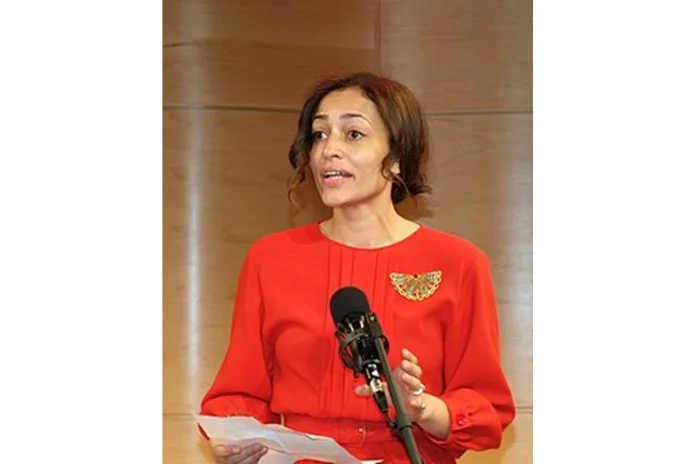
Zadie Smith Bio
Zadie Smith was born Sadie Smith on 25 October 1975 in Willesden, north-west London. She is an English novelist, essayist and short-story writer whose debut novel, White Teeth, published in 2000, became an international best-seller and established her as a leading voice in contemporary literature. Smith has held academic posts in the United States and the United Kingdom and her novels and essays examine race, class, identity and urban life across generations.
Early Life and Background
Zadie Smith was born to Yvonne Bailey and Harvey Smith and raised in the Brent borough of London. Her mother emigrated from Jamaica to England in 1969; Smith grew up in a mixed household and changed her name from Sadie to Zadie at the age of 14. Her family includes siblings and the entertainer Ben Bailey Smith among her relatives.
She attended Malorees Junior School and Hampstead School before reading English literature at King’s College, University of Cambridge. While at Cambridge she published short stories in The Mays Anthology and completed the manuscript for White Teeth during her final year.
Path to Celebrity
A partial manuscript of White Teeth attracted publisher interest while Smith was still a student and prompted a competitive auction for rights that was won by Hamish Hamilton. White Teeth was completed during her final year at Cambridge and its 2000 publication made Smith a global literary figure almost immediately. The novel won multiple awards, was widely translated and was adapted for television.
Following her debut, Smith published The Autograph Man in 2002 and expanded her public profile through roles such as writer-in-residence at the Institute of Contemporary Arts in London and as a Fellow of the Radcliffe Institute for Advanced Study at Harvard University. Her early success led to inclusion on lists of notable young authors and to election as a Fellow of the Royal Society of Literature in 2002.
Zadie Smith Career
Early Career (2000–2005)
White Teeth appeared in 2000 and achieved immediate commercial success, earning several literary prizes and broad critical attention. The novel established Smith’s interest in multigenerational narratives, comic energy and social observation, and it was adapted for television in 2002. Her second novel, The Autograph Man, followed in 2002 and while it met mixed reviews it consolidated her presence in contemporary fiction.
During this period Smith served as writer-in-residence at the Institute of Contemporary Arts and published short fiction and essays. She also spent time in the United States as a Radcliffe Fellow, which broadened her academic and transatlantic literary connections and laid the groundwork for later teaching appointments.
White Teeth Breakthrough (2000)
White Teeth was the breakthrough that defined Smith’s early career. The novel was auctioned to a major publisher on the basis of a partial manuscript, completed while she was an undergraduate, and upon publication it won awards such as the James Tait Black Memorial Prize and the Betty Trask Award and attained global sales and translation. The book’s mixture of humour, history and social commentary placed Smith at the centre of conversations about multicultural Britain and contemporary realism.
The novel’s success produced both praise and critical debate about literary trends; Smith engaged publicly with that criticism and used it to articulate a belief that fiction should combine intellect and feeling. White Teeth’s cultural visibility was extended by a television adaptation in 2002, which brought the novel to a wider audience and reinforced Smith’s reputation as a major new novelist.
On Beauty Breakthrough (2005)
Smith’s third novel, On Beauty, published in 2005, moved the setting to the United States and explored academic and family life around Greater Boston. The novel was shortlisted for the Man Booker Prize and won the 2006 Orange Prize for Fiction and the Anisfield-Wolf Book Award, marking a significant critical high point in her career. On Beauty demonstrated Smith’s capacity for extended moral and comic realism set across cultural contexts.
In the same period she published shorter work, including a paired short-story volume and editorial projects that showcased thematic interests in identity, intimacy and social conflict. Her growing profile also led to frequent contributions to major periodicals and to invitations to curate and guest-edit broadcast programming.
NW and Later Work (2012–2019)
Smith continued to experiment with form and voice in later novels. NW, published in 2012 and set in the Kilburn area of north-west London, received critical recognition and was adapted for television, expanding the cross-media presence of her fiction. Swing Time, published in 2016 and inspired in part by childhood interests in dance, was longlisted for the Man Booker Prize in 2017 and reinforced Smith’s range as a novelist concerned with movement, race and ambition.
Her short fiction collection Grand Union appeared in 2019 and marked a return to story form. Smith also compiled essays and non-fiction pieces, publishing collections that gathered criticism, reportage and personal reflection and demonstrating a parallel career as an essayist and public intellectual.
NYU Era (2010–Present)
Smith joined New York University’s Creative Writing Program as a tenured professor of fiction on 1 September 2010, after teaching at Columbia University. Her academic work has run alongside her publishing career and public essays; she has been a regular contributor to The New York Review of Books and served as a reviewer for major magazines. Her teaching role at NYU positioned her as an influential figure in transatlantic literary education and mentorship.
In 2023 Smith published the historical novel The Fraud, which reimagines the Tichborne case across the nineteenth century and drew favorable review attention for its historical ambition. In 2023 she was elected to the American Academy of Arts and Sciences, an acknowledgement of her sustained literary contribution. In October 2025 a collection of essays, Dead and Alive, was published by Hamish Hamilton and further illustrated her ongoing engagement with cultural criticism and literary form.
Notable Events and Milestones
Major milestones in Smith’s career include the international success and adaptation of White Teeth, the Orange Prize for Fiction and Anisfield-Wolf Book Award for On Beauty, election as a Fellow of the Royal Society of Literature in 2002 and election to the American Academy of Arts and Sciences in 2023. Her works have been adapted for television and she has held distinguished fellowships and residencies that expanded her academic profile.
Zadie Smith Family
Family Background and Literary Lineage
Zadie Smith comes from a mixed Jamaican and English family; her mother is Yvonne Bailey and her father is Harvey Smith. She grew up in Brent and has multiple siblings, including the performer Ben Bailey Smith. Her family background and upbringing in north-west London figure prominently in the themes and settings of her writing.
Personal Life
Smith met the poet and novelist Nick Laird while at the University of Cambridge and they married in 2004 in King’s College Chapel. The couple lived for periods in Rome, New York City and London and have two children. Smith has described herself as unreligious while retaining an interest in how religion shapes other people’s lives.
2025 Season Performance
The period around 2025 saw Smith active across writing, public commentary and cultural collaboration. Her 2023 novel The Fraud received strong reviews for its historical scope, and in 2025 a new essay collection, Dead and Alive, was published by Hamish Hamilton, extending her presence in contemporary public conversation. She also participated in cultural and commercial collaborations in 2025, including a major fashion campaign and musical contributions, reflecting a widening public profile beyond the purely literary sphere.
Smith has remained engaged in public debate and charity work, donating royalties from earlier essay projects to causes and signing public letters on issues of international concern. Her academic role at New York University and continued major publications leave her well positioned to shape debates about fiction, ethics and culture in the coming years.