
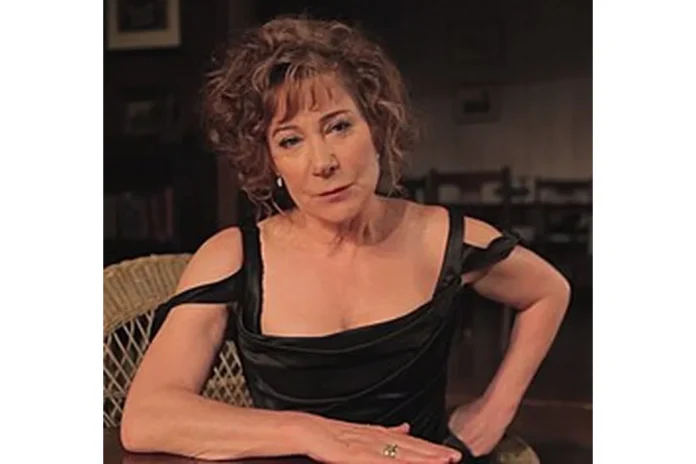
Zoë Wanamaker Bio
Zoë Wanamaker (born 13 May 1949) is an American-born British actress whose six-decade career has spanned the Royal Shakespeare Company, the National Theatre, acclaimed films, and long-running British television. She was appointed Commander of the Order of the British Empire in the 2001 New Year Honours for her services to drama, and she holds both British and American citizenship. Wanamaker has earned a reputation as one of the most respected stage actresses of her generation, with two Laurence Olivier Awards and four Tony Award nominations to her name.
Beyond the stage, Wanamaker has become familiar to global audiences through her role as Madam Hooch in Harry Potter and the Philosopher’s Stone (2001), her eleven seasons as Susan Harper in the BBC sitcom My Family (2000–2011), and recurring parts in productions such as Agatha Christie’s Poirot and Shadow and Bone. She continues to act on stage and screen, including a 2023 Broadway return in the memory play Pictures From Home.
Early Life and Background
Zoë Wanamaker was born in New York City on 13 May 1949, the daughter of Charlotte Holland, a Canadian actress and radio performer, and Sam Wanamaker, an American actor, film director, and radio producer. Her father was of Ukrainian-Jewish descent, and Wanamaker has described her own upbringing as secular and non-observant. A 2009 episode of the BBC series Who Do You Think You Are? revealed that her paternal grandfather, Maurice Wanamaker, had been a tailor originally from Mykolaiv.
In 1952, while working in the United Kingdom, Sam Wanamaker discovered he had been blacklisted in Hollywood. The family decided to remain in England, and Zoë grew up attending the independent King Alfred School in Hampstead and later Sidcot School, a Quaker boarding school in Winscombe, Somerset. She went on to attend Hornsey College of Art for a Pre-Diploma Course before committing to professional acting training.
Her father’s experience in the film industry provided an early window into performance, and the family’s relocation to Britain placed her near some of the most important classical companies in the English-speaking world. Theatrical craft became a familiar presence from childhood, shaping the path she would later pursue.
Path to Acting
Wanamaker enrolled at the Central School of Speech and Drama (now the Royal Central School of Speech and Drama) in London to study acting formally. Her training there built the vocal and classical foundation that would define her stage career. After completing her studies, she began working in British theatre and quickly earned a place in the country’s leading ensembles.
From 1976 to 1984 she was a member of the Royal Shakespeare Company, where she took on demanding classical and modern roles. Her early work with the company brought her critical attention, and in 1979 she won the Laurence Olivier Award for Best Actress for the Royal Shakespeare Company production of Once in a Lifetime. This early recognition established her as a serious dramatic actress and opened the door to major West End and Broadway opportunities.
Her association with the Royal Shakespeare Company and later the National Theatre cemented her reputation in British classical theatre. She was also the first person to speak on the stage of the reconstructed Shakespeare’s Globe on London’s South Bank in 1997, a moment that honoured her late father’s founding role in creating the new theatre.
Zoë Wanamaker Career
Early Career (1970–1984)
Wanamaker’s professional career began in 1970, and her early years were devoted almost entirely to the stage. She joined the Royal Shakespeare Company in 1976 and remained with the company for nearly a decade, taking on a wide range of roles in both Shakespearean and contemporary productions. Her 1979 performance in Once in a Lifetime earned her the Laurence Olivier Award for Best Actress, one of the most prestigious honours in British theatre.
During this period she also made early television appearances in acclaimed British productions, including the BBC drama Edge of Darkness. Her stage work led to her first Broadway nomination in 1981 for Piaf, marking her arrival on the American theatre scene alongside her growing reputation in London.
Breakthrough (1985–2000)
Throughout the 1980s and 1990s, Wanamaker balanced major West End and Broadway productions with notable screen work. She received a second Tony Award nomination in 1986 for Loot and was BAFTA-nominated for her performance in the first instalment of Prime Suspect in 1991. Television audiences saw her in series such as Paradise Postponed (1986) and Love Hurts (1992–1994).
In 1997 she appeared in the film Wilde, and the following year she won her second Laurence Olivier Award for Sophocles’ Electra. In 1999 she earned a Tony Award nomination for the Broadway transfer of that production. She was also cast in the BBC’s 2000 adaptation of Gormenghast and began her long run as Susan Harper in the BBC sitcom My Family, a role she would play until 2011.
Her casting as Madam Hooch in Harry Potter and the Philosopher’s Stone (2001) introduced her work to a worldwide audience. She did not return for the film’s sequels, publicly stating that the producers had underpaid their actors. By the end of this period she was firmly established as both a classical stage actress and a familiar television presence.
Notable Works and Milestones
Wanamaker’s signature stage roles include Once in a Lifetime, Electra, Piaf, Loot, and Awake and Sing!, the last of which earned her a fourth Tony Award nomination in 2006. Her most recognised screen performances include Madam Hooch in Harry Potter and the Philosopher’s Stone, Susan Harper in My Family, Paula Strasberg in My Week with Marilyn (2011), and the recurring role of Ariadne Oliver in Agatha Christie’s Poirot. Her election as Honorary President of Shakespeare’s Globe stands as a lasting tribute to her family’s contribution to British theatre.
Zoë Wanamaker Award Nominations
Wanamaker has received four Tony Award nominations for Best Actress on Broadway, for Piaf (1981), Loot (1986), Electra (1999), and Awake and Sing! (2006). She has also been recognised nine times by the Laurence Olivier Awards, with seven additional nominations beyond her two wins. In television she has earned two BAFTA TV Award nominations for Best Actress, for Prime Suspect (1991) and Love Hurts (1992–1994).
Zoë Wanamaker Awards Won
Wanamaker has won two Laurence Olivier Awards for Best Actress, for Once in a Lifetime in 1979 and for Electra in 1998. She was appointed Commander of the Order of the British Empire in the 2001 New Year Honours for services to drama, and she received an honorary Doctorate of Letters from the University of East Anglia on 19 July 2012.
| Award | Wins | Year |
|---|---|---|
| Laurence Olivier Award for Best Actress (Once in a Lifetime) | 1 | 1979 |
| Laurence Olivier Award for Best Actress (Electra) | 1 | 1998 |
| Commander of the Order of the British Empire | 1 | 2001 |
| Honorary Doctorate of Letters, University of East Anglia | 1 | 2012 |
Zoë Wanamaker Family
Zoë Wanamaker is the daughter of Sam Wanamaker, an American actor, film director, and radio producer who became the driving force behind the reconstruction of Shakespeare’s Globe in London, and Charlotte Holland, a Canadian actress and radio performer. Her cousin is the American film historian and collector Marc Wanamaker. Through her father’s efforts she has been closely associated with Shakespeare’s Globe, where she was named Honorary President in recognition of the Wanamaker family’s central role in the project.
Personal Life
Wanamaker lived for many years with fellow Royal Shakespeare Company actor David Lyon before marrying the Scottish actor, playwright, and screenwriter Gawn Grainger in November 1994. Grainger died on 17 May 2025. Wanamaker became a British citizen in 2000 while retaining her American citizenship. She has supported a range of charitable causes, including Tree Aid, Dignity in Dying, the Young Actors’ Theatre in Islington, and Survival International, and she serves as one of nine presidents of Better Planet Education.