
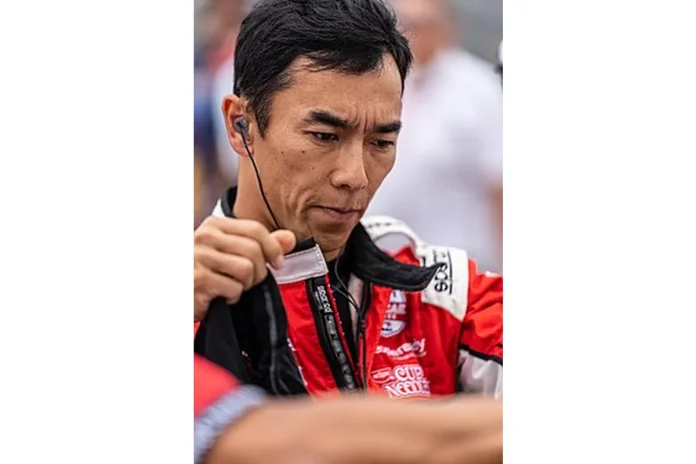
Takuma Sato Bio
Takuma Sato, born on 28 January 1977, is a Japanese racing driver known for competing part-time in the IndyCar Series with Rahal Letterman Lanigan Racing. He is one of only a handful of two-time winners of the Indianapolis 500, having triumphed in 2017 and 2020, and he remains the only Asian driver ever to win that famous race. Sato is widely respected for his aggressive driving style and for his personal motto, “No Attack, No Chance.” His long career has taken him from karting tracks in Japan to Formula One grand prix weekends and to the ovals and road courses of American open-wheel racing.
Early Life and Background
Takuma Sato was born in Shinjuku, Tokyo, Japan, and raised in the broader Tokyo area. He discovered motorsport as a teenager and began karting in Japan at the age of nineteen. In 1997, he won the Japanese national karting championship, a result that helped him secure backing from Honda and opened the door to a move into professional single-seater racing. Beyond motorsport, Sato was also a national cycling champion during his high school years, and he continues to use cycling as a core part of his physical training.
Coming from a country with a deep tradition in motorsport but limited international single-seater success at the time, Sato was determined to test himself against the best young drivers in the world. With Honda’s support, he relocated to Europe in 1999 to begin the next stage of his racing education.
Path to NASCAR
Note: this section is not applicable to Takuma Sato, whose career has been built on open-wheel racing rather than stock-car racing. Sato’s professional path led through Formula Three and Formula One before he committed fully to the IndyCar Series in the United States. He has not been documented as a competitor in any NASCAR national series.
Takuma Sato Career
Early Career (1999–2001)
Sato moved to Europe in 1999 with backing from Honda. He briefly raced in Vauxhall Junior and Formula Opel before debuting mid-season in Class B of the British Formula Three Championship with Diamond Racing, where he scored class wins at the British Grand Prix and at Spa. He then stepped up to the top class of the series with Carlin Motorsport in 2000, taking four wins and finishing third overall. The following year, 2001, he dominated British Formula Three with twelve victories in twenty-six races to become the first Japanese driver to win the championship. That same season he added the prestigious Macau Grand Prix and the Masters of Formula 3 to his résumé.
Formula One Breakthrough (2002–2008)
In 2002, Sato graduated to Formula One with the Honda-powered Jordan team alongside Giancarlo Fisichella. He showed flashes of speed and produced a strong fifth-place finish at his home race in Suzuka, although the season also brought a frightening crash in Austria. Sato moved with Honda to British American Racing (BAR) in 2003 as a test driver, replacing Jacques Villeneuve at the Japanese Grand Prix, where he scored points with sixth place.
Sato’s breakthrough arrived in 2004 at the United States Grand Prix, where bold overtaking moves delivered his first Formula One podium and made him the first Japanese driver on an F1 podium since Aguri Suzuki in 1990. He ended the year eighth in the World Drivers’ Championship with 34 points. After a difficult 2005 campaign with BAR, he joined the new Super Aguri team in 2006. With Super Aguri, he impressed with his work ethic and scored the squad’s first point at the 2007 Spanish Grand Prix, also earning F1 Racing magazine’s “Overtake of the Year” award at the Canadian Grand Prix. Financial problems forced Super Aguri out of Formula One after the 2008 Spanish Grand Prix, ending Sato’s time in the series.
IndyCar Breakthrough (2010–2016)
Sato returned to open-wheel racing in 2010 with KV Racing Technology in the IndyCar Series. He improved steadily, taking three top-five finishes and two pole positions in 2011, including his first IndyCar pole at the Iowa Corn Indy 250. In 2013, racing for A. J. Foyt Enterprises, Sato won the Grand Prix of Long Beach in his 52nd series start, becoming the first Japanese driver ever to win an IndyCar race. He remained with Foyt through 2016, scoring six top-five finishes, two podiums, and two pole positions during his tenure.
Indianapolis 500 Era (2017–2020)
Sato joined Andretti Autosport in 2017 and won the Indianapolis 500 that May, becoming the first Asian driver ever to take victory in the event. Later that year he added pole positions at the Dual in Detroit and at Pocono Raceway. He returned to Rahal Letterman Lanigan Racing (RLL) in 2018, earning a memorable win at Portland after starting twentieth, and opened 2019 with a commanding victory from pole at Barber Motorsports Park, later adding a win at Gateway. On 23 August 2020, after qualifying on the outside of the front row, Sato won his second Indianapolis 500.
Dale Coyne Racing Era (2022)
For the 2022 IndyCar season, Sato signed with Dale Coyne Racing with Rick Ware Racing, replacing Romain Grosjean. The highlight of the year was his Indianapolis 500 entry, where he finished 25th.
Current Team Era (2024–Present)
In 2023, Sato ran only the oval rounds with Chip Ganassi Racing, his first part-time IndyCar schedule since 2010. In March 2024, Rahal Letterman Lanigan Racing announced that Sato would rejoin the team for an Indianapolis 500-only drive, where he finished fourteenth after reaching the Fast 12 round of qualifying. In 2025, he returned to RLL for the Indianapolis 500, qualifying second on the grid, leading 51 laps, and ultimately being classified ninth after post-race disqualifications.
Driving Style and Strengths
Sato is renowned for his aggressive, attack-minded driving style, captured by his motto “No Attack, No Chance.” He is fearless on ovals and willing to attempt bold late-race passes, a trait that has earned him both spectacular victories and narrow defeats. His relentless approach, combined with strong feedback for engineers and a fitness base built around cycling, has helped him stay competitive across road courses, street circuits, and superspeedways.
Notable Races and Milestones
Signature moments include his 2013 Long Beach win as the first Japanese IndyCar victor, his 2017 Indianapolis 500 victory as the first Asian winner, his unlikely 2018 Portland win from twentieth on the grid, and his second Indianapolis 500 triumph in 2020. He was inducted into the Long Beach Motorsports Walk of Fame in 2024, recognizing his impact on that event and on American motorsport.
Takuma Sato Career Wins
Across his professional career, Takuma Sato has recorded multiple major open-wheel victories, most prominently two Indianapolis 500 wins (2017 and 2020), a Long Beach Grand Prix win in 2013, an IndyCar victory at Barber Motorsports Park in 2019, a win at Gateway in 2019, and a Portland win in 2018. He also won twelve British Formula Three races in 2001, plus the Macau Grand Prix and the Masters of Formula 3 that same season, and added a single point in Formula One at the 2007 Spanish Grand Prix with Super Aguri.
IndyCar Series Highlights
Sato’s IndyCar wins include Long Beach in 2013, Portland in 2018, Barber Motorsports Park in 2019, Gateway in 2019, and the Indianapolis 500 in both 2017 and 2020. His Indianapolis 500 victories stand as his most celebrated results and established him as a perennial contender on ovals. He continued to display front-running pace in 2025, leading 51 laps at Indianapolis before a late-race pit-box issue cost him a shot at the win.
Other Wins and Performances
Earlier in his career, Sato dominated British Formula Three with twelve wins in 2001 and added the Macau Grand Prix and Masters of Formula 3 titles. In Formula One, he scored a podium at the 2004 United States Grand Prix and a single World Championship point at the 2007 Spanish Grand Prix with Super Aguri. He also entered the 2014 Beijing ePrix in Formula E, setting the fastest lap of the race.
Takuma Sato Family
Family Background and Racing Lineage
Sato was born and raised in Tokyo and benefited from the early backing of Honda as a teenager. While his family details beyond his own biography are not widely documented, his racing lineage has continued through his son Rintaro Sato, who made his own racing debut in the 2024 F4 Japanese Championship.
Personal Life
Sato is married to Chiharu Sato, and together they have two children. He lives in Carmel, Indiana, with his manager Steve Fusek during the racing season and spends the offseason in Japan. A former national cycling champion in high school, Sato continues to use cycling as a key part of his training regimen.
2025 Season Performance
Takuma Sato’s 2025 IndyCar activity was centered on the Indianapolis 500 with Rahal Letterman Lanigan Racing. He quickly reminded the paddock of his speed, qualifying second on the grid, the middle of the front row, and outpacing his teammates throughout practice and qualifying week. He advanced through the Fast 12 qualifying round and showed the kind of single-lap pace that has long defined his career.
During the race itself, Sato was a factor at the front from the drop of the green flag. He ran at or near the lead across the opening stint and led a race-high 51 laps. His bid for a third Indianapolis 500 victory took a turn on lap 86 when he overshot his pit box, forcing his crew to push him back into position and costing him critical time on pit road.
He eventually took the checkered flag eleventh on-track but was promoted to ninth after post-race disqualifications of two Andretti drivers. Despite the result, Sato’s pace, his qualifying effort, and his lap-leading performance underlined that he remains a genuine threat whenever he returns to the cockpit at Indianapolis.