
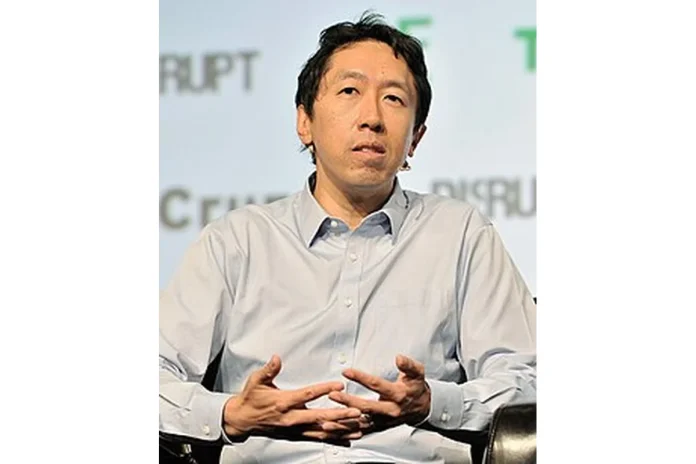
Andrew Ng Bio
Andrew Yan-Tak Ng, born on 18 April 1976 in London, England, is a British-American computer scientist, entrepreneur, and educator. He specializes in machine learning and artificial intelligence, and is widely recognized for co-founding and leading the Google Brain project and serving as chief scientist at Baidu. Ng is also the co-founder of Coursera and DeepLearning.AI, platforms that have introduced millions of learners to artificial intelligence concepts. He founded Landing AI and the AI Fund, and continues to advocate for accessible AI education and the responsible growth of the technology.
Throughout his career, Andrew Ng has bridged academic research and practical industry applications, helping to bring deep learning from laboratories into mainstream products. He served as a Stanford professor and as the director of the Stanford Artificial Intelligence Lab before expanding his influence through online education and venture capital. Ng remains an active voice in shaping public conversations about the future of work, open-source AI, and innovation policy.
Early Life and Background
Andrew Yan-Tak Ng was born in London in 1976 to parents who had immigrated from Hong Kong. His father, Ronald Paul Ng, is a hematologist and lecturer at UCL Medical School, while his mother, Tisa Ho, works as an arts administrator with the London Film Festival. He grew up alongside at least one brother, and the family later relocated to Hong Kong during his early childhood.
When he was six years old, Ng began learning the basics of programming from books, an early sign of his interest in computing. In 1984 the family moved to Singapore, where he attended Raffles Institution. During his high school years, he demonstrated exceptional mathematical ability and earned a Silver Medal at the International Mathematical Olympiad, an accomplishment that foreshadowed his future in technical research.
Path to Prominence in AI
Andrew Ng pursued his undergraduate studies at Carnegie Mellon University, earning a Bachelor of Science in 1997 with a triple major in computer science, statistics, and economics. While at Carnegie Mellon, he also conducted research at AT&T Bell Labs from 1996 to 1998, focusing on reinforcement learning, model selection, and feature selection. He then continued his education at the Massachusetts Institute of Technology, where he completed a Master of Science in Electrical Engineering and Computer Science in 1998.
Ng went on to earn a Doctor of Philosophy in Computer Science from the University of California, Berkeley, in 2002, writing his thesis on reinforcement learning under the supervision of Michael I. Jordan. That same year, he joined Stanford University as an assistant professor, where he built the influential Stanford Autonomous Helicopter project and led the STAIR robotics initiative that produced the widely used Robot Operating System.
Andrew Ng Career
Early Career (2002–2010)
Andrew Ng began his academic career at Stanford University in 2002 as an assistant professor, advancing to associate professor in 2009. His early research at Stanford focused on machine learning, robotics, and computer vision, and included co-authoring the influential paper that introduced latent Dirichlet allocation. He also developed the Stanford Autonomous Helicopter and led the STAIR project, both of which became milestones in the field of robotics.
In 2008 Ng launched the Stanford Engineering Everywhere program, which published Stanford courses online for free. His recorded machine learning lectures attracted millions of viewers and laid the groundwork for the modern massive open online course movement. This experience shaped his thinking about how technology could broaden access to high-quality education.
Google Brain and Coursera Breakthrough (2011–2013)
In 2011, Andrew Ng founded the Google Brain Deep Learning Project with colleagues including Jeff Dean, Greg Corrado, and Rajat Monga. The team trained a large neural network on sixteen thousand CPU cores that learned to recognize cats after watching only YouTube videos, an achievement that helped popularize deep learning. The project also contributed technology that improved speech recognition in Android devices.
Building on his success with online education, Ng co-founded Coursera with Daphne Koller in 2012, creating one of the world’s leading platforms for massive open online courses. Ng’s own machine learning course became one of the most popular classes on the platform, drawing more than one hundred thousand students in its first offering. His work during this period established him as a leading figure in both AI research and educational technology.
Baidu and Independent Ventures Era (2014–Present)
In 2014, Andrew Ng joined Baidu as chief scientist, leading the company’s Artificial Intelligence Group and growing it into a team of several thousand researchers. Under his leadership, Baidu developed technologies such as facial recognition systems, the Melody healthcare chatbot, and the DuerOS AI platform. Ng resigned from Baidu in March 2017 to focus on broader educational and entrepreneurial projects.
Following his departure from Baidu, Ng launched DeepLearning.AI in 2017 to offer online courses on artificial intelligence. He also founded Landing AI, a company that provides AI-powered software for businesses, and in 2018 established the AI Fund with one hundred seventy-five million dollars to back artificial intelligence startups. By 2023, an estimated eight million learners worldwide had taken his courses, reflecting his continued influence on AI education. In April 2024, Amazon appointed him to its board of directors.
Notable Events and Milestones
One of Andrew Ng’s signature achievements was the Google Brain project’s demonstration that a large neural network could learn to recognize concepts such as cats without explicit labels, a milestone that helped ignite the modern deep learning era. He also led the founding of Coursera, which grew into a global platform serving millions of learners and helped define the massive open online course model. His transition from academia to industry leadership at Baidu and back to independent entrepreneurship marked a rare trajectory that has influenced how AI research connects to real-world products.
Andrew Ng Awards and Recognition
Andrew Ng has received numerous awards recognizing his contributions to computer science, artificial intelligence, and education. His honors reflect both academic excellence and broader public influence across research, industry, and policy.
Major Honors and Recognition
Ng received the Sloan Research Fellowship in 2007 and was named to the MIT Technology Review TR35 list of top innovators under thirty-five in 2008. In 2009, the International Joint Conference on Artificial Intelligence presented him with the Computers and Thought Award for his early work in the field.
He was included in the Time 100 Most Influential People list in 2013, named to Fortune’s 40 Under 40 the same year, and recognized by Fast Company as one of the Most Creative People in Business in 2014. In 2015, the World Economic Forum selected him as a Young Global Leader. He was again named to the Time 100 Most Influential People list in 2023, this time in the AI category.
Andrew Ng Family
Family Background and Heritage
Andrew Ng was raised in a household shaped by academic and artistic pursuits. His father, Ronald Paul Ng, is a hematologist and lecturer at UCL Medical School, and his mother, Tisa Ho, has worked as an arts administrator with the London Film Festival. Both parents are immigrants from Hong Kong, a heritage that has informed Ng’s global perspective on education and technology.
Personal Life
Andrew Ng married Carol E. Reiley in 2014, and the couple has two children, a daughter born in 2019 and a son born in 2021. The MIT Technology Review once described them as an AI power couple because of their shared work in artificial intelligence and robotics. Ng currently resides in Los Altos Hills, California.