
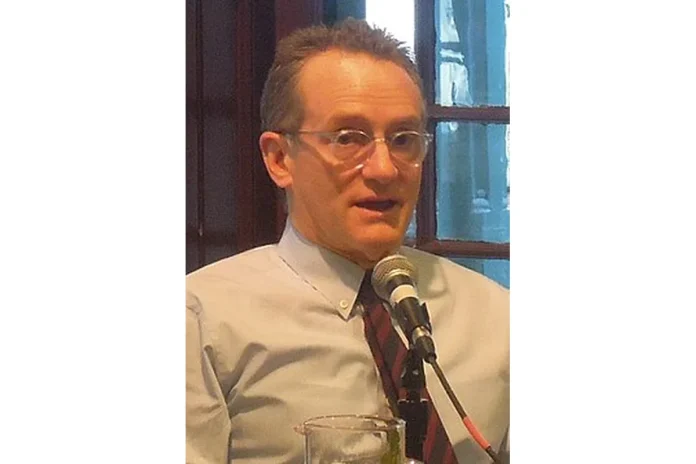
Howard Stanley Marks Bio
Howard Stanley Marks is an American investor and writer best known as the co-founder and co-chairman of Oaktree Capital Management, a leading investment firm specializing in distressed debt and alternative investments. His widely read investment memos articulate a risk-aware, cycle-focused approach to markets, and he has also published three books on investing. Born in 1946 in New York City, Marks has built a career spanning more than five decades, beginning in equity research in 1969 and culminating in his leadership of one of the most respected firms in global credit investing.
Under his leadership, Oaktree grew into the largest investor in distressed securities worldwide, raising what was at the time the largest distressed debt fund in history during the 2008 financial crisis. As of 2022, Forbes estimated his net worth at about US$2.2 billion, ranking him among the wealthiest figures in American finance. Warren Buffett has publicly praised Marks’s writing, calling his memos the first thing he opens and reads.
Early Life and Background
Howard Stanley Marks was born in 1946 and raised in Queens, New York. Although his family was ethnically Jewish, he was raised as a Christian Scientist. Growing up in the New York metropolitan area during the post-war decades, he developed an early interest in markets and finance, interests that would shape the trajectory of his later career.
Marks attended the Wharton School of the University of Pennsylvania for his undergraduate studies, where he majored in finance and graduated cum laude with a B.S. in Economics. He was a member of Pi Kappa Alpha fraternity during his time at Penn. In 1969, at the age of 23, he earned a Master of Business Administration in Accounting and Marketing from the University of Chicago Booth School of Business, where he received the George Hay Brown Prize. In 1975, he became a CFA charterholder, further formalizing his credentials in the investment profession.
Path to Oaktree Capital Management
Marks began his professional career in 1969 at Citicorp, where he worked for nearly a decade as an equity research analyst before becoming the company’s Director of Research. From 1978 to 1985, he served as a vice president and senior portfolio manager overseeing convertible and high-yield debt. Citibank allowed him to relocate to Los Angeles in 1980 to manage a high-yield fund, an experience that shaped his later focus on credit investing.
In 1985, Marks joined the TCW Group, where he led the groups responsible for investments in high-yield debt and convertible securities. In 1988, he and Bruce Karsh organized one of the first distressed debt funds operated by a major financial institution. By 1995, Marks, Karsh, and three other partners decided to launch their own firm. When TCW refused to let them continue managing the funds they had built, the five partners left and founded Oaktree Capital Management in Los Angeles.
Howard Stanley Marks Career
Early Career at Citicorp (1969–1985)
Howard Stanley Marks joined Citicorp in 1969 as an equity research analyst, beginning a sixteen-year tenure at the bank. His analytical work led to his appointment as Director of Research, a role in which he shaped the firm’s coverage of public companies. The early years at Citicorp gave him a foundation in fundamental analysis and corporate research.
From 1978 to 1985, Marks advanced to vice president and senior portfolio manager, overseeing portfolios of convertible and high-yield debt. It was during this period, in 1979, that he met Michael Milken at Century City and recognized the potential of Milken’s high-yield operation. His move to Los Angeles in 1980 to manage a high-yield fund marked his transition into credit-focused investing.
Building Distressed Debt at TCW (1985–1995)
At TCW Group, Marks built a track record in high-yield debt and convertible securities over a ten-year span. In 1988, he and Bruce Karsh launched one of the first distressed debt funds from a major financial institution, an early validation of the strategy that would later define Oaktree. The fund’s performance established Marks as one of the pioneers of institutional distressed investing.
By the mid-1990s, Marks and his team had built substantial businesses at TCW and were ready to operate independently. After TCW declined to let the partners continue managing the funds they had created, the group departed and founded Oaktree Capital Management in 1995. The firm was set up in Los Angeles, where Marks has remained based.
Leading Oaktree Capital Management (1995–Present)
After being founded in 1995, Oaktree grew rapidly, focusing on high-yield debt, distressed debt, and private equity. During the 2008 financial crisis, the firm raised $10.9 billion for distressed-asset purchases, the largest distressed debt fund in history at that time, a move that paid off richly for its investors. In April 2012, Oaktree became a public company via an initial public offering on the New York Stock Exchange, raising $380 million by selling 8.84 million shares at $43 each.
In March 2019, Brookfield Asset Management acquired 62% of Oaktree, while Marks and other Oaktree members retained 38% ownership and full control of the firm’s day-to-day operations. Funds led by Marks have produced long-term returns net of fees of 19% per year, drawing capital primarily from pension funds and sovereign wealth funds. His memos on investing strategy, posted publicly on the Oaktree website, have become required reading in the investment community.
Notable Events and Milestones
Among the defining moments of Howard Stanley Marks’s career, the 2008 distressed debt fund of $10.9 billion stands out as both a contrarian bet and a historic fundraising achievement. The 2012 initial public offering of Oaktree marked the firm’s emergence as a publicly traded alternative asset manager, and the 2019 partnership with Brookfield Asset Management created one of the largest alternative investment platforms in the world.
Howard Stanley Marks Career Wins
Howard Stanley Marks’s career is marked by consistent outperformance in credit and distressed investing, with funds under his leadership generating 19% net annual returns over the long term. His investment memos and three published books have influenced a generation of investors, including Warren Buffett, who has publicly highlighted Marks as a must-read voice in markets.
Career Highlights
Marks pioneered the institutional distressed debt model at TCW in 1988 and brought that expertise to Oaktree at its founding in 1995. The 2008 distressed debt fund of $10.9 billion is widely cited as the largest such fund ever raised at the time. His 2012 initial public offering on the New York Stock Exchange raised $380 million, and the 2019 Brookfield transaction valued Oaktree as a cornerstone of the global alternative investment industry.
Other Wins & Achievements
Marks received the George Hay Brown Prize at the University of Chicago Booth School of Business in 1969, an early academic distinction. He has also served as chair of the Trustees’ Investment Board at the University of Pennsylvania from 2000 to 2010, and currently chairs the Investment Committees of the Metropolitan Museum of Art and the Royal Drawing School in London.
Howard Stanley Marks Family
Family Background and Personal Lineage
Howard Stanley Marks was raised in Queens, New York, in an ethnically Jewish family that practiced Christian Science. His upbringing in mid-century New York shaped his early interest in markets and business, and his academic path led him to the Wharton School and the University of Chicago Booth School of Business, where he earned his undergraduate and graduate degrees.
Personal Life
Marks’s first marriage ended in divorce. He is married to Nancy Freeman Marks, with whom he has a son, Andrew, and a stepdaughter, Jane Hait, from Nancy’s first marriage. Andrew Marks is General Partner of the venture capital firm TQ Ventures, and Jane Hait is Founder and chair of the non-profit Center for Art, Research and Alliances. The couple resides in Beverly Hills, California, and has been an active philanthropic presence at the University of Pennsylvania, UCLA, and other institutions.