
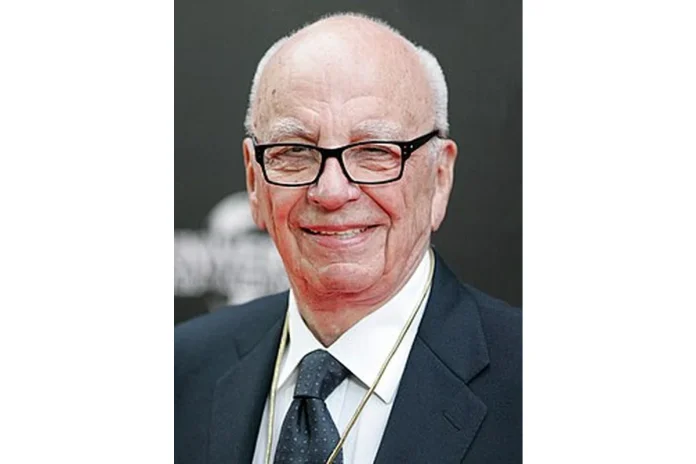
Rupert Murdoch Bio
Keith Rupert Murdoch, born on 11 March 1931, is an Australian-born American former business magnate, investor, and media proprietor who built one of the largest media empires of the modern era. Through News Corporation and its successor companies, he has owned newspapers, book publishers, and television networks across Australia, the United Kingdom, and the United States, including The Sun, The Times, The Wall Street Journal, HarperCollins, and Fox News. He began running his family’s small Adelaide newspaper in 1952 after his father’s death and steadily expanded internationally from the 1960s onward, reshaping tabloid and broadcast journalism. His influence on politics and public opinion across three continents has been widely discussed, and in September 2023 he formally stepped down as chairman of Fox Corporation and News Corp, handing leadership to his son Lachlan Murdoch.
Early Life and Background
Keith Rupert Murdoch was born on 11 March 1931 in Melbourne, Victoria, Australia, the second of four children of Sir Keith Arthur Murdoch and Dame Elisabeth Joy Greene. His father was a war correspondent who later became a regional newspaper magnate, owning two Adelaide newspapers and a radio station and serving as chairman of the Herald and Weekly Times publishing group. His paternal grandfather, Patrick John Murdoch, was a Scottish-born Presbyterian minister who had emigrated to Australia in 1884.
Murdoch attended Geelong Grammar School, where he co-edited the school journal The Corian and edited the student publication If Revived. He went on to study philosophy, politics, and economics at Worcester College, Oxford, where he became known for keeping a bust of Lenin in his rooms. His political leanings at Oxford were left-leaning, earning him the nickname “Red Rupert,” and he was active in the Oxford University Labour Party, even standing for secretary of the Labour Club.
While his father was alive, Murdoch worked part-time at the Melbourne Herald and was groomed to take over the family business. After graduating from Oxford and the death of his father from cancer in 1952, he returned to Australia to manage the family’s remaining newspaper, The News, based in Adelaide.
Path to Media Leadership
After taking control of The News at the age of 21, Murdoch turned the struggling Adelaide paper into a commercial success and began acquiring suburban and provincial newspapers across Australia. He bought the Sunday Times in Perth in 1956 and the Sydney afternoon tabloid The Daily Mirror in 1960, building a foundation for national influence. In 1964, he launched The Australian, the country’s first national daily newspaper, and later acquired The Daily Telegraph in Sydney in 1972.
Murdoch’s expansion outside Australia began in 1964, when he successfully outbid rivals for control of the Wellington daily The Dominion in New Zealand. That same year, he entered the British market with the purchase of the News of the World, and in 1969 acquired the struggling daily The Sun. The transformation of The Sun into a mass-market tabloid established his reputation for popular journalism.
In 1974, Murdoch relocated to New York City to pursue the American market, founding the supermarket tabloid Star and purchasing the New York Post in 1976. He became a naturalized United States citizen in 1985, a step required by law to own American television stations, and gave up his Australian citizenship at the same time. This move set the stage for the most ambitious phase of his media empire.
Rupert Murdoch Career
Early Career (1952–1968)
Murdoch’s early career was defined by his inheritance of The News in Adelaide and his rapid accumulation of newspapers in Australia and New Zealand. He developed a formula of bold headlines, sports coverage, and scandal-driven stories that later became his signature style, and The Economist later described him as having “invented the modern tabloid.”
His acquisition strategy during this period laid the groundwork for cross-continental growth. By the end of the 1960s, he had a stable of profitable regional titles, a newly launched national newspaper, and his first foothold in the United Kingdom. These years transformed him from a small-city publisher into an international media figure.
United Kingdom Breakthrough (1969–1985)
Murdoch’s British expansion began in earnest in 1968 with the News of the World and accelerated in 1969 with the purchase of The Sun, which he relaunched as a tabloid. By 1997, The Sun was attracting more than 10 million daily readers, making it the most widely read newspaper in the country. In 1981, Murdoch acquired The Times and The Sunday Times, gaining his first British broadsheet titles and immediate influence over national political coverage.
His UK operations were not without controversy. In 1986, Murdoch introduced electronic production processes to his British newspapers, leading to the dismissal of thousands of print workers and the long and often violent Wapping dispute. The conflict damaged his standing with British labour groups but ultimately modernized his printing operations. By 1990, he had merged his Sky Television with British Satellite Broadcasting to create BSkyB, which became a dominant pay-TV platform.
Politically, Murdoch built a close alliance with Conservative Prime Minister Margaret Thatcher in the 1980s, and The Sun was credited with helping John Major win an unexpected victory in the 1992 general election. He later shifted support to the Labour Party under Tony Blair, then to the Conservatives under David Cameron, and endorsed Vote Leave during the 2016 Brexit referendum.
American Era (1985–Present)
Murdoch’s move to the United States in 1985 unlocked a new phase of expansion. He acquired Twentieth Century Fox and a group of Metromedia television stations, founding the Fox Broadcasting Company in 1986. By 1996, he had launched the Fox News Channel, which grew into one of the most-watched cable news networks in the country. His film studios produced global hits such as Titanic and Avatar, while his publishing acquisitions included HarperCollins in 1989 and Dow Jones and Company, the parent of The Wall Street Journal, in 2007.
In 2013, News Corporation was split into two companies: 21st Century Fox, housing the entertainment businesses, and a new News Corp focused on publishing. Murdoch served as chairman and CEO of 21st Century Fox until 2015, when he left the CEO role but remained executive co-chairman. In 2019, 21st Century Fox was sold to The Walt Disney Company, and the remaining broadcasting assets were spun off as Fox Corporation, with Murdoch as chairman.
Murdoch announced his retirement in September 2023, formally stepping down as chairman of both Fox Corporation and News Corp and handing control to his son Lachlan Murdoch. As of 2025, he remains a board member of both companies and a major shareholder, while no longer involved in day-to-day management.
Notable Events and Milestones
One of the defining events of Murdoch’s later career was the 2011 News of the World phone hacking scandal, which led to the closure of the 168-year-old tabloid, the resignation of senior executives, and a British parliamentary finding that he was “not a fit person” to lead a major international company. In 2023, during the Dominion Voting Systems defamation case, Murdoch acknowledged that some Fox News commentators had endorsed false claims of election fraud; Fox settled the case for $787.5 million.
Rupert Murdoch Career Achievements
Murdoch’s career was marked by the steady construction of a global media empire spanning print, broadcast, film, and digital assets, and by his repeated ability to influence political outcomes in the United Kingdom, the United States, and Australia.
Career Highlights
He served as chairman and CEO of News Corporation from 1980 to 2013, then as executive chairman of the new News Corp from 2013 to 2023. He was also chairman and CEO of 21st Century Fox from 2013 to 2015, executive co-chairman from 2015 to 2019, and acting CEO of Fox News from 2016 to 2018 following the resignation of Roger Ailes. His stewardship of these companies coincided with the global spread of his titles and the growth of Fox News into a major force in American cable television.
Other Awards and Recognitions
Murdoch was appointed Companion of the Order of Australia in 1984 for services to publishing. He was made a Knight Commander of the Order of Saint Gregory the Great, a papal honour, in 1998. In 2010, the Anti-Defamation League presented him with its International Leadership Award for his support of Israel and his public stance against antisemitism.
Rupert Murdoch Family
Family Background and Media Lineage
Murdoch comes from a family with deep roots in Australian media. His father, Sir Keith Murdoch, was a respected journalist and newspaper owner who controlled a portfolio of regional titles and served as chairman of the Herald and Weekly Times group. His mother, Dame Elisabeth Greene, was a noted philanthropist who later established the Murdoch Children’s Research Institute. The Murdoch family has been described as one of the most influential media dynasties in the world.
Personal Life
Murdoch has been married five times. His first wife was Patricia Booker, whom he married in 1956 and divorced in 1967, with whom he has a daughter, Prudence MacLeod, born in 1958. In 1967, he married Anna Torv, a Scottish-born journalist, and they had three children: Elisabeth, born in 1968; Lachlan, born in 1971; and James, born in 1972. The couple divorced in 1999 after a settlement reportedly worth US$1.2 billion. He married Wendi Deng in 1999, with whom he has two daughters, Grace, born in 2001, and Chloe, born in 2003; they divorced in 2013. In 2016, he married former model Jerry Hall, with their divorce finalized in 2022. In March 2024, Murdoch became engaged to retired Russian molecular biologist Elena Zhukova, and they were married in June 2024 at his California estate. He is the father of six children and grandfather to thirteen grandchildren.