
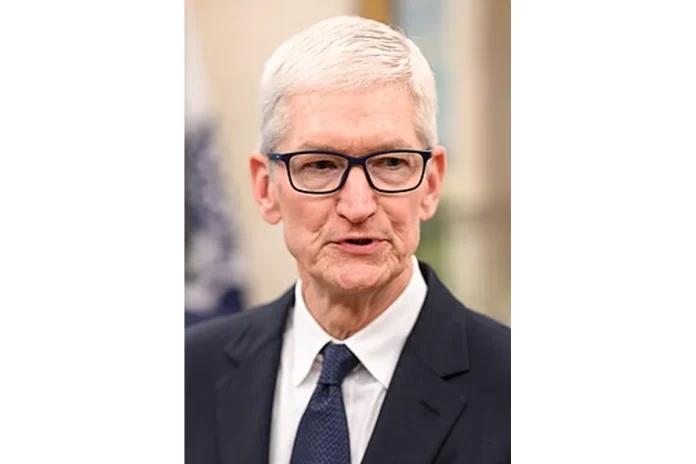
Tim Cook Bio
Timothy Donald Cook, known professionally as Tim Cook, is an American business executive and technology leader who has served as the chief executive officer (CEO) of Apple since August 24, 2011. Before becoming CEO, he spent more than a decade at Apple as a senior operations executive and later as chief operating officer, working closely with Apple co-founder Steve Jobs. Under his leadership, Apple grew into one of the most valuable companies in the world, and Cook became a public voice on issues such as user privacy, environmental protection, and LGBTQ rights. As of December 2025, his net worth was estimated at US$2.6 billion.
Cook is widely recognized for his disciplined approach to operations, his focus on long-term strategy, and his willingness to engage on social and political questions that affect the technology industry. Beyond Apple, he serves on the board of directors of Nike and on the board of trustees of Duke University, his alma mater. He is also the first openly gay chief executive of a Fortune 500 company.
Early Life and Background
Tim Cook was born on November 1, 1960, in Mobile, Alabama, in the southern United States. He was baptized in a Baptist church and grew up in the nearby small city of Robertsdale. His father, Donald Cook, worked in a shipyard, and his mother, Geraldine Cook, was employed at a local pharmacy. The values of hard work and routine discipline that shaped his upbringing in coastal Alabama continue to influence the way he runs Apple.
Cook attended Robertsdale High School, a public school in Alabama, and graduated as the salutatorian of his class in 1978. His strong performance in mathematics and science led him to study industrial engineering at Auburn University, where he earned a Bachelor of Science degree in 1982. Later, while working full time, he returned to school and completed a Master of Business Administration at Duke University in 1988, finishing as a Fuqua Scholar.
Path to Chief Executive Officer
After college, Cook began his professional career in 1982 at IBM, where he spent twelve years in the personal computer division and ultimately became director of North American fulfillment. He then moved to Intelligent Electronics, where he served as chief operating officer of the computer reseller division. In 1997, he accepted a position as vice president for corporate materials at Compaq, a major personal computer maker of the 1990s.
Cook’s career took a decisive turn in early 1998, when Apple co-founder Steve Jobs personally recruited him to join the company. Despite warnings from colleagues who favored the safer option of staying at Compaq, Cook trusted his intuition and accepted the offer. He joined Apple in March 1998 as senior vice president for worldwide operations, and his reputation for efficiency, cost control, and supply-chain discipline quickly made him one of Jobs’ most trusted deputies.
Tim Cook Career
Early Career at Apple (1998–2004)
When Cook arrived at Apple, the company was struggling financially. He shut down factories and warehouses, shifted production to contract manufacturers, and reduced Apple’s inventory from months to days. His group also invested in long-term supply deals, including advance purchases of flash memory that later powered products such as the iPod Nano, the iPhone, and the iPad.
These early operational decisions are widely credited with helping Apple stabilize its finances and prepare for a new generation of consumer products. Cook was promoted to lead worldwide sales and operations in January 2007, and he repeatedly stepped in as acting chief executive when Jobs took medical leave.
Operations Leadership and Acting CEO Role (2005–2011)
Cook was named chief operating officer of Apple in 2005, a role that gave him day-to-day control of the company’s global operations. In 2009, while Jobs was on his first medical leave, Cook served as acting chief executive and led the company through one of the most important product launches in Apple’s history, the iPhone. He took on similar duties again in early 2011, when Jobs stepped away for treatment.
During this period, Cook worked in close partnership with Jobs, helping Apple grow from a company with less than $6 billion in annual revenue in 1998 to roughly $100 billion by 2011. Their collaboration rebuilt Apple from near-bankruptcy into a global technology leader and prepared Cook to take over the company when the time came.
Apple CEO Era (2011–Present)
Following Steve Jobs’ resignation, Tim Cook was officially appointed chief executive officer of Apple on August 24, 2011. Six weeks later, on October 5, 2011, Jobs died from complications of pancreatic cancer. Cook took over a company at the height of its influence and set out to put his own stamp on its culture, replacing Jobs’ micromanagement style with a more collaborative and team-based approach.
Between 2011 and 2020, Cook roughly doubled Apple’s annual revenue and profit, and the company’s market value grew from about $348 billion to $1.9 trillion. By 2025, Apple was the second largest technology company in the world by revenue, with about US$416 billion in sales. Cook has guided Apple through the launch of new services, a stronger focus on environmental sustainability, and major investments in U.S. manufacturing.
In October 2012, Cook reshuffled his executive team after the disappointing launch of Apple Maps, eventually redistributing responsibilities among senior leaders including Jony Ive, Craig Federighi, Eddy Cue, and Bob Mansfield. In August 2021, on the tenth anniversary of his appointment as CEO, Cook received an approximate $750 million payout from selling more than five million shares of Apple stock. In 2025, he met with U.S. House members to oppose proposed legislation that could require Apple to collect sensitive data on children.
Notable Events and Milestones
One of the defining moments of Cook’s career came in 2014, when he publicly came out as gay in a Bloomberg Business editorial, becoming the first openly gay chief executive of a Fortune 500 company. That same year, the Alabama Academy of Honor inducted him as one of the state’s most distinguished citizens. In 2012 and again in 2021, Time magazine named Cook to its Time 100 list of the most influential people in the world.
Tim Cook Career Wins
Over more than two decades at Apple, Tim Cook has overseen some of the most important operational, financial, and strategic achievements in the company’s history. His steady leadership has helped Apple grow into one of the largest and most profitable companies on the planet.
Career Highlights
Cook’s first major win at Apple was the dramatic restructuring of the company’s supply chain beginning in 1998, which cut inventory from months to days and helped restore the company to financial health. His biggest milestone came on August 24, 2011, when he was named CEO of Apple following Steve Jobs’ resignation. His most recent notable win, in 2025, was announcing an additional $100 billion in U.S. investment, bringing Apple’s total U.S. commitment to $600 billion.
Other Wins and Achievements
Beyond Apple, Cook has built a strong record of public service and philanthropy. He has served on the board of Nike since 2005, joined the board of trustees of Duke University in 2015, and donated his fortune to charitable causes, beginning with a public pledge in March 2015. He was inducted into the Alabama Academy of Honor in 2014, recognized on the Time 100 list in 2012 and 2021, and received honorary recognition from Auburn University and Duke University, where he delivered commencement addresses in 2010 and 2018.
Tim Cook Family
Family Background and Lineage
Tim Cook was raised in a working-class family in southern Alabama. His father, Donald Cook, was a shipyard worker, and his mother, Geraldine Cook, worked at a local pharmacy. Cook has often spoken about how his parents’ work ethic and his modest upbringing shaped his values and his disciplined leadership style at Apple.
Personal Life
Cook is known for being private and solitary. He is a fitness enthusiast who enjoys hiking, cycling, and going to the gym, and he is often described as keeping a low public profile. In October 2014, he publicly came out as gay in an editorial for Bloomberg Business, becoming the first openly gay chief executive of a Fortune 500 company. He has said that he values a basic level of privacy while still using his position to advocate for LGBTQ rights, environmental protection, and user privacy.