
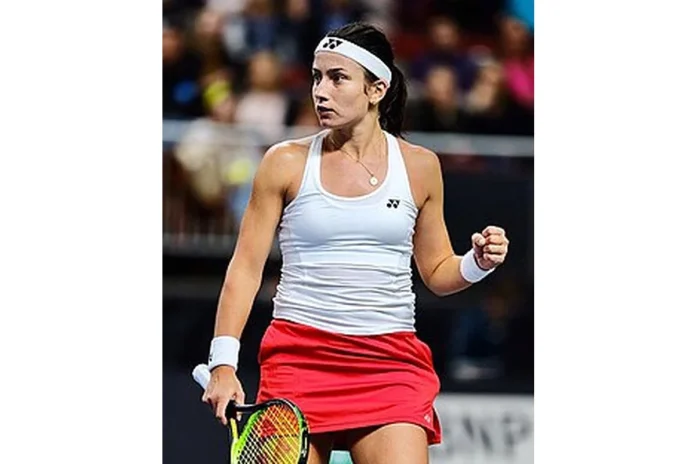
Anastasija Sevastova
Anastasija Sevastova (born 13 April 1990) is a Latvian professional tennis player. She achieved a career-high singles ranking of world No. 11 in October 2018 after reaching a Premier Mandatory final at the China Open. Sevastova has won four singles titles on the WTA Tour, as well as 13 singles and four doubles titles on the ITF Circuit, and is best known for her run to the 2018 US Open semifinals.
Anastasija Sevastova Bio
Anastasija Sevastova is a Latvian professional tennis player born on 13 April 1990 in Liepāja. She turned professional in 2006 and built her reputation as a tactical, all-court player who relies on variety, spin, and court craft rather than overpowering power. Throughout her career, Sevastova has combined promising results with extended breaks, including a first retirement in 2013, a return in 2015, and a maternity-related comeback that began in 2024.
Early Life and Background
Sevastova was born in Liepāja, Latvia, and was raised primarily by her mother, Diāna Golovanova, an English teacher. Her grandmother, keen to channel her granddaughter’s energy into a sport, introduced her to tennis at age six. The family lived near a tennis club in Liepāja, which made the game a natural choice over basketball or soccer.
Because Liepāja had no dedicated indoor tennis facilities, Sevastova spent her winters training on the varnished wooden floors of a school gymnasium, the same school where her mother taught and where compatriot Jeļena Ostapenko’s mother once studied. The fast wood surface and unpredictable bounces shaped her early game, and she has described those group lessons, with one coach and around ten children, as costing only about ten euros per month.
By her mid-teens, Sevastova needed to leave Liepāja to progress. At 14, she followed the path of Ernests Gulbis and boarded at Niki Pilić’s tennis academy in Munich, the same academy where a young Novak Djokovic was also training, while returning to Latvia to complete her schooling. At the same age, she won the Latvian under-18 championships.
Path to Tennis
Sevastova’s entry into competitive tennis was gradual rather than sudden. Her ITF Women’s Circuit debut came in April 2006, when she was just under 16, and within months she reached her first ITF final at a $10k event in Garching and won her first title in Bad Saulgau. By the end of 2009, she had entered the WTA Tour’s top 100, made her Grand Slam debut at the French Open, and recorded her first major match-win at the US Open over Tamarine Tanasugarn.
During her later retirement years, Sevastova studied leisure management in Austria, reflecting on a period in which injuries and illness had made competition feel increasingly difficult. By the end of 2014, with her body feeling better, she chose to give professional tennis another chance, a decision that launched one of the WTA Tour’s most notable comeback stories.
Anastasija Sevastova Career
Early Career (2006–2013)
Sevastova broke through on the WTA Tour in 2010, defeating world No. 9 Jelena Janković at the Monterrey Open and reaching the semifinals, where she fell to Anastasia Pavlyuchenkova. The following week, she reached the third round of the Indian Wells Open with a win over Ana Ivanovic, and in May she captured her first WTA singles title at the Estoril Open, beating Arantxa Parra Santonja in straight sets. A run to the fourth round of the 2011 Australian Open, where she pushed world No. 1 Caroline Wozniacki, lifted her into the top 40.
Form and fitness problems followed, and Sevastova spent much of 2012 back on the ITF Circuit. Cumulative illness and injuries led her to announce her retirement from the tour in May 2013, closing the first chapter of her professional career.
Successful Return and US Open Breakthrough (2015–2017)
Sevastova returned to professional tennis in January 2015, winning a $10k ITF title in Sharm El Sheikh and steadily rebuilding her ranking through the WTA and ITF levels. Her 2016 season produced her signature run to date at that point, reaching the US Open quarterfinals with upset wins over Garbiñe Muguruza, Kateryna Bondarenko, and Johanna Konta before falling to Caroline Wozniacki.
In 2017, she reached the Dubai Championships semifinals, recorded her first Premier Mandatory semifinal at the Madrid Open with a win over world No. 3 Karolína Plíšková, and claimed her first WTA title since 2010 at the Mallorca Open, defeating Julia Görges in three sets. She added a second consecutive US Open quarterfinal, beating Maria Sharapova in the fourth round before losing to eventual champion Sloane Stephens, and finished the year ranked No. 17.
Peak Years (2018)
The 2018 season was the high-water mark of Sevastova’s career. After a semifinal run at the Brisbane International and early exits at the Australian Open and Qatar Ladies Open, she reached the semifinals at the Charleston Open and the final of the Mallorca Open as defending champion, finishing as runner-up to Tatjana Maria. On clay, she won her third career title at the Bucharest Open with a straight-sets win over Petra Martić.
At the US Open, Sevastova defeated Donna Vekić, Claire Liu, Ekaterina Makarova, and seventh seed Elina Svitolina to reach her third consecutive quarterfinal at the tournament, then ousted defending champion Sloane Stephens in straight sets to reach her first major semifinal. There, she lost to 23-time Grand Slam champion Serena Williams. She closed the year by reaching the final of the China Open, where she fell to Caroline Wozniacki but secured a career-high ranking of world No. 11.
Variable Results and Comebacks (2019–2025)
From 2019 onward, Sevastova’s results fluctuated as she battled injuries. She made her first second week at the Australian Open since 2011, advanced to the French Open’s second week for the first time, and won the inaugural Baltic Open in Jūrmala, a title she has called her most cherished. The COVID-19 pandemic disrupted the 2020 season, and her ranking slipped outside the top 50 for the first time since August 2016.
In February 2022, Sevastova announced an indefinite break from tennis. She returned from maternity leave at the 2024 Transylvania Open, recording her first win since January 2022, and later retired from a match against Anna Karolína Schmiedlová at the ATX Open in March 2024 due to injury. Following a 14-month layoff caused by an ACL injury, she came back at the 2025 Madrid Open, reaching the third round with wins over Anastasia Pavlyuchenkova and 23rd seed Jeļena Ostapenko. She also reached the quarterfinals of the 2025 Morocco Open as a wildcard and advanced to the fourth round of the 2025 Canadian Open, defeating Ajla Tomljanović, 25th seed Magda Linette, and third seed Jessica Pegula before losing to Naomi Osaka.
Driving Style and Strengths
Sevastova is widely described as a tactical, all-round player who wins points with variety rather than pace. She is aggressive on the baseline, owns consistent and accurate groundstrokes on both wings, and can serve at speeds of up to 110 mph. She uses her drop shots and slices effectively, generates heavy spin on her forehand and backhand, and has singled out her backhand as her favorite shot. She has cited hardcourt and clay as her preferred surfaces.
Notable Events and Milestones
Sevastova’s most celebrated run remains the 2018 US Open, where she became the first Latvian woman to reach a Grand Slam semifinal, defeating defending champion Sloane Stephens before falling to Serena Williams. Her career-high ranking of world No. 11, reached in October 2018, is the highest ever by a Latvian woman, and her 2017 Mallorca Open title marked her first WTA trophy in seven years.
Anastasija Sevastova Career Wins
Sevastova has won four singles titles on the WTA Tour, supplemented by 13 singles and four doubles titles on the ITF Circuit. Her victories span clay, hardcourt, and grass, and her biggest breakthroughs have come in comeback seasons that bookended an extended first retirement.
WTA Tour Highlights
Her first WTA title came at the 2010 Estoril Open on clay, and her next arrived seven years later at the 2017 Mallorca Open on grass, where she defeated Julia Görges in three sets. In 2018, she added the Bucharest Open, beating Petra Martić in straight sets, and reached the China Open final, where she lost to Caroline Wozniacki.
Other Wins and Performances
On the ITF Circuit, Sevastova collected 13 singles and four doubles titles, including early wins at $10k events in Bad Saulgau and Sharm El Sheikh. She also won the inaugural Baltic Open in Jūrmala in 2019, a milestone title on Latvian soil.
| Series | Wins | Top Tens | Poles |
|---|---|---|---|
| WTA Tour (singles) | 4 | 0 | 0 |
| ITF Circuit (singles) | 13 | 0 | 0 |
| ITF Circuit (doubles) | 4 | 0 | 0 |
Anastasija Sevastova Family
Family Background and Tennis Lineage
Sevastova was raised by her mother, Diāna Golovanova, an English teacher who played a central role in her early tennis journey, including coaching her through the cold-weather months on the wooden floors of her own school. Her grandmother was the family member who first introduced her to tennis, and her mother has spoken publicly about how the proximity of a local tennis club to their Liepāja home made the sport a natural fit.
Personal Life
Besides Latvian, Sevastova speaks English, Russian, and German. During her first retirement, she studied leisure management in Austria before returning to competition in January 2015. She announced a second break from the tour in February 2022, and returned in February 2024 from maternity leave, and is sponsored by Yonex for her racquets and clothing, using the Yonex Ezone DR 98 racquet.
2025 Season Performance
Sevastova’s 2025 campaign has been defined by comebacks. She returned to the WTA Tour at the Madrid Open using her protected ranking, defeating Anastasia Pavlyuchenkova and 23rd seed Jeļena Ostapenko to reach the third round, where she was double-bageled by 13th seed Diana Shnaider. The run marked her first significant results since returning from a 14-month layoff caused by an ACL injury.
Using wildcards and protected rankings, she then reached the quarterfinals of the 2025 Morocco Open, beating Yasmine Kabbaj and Zeynep Sönmez before losing to Jaqueline Cristian. At the 2025 Canadian Open, she produced one of the most striking results of her year, defeating Ajla Tomljanović, 25th seed Magda Linette, and third seed Jessica Pegula to reach the fourth round, where her run was ended by Naomi Osaka.
Across 2025, Sevastova has balanced moments of high-level tennis with the realities of rebuilding match fitness, and her deepest results have come on the hardcourts of North America. Her protected ranking and the goodwill of tournament wildcards have allowed her to enter major events, and her wins over top-30 opponents have shown that her tactical game remains effective when her body cooperates.