
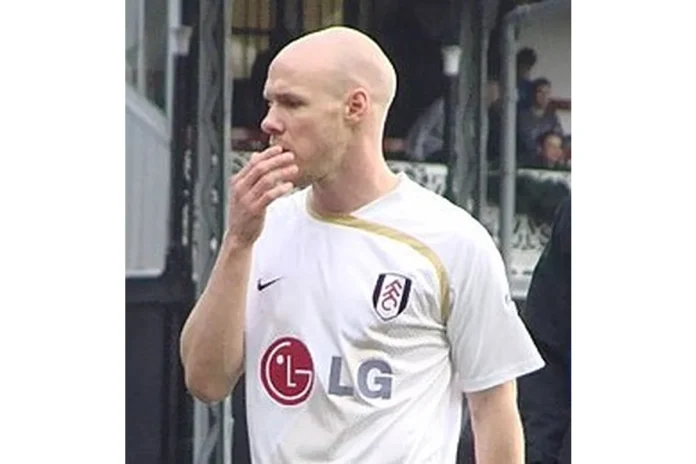
Andrew Johnson Bio
Andrew Johnson, born on 10 February 1981 in Bedford, England, is a retired English professional footballer who played as a striker. Across a seventeen-year senior career that began in 1998 and ended in 2015, he became best known for his prolific goal-scoring record at Crystal Palace, where his finishing was central to the club’s promotion to the Premier League. He later represented several top-flight English sides and earned eight caps for the England national team before moving into business and football administration.
Standing 5 ft 7 in tall, Johnson built his reputation on sharp movement in the box, a calm finishing touch, and consistency across multiple divisions. After retiring from playing in 2015, he returned to Crystal Palace as an ambassador and later took on a director of football role at a non-league club, continuing his involvement in the game beyond the touchline.
Early Life and Background
Andrew Johnson was born and raised in Bedford, Bedfordshire, in the south of England. He grew up in a family environment that supported his early interest in football, and he joined the youth setup at Luton Town, where he developed as a young forward. His time in Luton Town’s Academy provided the foundation for his transition into professional football, with regular coaching and competitive matches shaping his understanding of the striker’s role.
His progress through the academy ranks drew attention from bigger clubs, and in 1998 he made the move to Birmingham City to begin his senior career. While specific details of his schooling are not widely documented, his formative years in Bedford and the Luton youth system laid the groundwork for the disciplined, goal-focused approach he would later bring to the professional game.
Path to Professional Football
Johnson signed his first professional contract with Birmingham City on 11 March 1998, marking the official start of his climb through the English football pyramid. He quickly featured for the senior side and went on to make more than 100 appearances for the club, gaining valuable experience in both the First Division and the Premier League. One notable moment came in the 2001 League Cup Final, where he missed a penalty in the shoot-out defeat to Liverpool, an experience that highlighted the pressures of top-level football.
Following Birmingham’s promotion to the Premier League, Johnson was sold to Crystal Palace in 2002 as part of a transfer deal that also brought Clinton Morrison to St Andrew’s. That transition set the stage for the most productive chapter of his career, as he stepped into a Palace side aiming to return to the top flight.
Andrew Johnson Career
Early Career at Birmingham City (1998–2002)
Johnson’s four years at Birmingham City gave him a platform to prove himself as a reliable goalscorer in English football. Operating primarily as a central striker, he adapted to the demands of senior football and developed the consistency that would define his later career. Over 100 appearances for the Blues, he established a reputation for hard running, intelligent movement, and a steady eye for goal.
The 2001 League Cup Final appearance against Liverpool was a defining early memory, even though it ended in disappointment. His performances during this period convinced Crystal Palace to make their move, and in 2002 he headed to Selhurst Park with a growing reputation as one of the Championship’s most dangerous forwards.
Crystal Palace Breakthrough (2002–2006)
Johnson made an explosive start at Crystal Palace, scoring a hat-trick in a 5–0 win over rivals Brighton and Hove Albion on 26 October 2002, and another hat-trick in the following match against Walsall. After a quieter spell, the appointment of Iain Dowie as manager transformed his output. He finished the 2003–04 First Division season as the division’s top scorer with 32 goals, driving Palace into the play-offs and ultimately into the Premier League after a 1–0 final win over West Ham United.
Despite Palace’s relegation the following season, Johnson was the highest-scoring English player in the Premier League with 21 goals and the second-highest overall. His form attracted the attention of England manager Sven-Göran Eriksson and led to international recognition. He was also voted into Palace’s Centenary XI in 2005, the only player at the club at the time to be selected, and he continued to deliver crucial goals, including 15 in the Championship in 2005–06.
Everton Era (2006–2008)
After a competitive transfer saga involving Wigan Athletic and Bolton Wanderers, Johnson completed a move to Everton in May 2006, signing a five-year contract at Goodison Park. The transfer set new club records for both Everton and Palace in terms of fee. He scored on his debut against Watford on 19 August 2006, and went on to end the 2006–07 Premier League season as Everton’s top scorer with 11 league goals, plus one in the FA Cup.
His time at Everton was not without controversy, as he faced accusations of simulation from figures including José Mourinho and Neil Warnock. Everton manager David Moyes responded by contacting the Professional Game Match Officials Board on his behalf. Johnson added a new five-year contract in November 2007 and contributed important goals in the UEFA Cup, including a brace in a 6–1 win over SK Brann and a strike against Fiorentina.
Fulham Era (2008–2012)
In August 2008, Johnson signed a four-year deal with Fulham for a fee reported to be around £10.5 million. He debuted in a 2–1 win over Bolton Wanderers and scored his first Fulham goals against Wigan Athletic on 29 October 2008. His 10 goals in 2008–09 helped Fulham finish seventh and qualify for the UEFA Europa League.
Injuries disrupted his next two seasons, but he returned strongly in 2011–12, scoring a Premier League hat-trick in a 6–0 win over Queens Park Rangers and netting twice in a 4–1 Europa League victory over Wisła Kraków. His contract expired in June 2012 and he was released after four years at Craven Cottage.
Queens Park Rangers and Return to Crystal Palace (2012–2015)
Johnson joined Queens Park Rangers on a two-year deal in June 2012, but a cruciate ligament injury ruled him out for most of that campaign. He returned to score the winning goal on the opening day of the 2013–14 Championship season against Sheffield Wednesday. After being released in July 2014, he returned to Crystal Palace on a short-term contract in September 2014, making one League Cup appearance before departing in January 2015.
Notable Events and Milestones
Johnson’s career-defining moments include his 32-goal 2003–04 First Division season, his place in Palace’s Centenary XI, and his record-breaking transfer to Everton. He also became a central figure in a high-profile dispute with José Mourinho over accusations of diving, prompting Everton to take the unusual step of engaging the Professional Game Match Officials Board.
Andrew Johnson International Career
Johnson earned eight caps for England between 2005 and 2007, having previously represented the country at Under-20 level at the 1999 FIFA World Youth Championship. His senior debut came against the Netherlands on 9 February 2005, after he publicly considered a switch to Poland through his grandfather’s heritage. He went on to feature in Euro 2008 qualifiers and appeared in friendlies under both Sven-Göran Eriksson and Steve McClaren.
Andrew Johnson Family and Personal Life
Public details about Andrew Johnson’s family life are limited. He was born in Bedford and has kept much of his personal life away from the public eye throughout his career. After retiring from professional football in 2015, he returned to Crystal Palace as an ambassador in March 2016, taking on coaching and community duties.
2025 Season Performance
Andrew Johnson is no longer an active player, so the 2025 calendar year is focused on his off-field roles rather than competitive action. In February 2024 he was appointed director of football at AFC Croydon Athletic, a non-league club, where he is expected to continue influencing recruitment, player development, and operational structure. His role at Crystal Palace as an ambassador also remains active, combining community outreach with academy support.
Looking ahead through 2025, Johnson is likely to balance his work at AFC Croydon Athletic with ongoing ambassadorial duties at Crystal Palace. His experience as a former Premier League striker and England international gives him a strong platform to mentor younger players and contribute to football administration at multiple levels.