
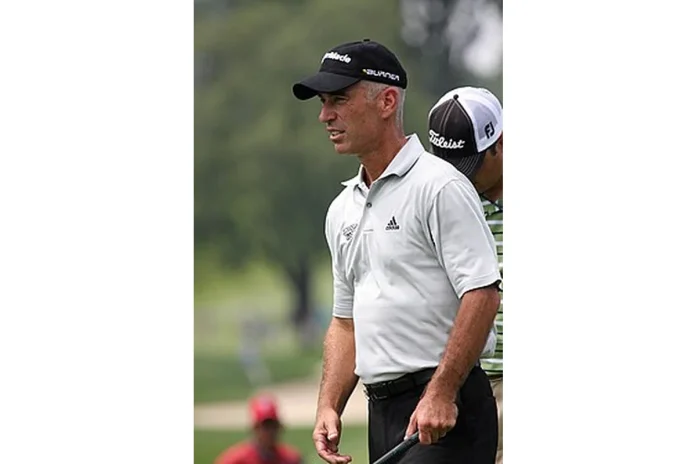
Corey Pavin Bio
Corey Allen Pavin (born November 16, 1959) is an American professional golfer whose career on the PGA Tour has spanned more than four decades. A native of Oxnard, California, Pavin became one of the shortest and most resilient players in professional golf, known for his accuracy off the tee and a fiery competitive spirit. He is best remembered for winning the 1995 U.S. Open at Shinnecock Hills Golf Club, the defining achievement of a career that also included 15 PGA Tour victories and a stint as U.S. Ryder Cup captain.
Standing 5 feet 9 inches tall and playing at a compact 70 kilograms during his competitive prime, Pavin carved out a place among the elite of his era through precision and mental toughness. He was named PGA Tour Rookie of the Year in 1984, topped the tour’s money list in 1991, and was honored as PGA Player of the Year the same season. Pavin later transitioned to the PGA Tour Champions, where he captured the Allianz Championship in 2012.
Early Life and Background
Corey Allen Pavin was born on November 16, 1959, in Oxnard, California, the son of Barbara and Jack Pavin. He grew up in the coastal Southern California city and attended Oxnard High School, where he developed the competitive foundation that would later support a long professional career. The Oxnard upbringing, combined with access to year-round playing conditions, helped him refine the disciplined short game that would become his trademark.
Pavin went on to attend the University of California, Los Angeles (UCLA), one of the premier collegiate golf programs in the country. While at UCLA he continued to sharpen his game and represented the United States in amateur competition. In 1981, he won two gold medals at the Maccabiah Games, often referred to as the Jewish Olympics, held in Israel — a remarkable achievement that signaled his readiness for the professional ranks.
Path to Professional Golf
After his amateur success, Pavin made the decision to turn professional in 1982. His first attempt at the PGA Tour Qualifying School ended in disappointment, as he failed to advance past the regional qualifying stage. Rather than give up, he used the setback as motivation, heading overseas in 1983 to gain experience on international tours.
Early in 1983, Pavin played on the Southern African Tour, where he won the Lexington PGA — his first professional tournament and only his fourth event as a professional. He soon moved to the European Tour, where he posted a solo third-place finish at the Scandinavian Enterprise Open behind Sam Torrance and Craig Stadler. A month later, Pavin captured the German Open, finishing three strokes ahead of joint runner-up Seve Ballesteros. He concluded the year 13th on the European Tour Order of Merit, and later in 1983 earned his PGA Tour membership, setting the stage for a long and successful career in the United States.
Corey Pavin Career
Early Career (1984–1990)
Pavin burst onto the PGA Tour in 1984, capturing his first victory at the Houston Coca-Cola Open and earning PGA Tour Rookie of the Year honors. He quickly established himself as a consistent contender, winning at least one significant domestic or international event over the next several seasons. His accuracy off the tee and clutch putting made him a feared opponent in any final group.
Throughout the late 1980s, Pavin continued to build his resume, adding multiple tour titles and establishing a reputation as one of the most focused competitors in the game. By the end of the decade, he had positioned himself among the upper echelon of American players and was ready to push for the biggest prizes in the sport.
PGA Tour Breakthrough (1991–1995)
The 1991 season marked Pavin’s arrival as a dominant force on the PGA Tour. He topped the tour’s money list that year and was honored as the PGA Player of the Year, becoming just the second player in tour history to lead the money list without winning a major championship. His consistent ball-striking and ability to perform under pressure set him apart from his peers.
Pavin’s career reached its highest point in 1995 at the U.S. Open, played at Shinnecock Hills Golf Club. Entering the final round three strokes behind Greg Norman and Tom Lehman, Pavin produced one of the most memorable shots in major championship history on the 72nd hole. Facing a 450-yard par 4, he hit a four-wood 228 yards to within five feet of the hole, setting up the birdie that secured his only major title.
After the U.S. Open triumph, Pavin won the Bank of America Colonial in 1996, but his form then declined sharply. He slid from a world ranking as high as second to outside the top one hundred, and endured a 10-year winless drought on the PGA Tour. He finally ended that streak in 2006 at the U.S. Bank Championship in Milwaukee, claiming his 15th career tour title after 242 consecutive events without a victory. During the opening round of that tournament, he set a PGA Tour record for the fewest strokes needed to complete nine holes, posting a 26 (8-under par), breaking a mark previously shared by Mike Souchak, Andy North, Billy Mayfair, and Robert Gamez.
PGA Tour Champions Era (2010–Present)
Pavin began playing on the Champions Tour in 2010, joining the senior circuit after decades of competition at the highest level. In June 2010, he narrowly missed a PGA Tour title, losing in a sudden-death playoff to Bubba Watson at the Travelers Championship. The performance showed that his competitive fire remained intact as he entered the next chapter of his career.
In February 2012, in his 35th Champions Tour start, Pavin won the Allianz Championship, defeating Peter Senior with a birdie on the first sudden-death playoff hole after finishing regulation at 11 under par. The victory was his first on the senior tour and a fitting reward for his continued dedication to the game.
Driving Style and Strengths
Pavin built his game around accuracy rather than raw power, using precision iron play and one of the straightest drivers on tour to gain an advantage on demanding setups. His clutch short game and ability to grind out pars under pressure made him particularly effective in major championships, where patience and shot-making are rewarded. Throughout his career, his mental toughness often proved the difference in tight finishes.
Notable Events and Milestones
Beyond his 1995 U.S. Open heroics, Pavin was named U.S. captain for the 2010 Ryder Cup at Celtic Manor Resort in Newport, Wales, where the American team fell to Europe 13½ to 14½. He had previously served as an assistant to U.S. captain Tom Lehman in 2006. His 15 PGA Tour victories and one Champions Tour title place him among the most accomplished American golfers of his generation.
Corey Pavin Career Wins
Corey Allen Pavin has compiled 28 professional wins across multiple tours during a career that began in 1982. His 15 PGA Tour titles, two European Tour victories, and one Champions Tour win are the foundation of a resume that also includes successful stints on the Southern Africa, PGA Tour of Australasia, and Asia Golf circuits.
PGA Tour Highlights
Pavin won 15 PGA Tour events, beginning with the 1984 Houston Coca-Cola Open and concluding with the 2006 U.S. Bank Championship in Milwaukee, which ended a 10-year victory drought. His crowning achievement came at the 1995 U.S. Open at Shinnecock Hills, where his final-hole four-wood is etched into major championship history. He posted a 5-4 playoff record across his tour career.
Other Wins and Performances
Beyond the PGA Tour, Pavin captured the 1983 Lexington PGA on the Southern Africa Tour and the 1983 German Open on the European Tour, the latter by three strokes over Seve Ballesteros. He added two victories on the PGA Tour of Australasia, two on the PGA of Japan Tour, and one on the Asia Golf Circuit, demonstrating his adaptability across international competition.
Corey Pavin Family
Family Background and Racing Lineage
Pavin was born in Oxnard, California, to parents Barbara and Jack Pavin, who raised him in the coastal city where he attended Oxnard High School. While his family did not have a notable golf lineage, his parents supported his athletic development, and his success at the 1981 Maccabiah Games, where he won two gold medals, reflected the disciplined foundation built at home.
Personal Life
In April 1983, Pavin married Shannon Healy, and the couple had two children. He later married Lisa Nguyen in 2003. Pavin has been politically active and outspoken, identifying as a Republican. He was the only top Jewish player on the PGA Tour until 1991, when he converted to Christianity, and in 2007 he was named the 117th-greatest Jewish athlete in Peter S. Horvitz’s The Big Book of Jewish Sports Heroes. Pavin also made a cameo appearance as himself in the 1996 golf film Tin Cup, starring Kevin Costner. He resides in Dallas, Texas.
2025 Season Outlook
At 65 years old, Corey Allen Pavin remains a recognizable figure in professional golf, though his competitive schedule on the PGA Tour Champions has been limited in recent seasons. His lone Champions Tour victory, the 2012 Allianz Championship, came in his 35th start on the senior circuit, and he has continued to make occasional appearances at senior majors and invitational events.
Looking ahead to the 2025 season, Pavin is expected to focus on select Champions Tour events where his experience and course-management skills can still be competitive factors. While regular contention is no longer the expectation, his presence continues to draw interest from fans who remember his 1995 U.S. Open triumph and his 2010 Ryder Cup captaincy.
Beyond playing, Pavin remains active in course design, broadcasting, and corporate golf outings from his home base in Dallas, Texas. His enduring connection to the game, combined with his willingness to give back through junior golf initiatives, suggests that his influence on American golf will extend well beyond his competitive appearances on the 2025 Champions Tour schedule.