
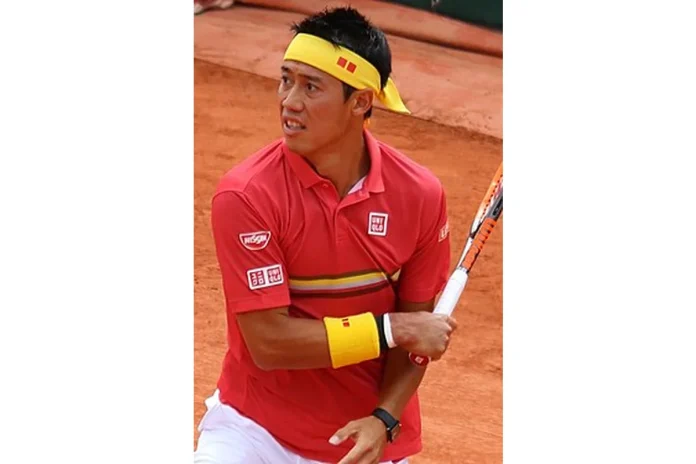
Kei Nishikori Bio
Kei Nishikori (born 29 December 1989, in Matsue, Shimane, Japan) is a Japanese professional tennis player who has spent most of his career ranked among the world’s elite. He is the only Japanese man in the Open Era to have been ranked in the top five in singles, reaching a career-high of world No. 4 in March 2015. Nishikori has won twelve titles on the ATP Tour and became the first Asian man to contest a Grand Slam singles final when he reached the championship match at the 2014 US Open.
Beyond his ATP success, Nishikori represented Japan at three Olympic Games and won the bronze medal in singles at the 2016 Rio Olympics, defeating Rafael Nadal in the bronze-medal match to deliver Japan its first Olympic tennis medal in 96 years. He holds one of the highest percentages of deciding-set wins in the Open Era, with a 29–8 record and a 78.4 win percentage in matches extending to five sets, underscoring his reputation as a relentless competitor.
Early Life and Background
Kei Nishikori was born in Matsue, the capital city of Shimane Prefecture in Japan, to Kiyoshi Nishikori, an engineer, and Eri Nishikori, a piano teacher. He grew up with an older sister, Reina, who later graduated from college and moved to Tokyo. Nishikori first picked up a tennis racket at the age of five, and by 2001 his talent was evident when he won the All Japan Tennis Championships for Kids.
He attended Aomori-Yamada High School, balancing academic studies with an increasingly demanding junior tennis schedule. In 2004, at just 14 years of age, Nishikori moved to Bradenton, Florida, to train at the IMG Academy, a major step that allowed him to compete against the world’s best young players and accelerate his development. As a junior, he compiled a 73–37 record in singles and reached the boys’ doubles title at the 2006 Junior French Open alongside Emiliano Massa, achieving a combined junior ranking of No. 7 in July 2006.
Path to Tennis
Nishikori’s transition to the professional ranks came in 2007, when he began playing USTA Pro Circuit events and ATP main draws as a teenager. He made his ATP main-draw debut in Los Angeles that year and qualified for additional events, recording his first ATP main-draw win at the Indianapolis Tennis Championships by defeating Alejandro Falla. By the end of 2007, he was already being recognized by the Tokyo Sports Writers Club and had earned a reputation as one of Japan’s brightest tennis prospects.
In 2008, he captured his maiden ATP title at the Delray Beach tournament by upsetting top seed James Blake in the final, becoming the first Japanese man in nearly 16 years to win an ATP event. Later that year, he became the first Japanese player to reach the round of 16 at the US Open in 71 years, stunning fourth seed David Ferrer in five sets. Those early breakthroughs set the stage for a steady climb up the ATP rankings and established Nishikori as a legitimate contender on the global tour.
Kei Nishikori Career
Early Career (2007–2009)
Nishikori turned professional in 2007 and quickly adapted to the ATP level, reaching his first ATP quarterfinal at Indianapolis at just 17 years old. He capped 2008 with his breakthrough title at Delray Beach and a memorable run to the fourth round of the US Open. In March 2009, he was named the 2008 ATP Newcomer of the Year, becoming the first Asian player to win the award.
The 2009 season, however, was disrupted by an injured right elbow that forced him to withdraw from the French Open, Wimbledon, and the US Open. After recovering, Nishikori returned to the Challenger circuit and steadily rebuilt his form, setting the stage for his move into the world’s top 20 over the next several years.
ATP Breakthrough (2010–2013)
Nishikori made his French Open debut in 2010, recovering from two sets down to beat Santiago Giraldo before falling to Novak Djokovic. He went on to claim Challenger titles in Savannah and Sarasota, and at the US Open he knocked out 11th seed Marin Čilić in a five-set marathon. Over the next three seasons, Nishikori collected additional ATP titles, including the U.S. National Indoor Championships in Memphis in 2013, where he defeated Feliciano López in straight sets without dropping a set all week.
By the end of 2013, he had climbed into the world’s top 20 and was widely viewed as Asia’s leading men’s tennis player. He also impressed on clay by reaching the third round of the Madrid Open after defeating defending champion Roger Federer, reinforcing his versatility across surfaces.
2014: Career Breakthrough and US Open Final
The 2014 season marked Nishikori’s arrival as a genuine Grand Slam contender. With former world No. 2 Michael Chang joining his coaching team, he reached his first Masters 1000 final at the Madrid Open, defeating David Ferrer in a tight three-set semifinal before falling to Rafael Nadal. He followed that by winning his first clay-court title at the Barcelona Open and lifting his third Memphis title.
His defining moment came at the 2014 US Open, where he overpowered world No. 1 Novak Djokovic in four sets in the semifinals to become the first Asian man to reach a Grand Slam singles final. In the championship match, he was defeated in straight sets by Marin Čilić, who was in top form that fortnight. Nishikori also became the first man from Asia to qualify for the ATP Finals, reaching the semifinals in London. He finished the year ranked inside the world’s top five.
Olympic Medal and Continued Top-Five Form (2015–2016)
In 2015, Nishikori reached the final of the Rogers Cup in Toronto and the quarterfinals of the French Open and the US Open, confirming his consistency at the highest level. The 2016 season brought his most celebrated achievement outside the Grand Slams. After strong runs at the Miami Open and Indian Wells Masters, he arrived at the Rio 2016 Olympics as the No. 4 seed.
He reached the Olympic semifinals, where he lost to Andy Murray, before bouncing back to defeat Rafael Nadal 6–2, 6–7, 6–3 in the bronze-medal match, winning Japan’s first Olympic tennis medal in 96 years. He closed 2016 by qualifying for the ATP World Tour Finals for the third consecutive year and reaching the semifinals, finishing the season ranked world No. 5.
Later Career and Comeback (2019–Present)
Nishikori’s career has been marked by persistent injury challenges, but he has produced memorable comebacks when healthy. In January 2019, he won the Brisbane International, defeating Daniil Medvedev in the final for his first ATP title since February 2016 and snapping a streak of nine consecutive final losses. Later that year, he reached the quarterfinals of both the French Open and Wimbledon, falling to Rafael Nadal and Roger Federer respectively.
Throughout the early 2020s, Nishikori continued to represent Japan in the Davis Cup and on the ATP Tour, while dealing with various injuries that limited his playing schedule. Past and present coaches on his team have included Brad Gilbert, Dante Bottini, Michael Chang, and Thomas Johansson, reflecting his willingness to evolve his game in pursuit of more titles.
Driving Style and Strengths
Although the term “driving style” is typically reserved for motorsports, Nishikori’s on-court strengths parallel the precision of a top-tier competitor. Standing at 5 ft 10 in, he plays most comfortably from the baseline, using solid, consistent groundstrokes on both wings to push his opponents around the court. His two-handed backhand is widely regarded as one of the best on tour, comparable to those of Novak Djokovic and Andy Murray, while his flat serve can reach speeds of up to 120 mph.
Notable Events and Milestones
Signature milestones include his 2014 US Open run to the final, his 2016 Olympic bronze medal, and his 2019 Brisbane International title. He also holds the distinction of being the second man in Open Era history, after Jiro Sato, to reach the top five in singles for Japan, and he maintains one of the highest deciding-set win percentages in the modern era.
Kei Nishikori Career Wins
Across his career, Kei Nishikori has accumulated twelve ATP Tour singles titles, with a particular emphasis on hard-court events in North America and Asia. He is best known for his four Memphis Open titles, his Barcelona Open victory on clay in 2014, and his Brisbane International win in 2019.
Series Highlights
Nishikori’s Memphis reign began in 2013 and peaked in 2016, when he defeated Taylor Fritz in the final to become a four-time Memphis champion, joining Jimmy Connors as the only four-time winners of the event. His first title came in 2008 at Delray Beach, and his most recent ATP title came at Brisbane in 2019, where he defeated Daniil Medvedev in three sets to break a long final-loss streak.
Other Wins and Performances
In addition to his twelve ATP titles, Nishikori has reached multiple Masters 1000 finals, including Madrid in 2014, Miami in 2016, and the Rogers Cup in 2016. He also reached the final of the 2014 US Open and earned the bronze medal at the 2016 Rio Olympics, both historic results for Asian men’s tennis.
Kei Nishikori Family
Family Background and Tennis Lineage
Nishikori was raised in Matsue by his father, Kiyoshi Nishikori, an engineer, and his mother, Eri Nishikori, a piano teacher. His older sister, Reina, works in Tokyo. While his parents are not directly involved in tennis, their support allowed him to pursue training at the IMG Academy in Florida at age 14, a foundational step in his professional development.
Personal Life
Nishikori married his long-term girlfriend, Mai Yamauchi, in December 2020. His personal interests include soccer, golf, reading, and listening to music. Throughout his career he has been endorsed by Wilson (racquets), Uniqlo (clothing), Nissin Foods, TAG Heuer, and EA Games, among other sponsors, and he has been a brand ambassador for Japan Airlines, with his image featured on a Boeing 777-300ER dubbed “JET-KEI.”
2025 Season Performance
Heading into the 2025 season, Nishikori remains an active presence on the ATP Tour, though injuries continue to influence his playing schedule. His participation in select events has been geared toward staying competitive and gradually rebuilding his ranking, rather than chasing a full-year schedule.
His association with longtime sponsors and his role as Japan’s most recognizable male tennis player keep him in demand for exhibitions, exhibitions series, and media commitments alongside his tournament appearances. Fans in Japan continue to follow his results closely, especially at the Rakuten Japan Open and other Asian stops.
While it is unclear how many tournaments Nishikori will contest in 2025, his legacy as Japan’s greatest male tennis player is already secure. Any return to form would only add to a resume that includes twelve ATP titles, a Grand Slam final, and an Olympic bronze medal.