
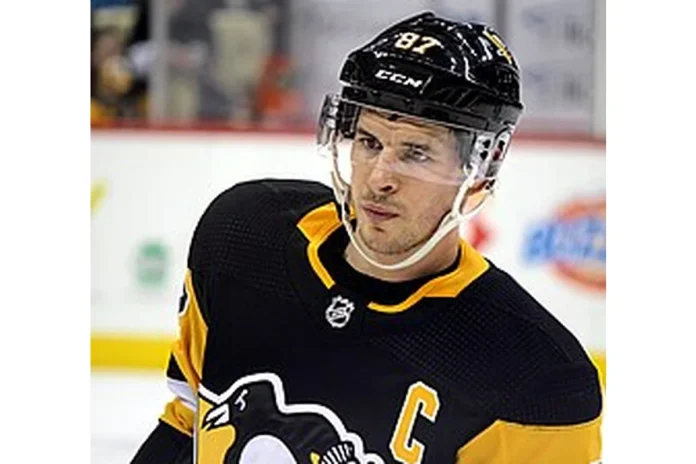
Sidney Crosby Bio
Sidney Patrick Crosby, born on August 7, 1987, in Halifax, Nova Scotia, Canada, is a Canadian professional ice hockey centre and captain of the Pittsburgh Penguins of the National Hockey League (NHL). Nicknamed “Sid the Kid” early in his career and later dubbed “The Next One,” Crosby was selected first overall by the Pittsburgh Penguins in the 2005 NHL entry draft. Standing 180 cm tall and weighing 91 kg, he has been one of the most lauded prospects in ice hockey history and is widely regarded as one of the greatest players of all time.
During his two-year major junior career with the Rimouski Océanic of the Quebec Major Junior Hockey League (QMJHL), Crosby earned many awards and led his club to the 2005 Memorial Cup final. The Océanic and the QMJHL retired his jersey number 87 in 2019. Crosby debuted in the NHL during the 2005–06 season, recording 102 points and finishing as runner-up for the Calder Memorial Trophy as NHL Rookie of the Year. At 18 years and 253 days, he became the youngest player to reach 100 points in an NHL season.
Early Life and Background
Sidney Patrick Crosby was born on August 7, 1987, in the Grace Maternity Hospital in Halifax, Nova Scotia, to Troy and Trina Crosby. He grew up in nearby Cole Harbour and has a younger sister named Taylor. His jersey number, 87, reflects his birthdate, 8/7/87. Crosby’s father Troy was a goaltender who played for the Verdun Junior Canadiens in the QMJHL and helped the team win the 1985 President’s Cup. Troy was drafted 240th overall by the Montreal Canadiens in 1984 but never played at the NHL level. Growing up, Crosby admired Steve Yzerman and, like his father, was a Montreal Canadiens fan. He began playing hockey by himself in his basement at the age of two and learned to skate at age three.
Crosby attended Astral Drive Junior High School from ages 12 to 15, where he was a straight-A student. At age 15, he transferred to Shattuck-Saint Mary’s boarding school in Faribault, Minnesota, to play with the school’s elite hockey program. While playing for the Rimouski Océanic of the QMJHL, Crosby attended Harrison Trimble High School in Moncton, New Brunswick, where he graduated in 2005. He gave his first newspaper interview at age seven, and early in his minor hockey years he began attracting significant media attention for his exceptional play.
When Crosby was 13, Nova Scotia’s Minor Hockey Council refused to allow him to play midget hockey, a level reserved for 15- to 17-year-olds, and his family lawsuit was unsuccessful. The following year, he joined the triple-A Dartmouth Subways and scored 217 combined regular season and playoff points, leading Dartmouth to a second-place finish at the 2002 Air Canada Cup. He finished the national tournament with 24 points in seven games and was named MVP and Top Scorer. He was also called up as a 14-year-old to play two games with the Maritime Junior A Hockey League’s Truro Bearcats.
Path to Hockey
Crosby was selected first overall in the 2003 Midget Draft by the Rimouski Océanic of the QMJHL. In his first exhibition game, he scored eight points, leading his teammates to nickname him “Darryl” in reference to Darryl Sittler’s ten-point NHL game in 1976. In his first QMJHL regular season game, he scored one goal and added two assists. He finished his rookie QMJHL season with 54 goals and 81 assists over 59 games, capturing the Jean Béliveau Trophy as the league’s leading point-scorer. He was further recognized with the RDS/JVC Trophy and Michel Brière Memorial Trophy, becoming the first QMJHL player to win all three major awards at once.
Returning to the Océanic for the 2004–05 season, Crosby led the league with 66 goals, 102 assists and 168 points over 62 games to capture his second consecutive Béliveau Trophy. He was again named Most Valuable Player, Offensive Player and Personality of the Year. The Océanic finished the regular season with the best record in the league, registering a league-record 28-game undefeated streak. They went on to capture the President’s Cup as QMJHL playoff champions, and Crosby led the playoffs with 31 points over 13 games, earning the Guy Lafleur Trophy as postseason MVP. With their QMJHL championship, the Océanic qualified for the 2005 Memorial Cup, where Crosby was named to the Tournament All-Star team and captured the Ed Chynoweth Trophy as the competition’s leading scorer.
During the off-season, the proposed World Hockey Association held an entry draft and selected Crosby first overall. He turned down a reported US$7.5 million contract offer to remain focused on reaching the NHL. Crosby debuted internationally for Canada at the 2003 U-18 Junior World Cup as the youngest player on the team. He went on to compete in two World Junior Championships and became the youngest player to score a goal in the history of the tournament at 16 years, 4 months, and 21 days. He finished the 2005 World Junior Championships with six goals and three assists as Canada earned gold, a moment Crosby later called his most memorable in hockey.
Sidney Crosby Career
Early Career (2005–2007)
Sidney Patrick Crosby made his NHL debut on October 5, 2005, against the New Jersey Devils, registering an assist on the team’s first goal of the season. He scored his first NHL goal in the Penguins’ home opener on October 8 against the Boston Bruins. Crosby began his rookie season playing alongside Hall of Famer Mario Lemieux, though Lemieux was forced to retire due to an irregular heartbeat after just 26 games. On December 15, 2005, new head coach Michel Therrien designated Crosby as an alternate captain for the Penguins. Despite the team’s struggles, Crosby’s first NHL campaign was a personal success as he established franchise records in assists and points for a rookie, both previously held by Lemieux.
Crosby finished his rookie season with 39 goals and 102 points, becoming the youngest player in NHL history to score 100 points in a single season and only the seventh rookie ever to reach that benchmark. He finished second in the NHL scoring race and second to Alexander Ovechkin for the Calder Memorial Trophy as NHL Rookie of the Year, marking the start of a rivalry that would help define the league for over a decade. In his second NHL season, Crosby built on his rookie success. On October 28, 2006, he scored his first NHL hat-trick in an 8–2 victory over the Philadelphia Flyers, and on December 13 he recorded the first six-point game of his career.
NHL Breakthrough (2006–2010)
Crosby finished the 2006–07 season with 36 goals and 84 assists for 120 points in 79 games, becoming the first teenager to lead the NHL in scoring since Wayne Gretzky in 1980. At 19 years old, he became the youngest player in NHL history to win the Art Ross Trophy and the youngest scoring champion in any major North American professional sport. He also won the Hart Memorial Trophy as the league’s most valuable player and the Lester B. Pearson Award for most outstanding player as judged by his peers. He started the 2007–08 season with the team’s captaincy and led the Penguins to the 2008 Stanley Cup Finals, where they were defeated by the Detroit Red Wings in six games.
The Penguins returned to the Finals against Detroit the following year and won in seven games; Crosby became the youngest captain in NHL history to win the Stanley Cup. Crosby also led Pittsburgh to Stanley Cup championships in 2016 and 2017, becoming the third player to win the Conn Smythe Trophy as playoff MVP in consecutive years. In 2009–10, he received the Mark Messier Leadership Award and scored 51 goals, winning the Maurice Richard Trophy as the NHL’s leading goal scorer. He was also a runner-up for the Art Ross Trophy and a finalist for the Hart Memorial Trophy that season.
In early 2011, Crosby sustained a concussion that left him sidelined for the rest of the season and for most of the 2011–12 campaign. After his recovery, he returned to elite form and in 2013 won his second career Ted Lindsay Award. In 2014, Crosby again won the Hart Memorial Trophy, his second career Art Ross Trophy with 104 points, and his second consecutive Ted Lindsay Award and third altogether. He was also a finalist for the Hart Memorial Trophy in 2010 and 2021. In 2017, he won his second Maurice Richard Trophy and was named one of the 100 Greatest NHL Players in history.
Pittsburgh Penguins Era (2005–Present)
Sidney Patrick Crosby has served as captain of the Pittsburgh Penguins since the 2007–08 season, anchoring the franchise through multiple championship windows. His presence helped the Penguins’ attendance increase by 33% in his rookie year and helped secure funding for a new arena, ending speculation that the franchise would relocate. He continued to lead the team as one of the NHL’s premier centres, with Pittsburgh frequently contending in the Stanley Cup playoffs throughout his tenure. His leadership and consistent on-ice performance have made him the heartbeat of the franchise, as described by head coach Mike Sullivan in 2019.
Crosby’s career with the Penguins has included additional individual honours, including recognition as one of the 100 Greatest NHL Players in history in January 2017. He has continued to produce at an elite level into his late 30s, contributing offensively and defensively while serving as the team’s captain and first-line centre. In 2018, he was chosen as Nova Scotia’s “Best athlete ever” by the Nova Scotia Sport Hall of Fame. He remains one of the most respected and influential players in the NHL, frequently cited by peers and analysts as the most complete player of his generation.
Driving Style and Strengths
Crosby is noted for his on-ice vision, passing ability, leadership, work ethic, and complete overall game. His lower-body strength is widely regarded as among the best in the league, allowing him to protect the puck along the boards and explode through the neutral zone. Professional NHL players have particularly noted Crosby for his backhand shot, with goaltender Jonathan Quick writing in The Players’ Tribune in July 2015 that Crosby had the best backhand shot in the NHL. Crosby’s anticipation and ability to read the play when the other team has the puck set him apart, allowing him to pick off passes and turn defensive plays into offensive chances.
Notable Events and Milestones
Crosby became the youngest player in NHL history to score 100 points in a single season during his rookie year and the youngest to win the Art Ross Trophy in his second season. He became the youngest captain in NHL history to win the Stanley Cup in 2009 and the third player to win the Conn Smythe Trophy in consecutive years after his 2016 and 2017 championships. He was named one of the 100 Greatest NHL Players in history in January 2017 and won an Emmy Award in September 2016 for his role in “There’s No Place Like Home With Sidney Crosby.”
Sidney Crosby Career Wins
Across his major junior, NHL, and international career, Sidney Patrick Crosby has compiled an extraordinary list of championships and individual awards. He won two QMJHL scoring titles, a QMJHL playoff championship, and the Ed Chynoweth Trophy as the Memorial Cup’s leading scorer. In the NHL, he has won three Stanley Cup championships with the Pittsburgh Penguins in 2009, 2016, and 2017, along with two Hart Memorial Trophies, two Art Ross Trophies, two Maurice Richard Trophies, three Ted Lindsay Awards, and two Conn Smythe Trophies.
NHL Highlights
Crosby has won three Stanley Cup championships with the Pittsburgh Penguins, first in 2009 when he became the youngest captain in NHL history to lift the Cup, and again in 2016 and 2017 when he became the third player to win the Conn Smythe Trophy in consecutive years. He has scored more than 50 goals in a season and captured the Maurice Richard Trophy as the NHL’s leading goal scorer in 2010 and 2017. He has led the NHL in scoring with the Art Ross Trophy twice and won the Hart Memorial Trophy as the league’s most valuable player in 2007 and 2014.
Other Wins and Performances
Crosby won gold at the 2005 World Junior Championships and captained Team Canada to gold medals at the 2010 and 2014 Winter Olympics, scoring the game-winning overtime goal against the United States in 2010 in what became known as the “Golden Goal.” He captained Canada to gold at the 2015 IIHF World Championship, becoming a member of the Triple Gold Club. In 2016, he captained Canada to gold at the World Cup of Hockey and was named MVP by unanimous vote. In 2025, he captained Canada to a championship win in the inaugural 4 Nations Face-Off.
Sidney Crosby Family
Family Background and Racing Lineage
Sidney Patrick Crosby was born to Troy and Trina Crosby and raised in Cole Harbour, Nova Scotia. His father Troy was a goaltender who played for the Verdun Junior Canadiens in the QMJHL and helped the team win the 1985 President’s Cup. Troy was drafted 240th overall by the Montreal Canadiens in 1984 but never played at the NHL level. Crosby grew up in a hockey family and admired Steve Yzerman as a young player. His younger sister Taylor is a hockey goaltender who attended Shattuck-Saint Mary’s in Faribault, Minnesota, and played NCAA women’s hockey at Northeastern University and later St. Cloud State University.
Personal Life
Crosby rarely discusses his personal life and avoids social media. From 2005 until 2010, he lived with Mario Lemieux’s family in Sewickley, Pennsylvania, and in May 2010 he purchased his own home in the same area. In June 2006, he had bought his first house on Grand Lake in Halifax, Nova Scotia. He has signed major endorsement deals with Reebok and Adidas and also has endorsement deals with Bell, Tim Hortons, and Gatorade. Crosby created the Sidney Crosby Foundation in 2009, an organization committed to helping charities benefiting children, and in 2015 he started a hockey school in Cole Harbour.
2025 Season Performance
Heading into the 2025 season, Sidney Patrick Crosby remained the captain of the Pittsburgh Penguins and one of the NHL’s most respected veteran players. Following Pittsburgh not qualifying for the 2025 Stanley Cup playoffs, Crosby accepted an invitation to join Team Canada at the 2025 IIHF World Championship in Stockholm. This was to be his first appearance at the World Championship since 2015. Former Penguins teammate Marc-André Fleury, who had retired from the NHL at season’s end, also announced that he would participate in the tournament as his final competition.
Earlier in 2025, on June 28, 2024, Crosby was one of the first six players selected to represent Team Canada in the 2025 4 Nations Face-Off, the first international tournament with full NHL participation since 2016, and he was later named captain of the team. Crosby missed the Penguins’ final two games before the tournament due to injury but confirmed that he would participate. He had three assists in Team Canada’s 4–3 opening victory against Sweden, including on the overtime winner, and Canada went on to win the tournament with Crosby finishing with five points.
Crosby’s enduring presence on the Penguins roster, combined with his international leadership, underscores his continued importance to the sport. He remains a central figure for both Pittsburgh and Team Canada, with his trademark work ethic, vision, and complete two-way game still evident at this stage of his career. His performances in the 4 Nations Face-Off reinforced his reputation as a player who rises up in the most important games.