
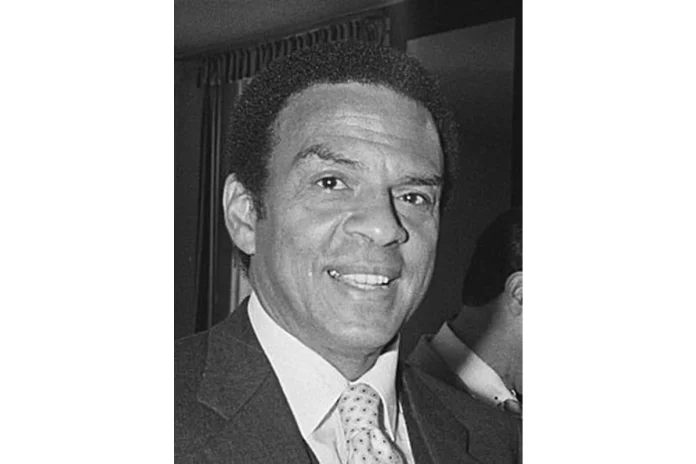
Andrew Young Bio
Andrew Jackson Young Jr. (born March 12, 1932) is an American politician, diplomat, pastor, and civil rights leader whose career has spanned more than six decades in public service. A member of the Democratic Party, he became an early leader in the civil rights movement as executive director of the Southern Christian Leadership Conference and a close confidant of Martin Luther King Jr. He later served as a U.S. Representative from Georgia, as United States Ambassador to the United Nations under President Jimmy Carter, and as the 55th mayor of Atlanta. After leaving public office he founded the Andrew Young Foundation and has remained active in public policy, education, and international affairs.
Early Life and Background
Andrew Jackson Young Jr. was born on March 12, 1932, in New Orleans, Louisiana, to Daisy Young, a schoolteacher, and Andrew Jackson Young, a dentist. He grew up in a fairly well-to-do household in segregated New Orleans, where his parents worked to provide opportunities that compensated for the restrictions of the era. In a 1964 interview with author Robert Penn Warren, Young recalled the tensions of segregation in his hometown, noting that his parents were reluctant to help less wealthy black communities in the area.
Young’s father hired a professional boxer to teach Andrew and his brother how to defend themselves, an experience that shaped his early sense of resilience. He attended Dillard University for one year before graduating from Howard University, and later earned a divinity degree from Hartford Seminary in Hartford, Connecticut, in 1955. He is a member of Alpha Phi Alpha fraternity.
Path to US Politics
Young began his professional life in the ministry, accepting a pastorate at a church in Marion, Alabama, where he met Jean Childs, who later became his wife. He became interested in Mahatma Gandhi’s concept of nonviolent resistance as a tactic for social change and encouraged African Americans in Alabama to register to vote, sometimes facing death threats for his efforts. It was during this period that he became a close friend and ally of Martin Luther King Jr.
In 1955, Young accepted a pastorate at Bethany Congregational Church in Thomasville, Georgia. He later served at the Evergreen Congregational Church in Beachton, Georgia, from 1957 to 1959, and worked with the Youth Division of the National Council of Churches in New York City, where he appeared on the CBS program Look Up and Live. In 1960, he joined the Southern Christian Leadership Conference, and in 1964, he was named its executive director, a position that placed him at the center of the civil rights movement.
Andrew Young Career
Early Career (1960s)
As executive director of the Southern Christian Leadership Conference, Young served as a strategist and negotiator during the Civil Rights Campaigns in Birmingham (1963), St. Augustine (1964), Selma (1965), and Atlanta (1966). He was jailed for his participation in civil rights demonstrations in both Selma, Alabama, and St. Augustine, Florida. The movement’s efforts during this period helped secure the congressional passage of the Civil Rights Act of 1964 and the Voting Rights Act of 1965.
Young was with Martin Luther King Jr. in Memphis, Tennessee, when King was assassinated in 1968. He continued his activism in the years that followed before entering electoral politics. In 1970, he ran unsuccessfully as a Democrat for the 5th District seat in the U.S. House of Representatives from Georgia. After his defeat, attorney Murray M. Silver served as his campaign finance chairman, and Young ran again in 1972, winning the seat.
Congressional Career (1972-1977)
During his four-plus years in Congress, Young was a member of the Congressional Black Caucus and was involved in several debates regarding foreign relations, including the decision to stop supporting Portuguese attempts to hold on to their colonies in southern Africa. He sat on the powerful Rules Committee and the Banking and Urban Development Committee. He opposed the Vietnam War, helped enact legislation that established the U.S. Institute for Peace, established the Chattahoochee River National Recreation Area, and negotiated federal funds for MARTA and the Atlanta highways.
Young was re-elected in 1974 and 1976. He was the first African American elected to Congress from Georgia since Reconstruction and one of the first two African Americans elected to Congress from the former Confederacy since Reconstruction.
United Nations Ambassadorship (1977-1979)
In 1977, President Jimmy Carter appointed Young to serve as the United States Ambassador to the United Nations, making him the first African American to hold the position. Although the U.S. and the UN enacted an arms embargo against South Africa, Young vetoed economic sanctions. In 1979, he played a leading role in advancing a settlement in Rhodesia that paved the way for Robert Mugabe to take power as Prime Minister of the newly formed Republic of Zimbabwe.
His ambassadorship ended on August 14, 1979, after a controversial private meeting with a Palestine Liberation Organization representative. Carter denied any complicity in what was called the “Andy Young Affair” and asked Young to resign. Atlanta city councilman Wyche Fowler won the special election to fill Young’s seat in Congress.
Mayor of Atlanta (1982-1990)
After being urged by a number of people, including Coretta Scott King, Young ran for mayor of Atlanta in 1981 and was elected later that year with 55 percent of the vote, succeeding Maynard Jackson. As mayor, he brought in $70 billion of new private investment and continued programs for including minority and female-owned businesses in all city contracts. The Mayor’s Task Force on Education established the Dream Jamboree College Fair that tripled college scholarships given to Atlanta public school graduates.
Young was re-elected in 1985 with more than 80 percent of the vote. In 1985, he was involved in renovating the Atlanta Zoo, which was renamed Zoo Atlanta. Atlanta hosted the 1988 Democratic National Convention during his tenure. He was prohibited by term limits from running for a third term. A 1993 survey conducted by Melvin G. Holli of the University of Illinois at Chicago ranked Young as the fifteenth-best American big-city mayor to serve between 1820 and 1993, and the fifth-best big-city mayor to serve post-1960.
Post-Mayoral Career (1990-Present)
After leaving the mayor’s office in early 1990, Young launched a bid for the Democratic nomination for governor of Georgia, finishing second to Zell Miller in the primary. He served as co-chair of the 1996 Summer Olympic Games in Atlanta and from 2000 to 2001 served as president of the National Council of Churches. In 2003, Young founded the Andrew Young Foundation, an organization that supports education, health, leadership, and human rights in the United States, Africa, and the Caribbean.
In 2023, Young launched the “Andrew Young HBCU Scholarship Program,” funded by McGraw Hill Education in partnership with the Institute of World Politics and the Thurgood Marshall College Fund. On January 9, 2025, he delivered the homily at the state funeral service for Jimmy Carter at Washington National Cathedral.
Notable Events and Milestones
Among Andrew Young’s signature achievements were his role as executive director of the Southern Christian Leadership Conference during the passage of the Civil Rights Act of 1964 and the Voting Rights Act of 1965, his service as the first African American U.S. Ambassador to the United Nations, and his tenure as the 55th mayor of Atlanta. He delivered the homily at the state funeral for President Jimmy Carter in January 2025, marking one of the most recent milestones in a career defined by public service.
Andrew Young Career Wins
Andrew Young’s career is marked by a series of historic electoral and institutional victories. His wins include election to the U.S. House of Representatives in 1972, his appointment as the first African American U.S. Ambassador to the United Nations in 1977, and two terms as mayor of Atlanta beginning in 1981.
Electoral Highlights
Young first won a congressional seat representing Georgia’s 5th District in 1972 after an unsuccessful bid in 1970, and was re-elected in 1974 and 1976. He was elected mayor of Atlanta in 1981 with 55 percent of the vote and re-elected in 1985 with more than 80 percent of the vote, becoming one of the most popular big-city mayors in modern American history.
Other Achievements
Beyond electoral wins, Young helped establish the Chattahoochee River National Recreation Area, negotiated federal funds for MARTA and the Atlanta highways, and co-chaired the 1996 Summer Olympic Games. In 2023, he launched the Andrew Young HBCU Scholarship Program to support students who demonstrate leadership potential rooted in the non-violent principles of Dr. King.
Andrew Young Family
Family Background and Civil Rights Lineage
Andrew Young was born to Daisy Young, a schoolteacher, and Andrew Jackson Young, a dentist, in New Orleans, Louisiana. He was raised in a fairly well-to-do household during the era of segregation, and his parents’ work as educators and professionals helped shape his early commitment to community advancement.
Personal Life
Young married Jean Childs in 1954, and the couple had four children. Jean Childs Young died of liver cancer in 1994. He married Carolyn McClain in 1996. His daughter Lisa Young died on March 14, 2025, from cancer. In September 1999, Young was diagnosed with prostate cancer, which was successfully removed with surgery in January 2000.