
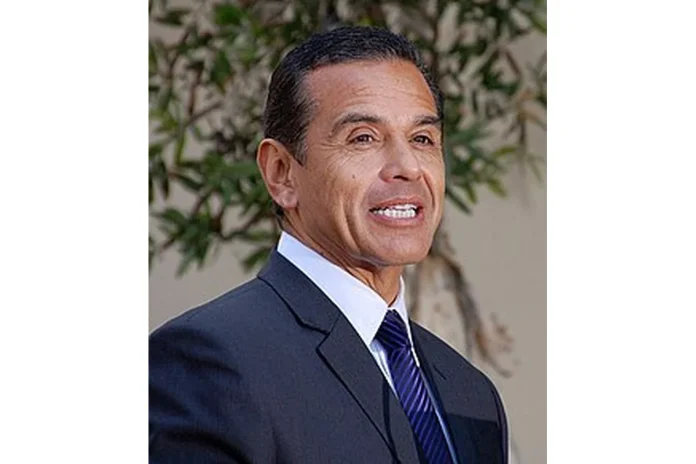
Antonio Villaraigosa Bio
Antonio Ramón Villaraigosa is an American politician and member of the Democratic Party who served as the 41st Mayor of Los Angeles from 2005 to 2013. Born and raised in Los Angeles, he built his career through the California State Assembly, the Los Angeles City Council, and ultimately City Hall, becoming one of the most recognizable Latino political figures in the state. After leaving the mayor’s office, Villaraigosa remained active in public policy and ran for Governor of California in 2018 before launching a second gubernatorial bid in 2024.
Early Life and Background
Antonio Ramón Villaraigosa was born on January 23, 1953, in Los Angeles, California, and grew up in the City Terrace neighborhood on the Eastside of Los Angeles County. He attended both Catholic and public schools during his early years, including Cathedral High School, where his grades suffered after a benign tumor in his spinal column briefly left him paralyzed from the waist down at age 16. He was later expelled from Cathedral High following a fight after a football game.
He ultimately graduated from Theodore Roosevelt High School after taking adult education classes there. Villaraigosa went on to attend East Los Angeles College before transferring to the University of California, Los Angeles (UCLA), where he earned a Bachelor of Arts degree in history in 1977. At UCLA, he was a leader of MEChA, a Chicano student organization, though he later distanced himself from the group. He also attended the unaccredited People’s College of Law and subsequently failed the California bar exam four times before turning to political organizing.
Path to US Politics
Villaraigosa’s entry into politics began through labor organizing. After law school, he became a field representative and organizer with United Teachers Los Angeles, gaining experience in advocacy and coalition building. In 1990, he was appointed to the Los Angeles Metropolitan Transportation Board, where he served until 1994, laying the groundwork for his later focus on transit policy.
In 1994, Villaraigosa was elected to the California State Assembly, where his colleagues selected him to serve as Democratic Assembly Whip and later Assembly Majority Leader from 1996 to 1998. His rising profile within the Assembly led to his election as Speaker of the California State Assembly in 1998, a position he held until 2000. These roles established him as a prominent voice in California Democratic politics and set the stage for his move into Los Angeles citywide politics.
Antonio Villaraigosa Career
Early Career (1990–2003)
Following his appointment to the Los Angeles Metropolitan Transportation Board in 1990, Villaraigosa built a reputation as an energetic advocate for transit and infrastructure investment. His election to the California State Assembly in 1994 marked his first major electoral victory and launched a six-year tenure in Sacramento that included leadership posts as Majority Leader and Speaker.
In 2001, Villaraigosa ran for Mayor of Los Angeles but was defeated in a run-off election by Democrat James Hahn. He returned to elected office in 2003 by defeating incumbent Councilman Nick Pacheco to win a seat on the Los Angeles City Council, representing the 14th District on the Eastside and re-establishing his foothold in city politics.
Breakthrough (2005–2008)
Villaraigosa placed first in the primary for the Los Angeles mayoral election of March 8, 2005, and won the run-off on May 17, receiving 58.7% of the vote. He was sworn in as the 41st Mayor of Los Angeles on July 1, 2005, becoming the first Latino to hold the office in modern Los Angeles history.
As mayor, Villaraigosa prioritized transportation expansion and championed the extension of the Purple Line subway along Wilshire Boulevard, a project supporters called the Subway to the Sea. His lobbying helped place Measure R on the November 2008 ballot, which Los Angeles County voters approved to fund major transit projects over thirty years. He also pursued education reform through Assembly Bill 1381, which sought to shift authority over the Los Angeles Unified School District to the mayor, and he founded the Mayor’s Partnership for Los Angeles Schools to manage low-performing campuses.
In public safety, Villaraigosa pledged to hire 1,000 new police officers, and by March 2009, the Los Angeles Police Department had expanded to its largest force in city history. He also signed legislation raising trash collection fees to fund additional officers, though a 2008 audit later found that only a portion of the new revenue reached police hiring.
Democratic Era (2009–2013)
Villaraigosa won re-election in 2009 with 55.65% of the vote against his most prominent challenger, attorney Walter Moore, though he drew controversy for refusing to debate his opponents during the campaign. During his second term, he continued pushing transportation and infrastructure initiatives, including a Thirty/Ten plan later adopted at the federal level as the America Fast Forward program.
He also chaired the 2012 Democratic National Convention, where a notable moment occurred when he controversially declared an amendment passed despite repeated voice votes failing to produce a two-thirds majority. Villaraigosa left office in 2013 with an approval rating of 47%, having shaped major debates over transit, education, and policing in Los Angeles.
Notable Events and Milestones
Villaraigosa’s career-defining moments include his 2005 election as the 41st Mayor of Los Angeles, the passage of Measure R in 2008 to fund decades of transportation projects, and his role as Chairman of the 2012 Democratic National Convention. His advocacy for the Subway to the Sea and his AB 1381 education reform effort remain signature initiatives of his time in office.
Antonio Villaraigosa Family
Family Background and Personal Life
Villaraigosa adopted the blended surname Villaraigosa upon his marriage to Corina Raigosa on November 28, 1987. The couple had two children, and Villaraigosa’s first child was born when he was 21, with a second child born four years later. The couple separated in 2007, and Corina Villaraigosa filed for dissolution of marriage in Los Angeles Superior Court that June.
Villaraigosa later had a relationship with television news anchor Lu Parker beginning in March 2009, which ended in May 2012. He married Patricia Govea on August 6, 2016, in San Miguel de Allende, Mexico; the couple later separated in 2018 and filed for divorce in 2022.