
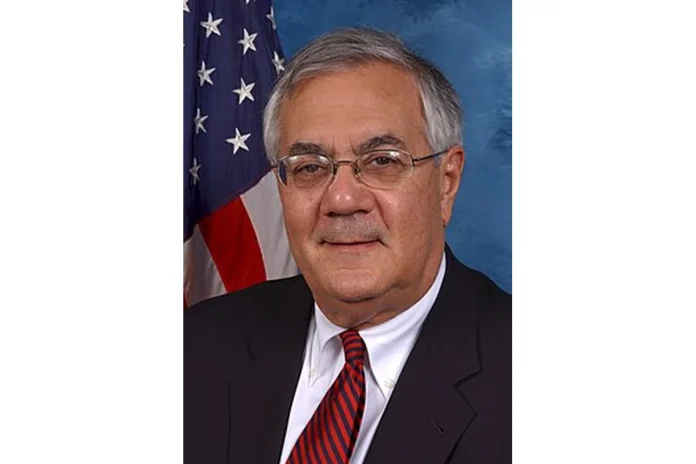
Barney Frank Bio
Barnett Frank, widely known as Barney Frank (born March 31, 1940), is a retired American politician, lawyer, author, and academic who served Massachusetts in the U.S. House of Representatives for more than three decades. A member of the Democratic Party, Frank represented the state’s 4th congressional district from 1981 to 2013 and chaired the House Financial Services Committee from 2007 to 2011. He was a leading co-sponsor of the landmark 2010 Dodd–Frank Act, the most comprehensive reform of U.S. financial regulation in decades.
Frank is widely remembered as one of the most prominent openly gay politicians in United States history. He publicly came out in 1987, founded the National Stonewall Democrats in 1998, and in 2012 became the first sitting member of Congress to marry a same-sex partner, James (Jim) Ready. A graduate of Harvard College and Harvard Law School, Frank remains a resident of Newton, Massachusetts.
Early Life and Background
Barnett Frank was born on March 31, 1940, in Bayonne, New Jersey, to Samuel Frank and Elsie Frank, née Golush. He grew up in a working-class community across the harbor from New York City, where his parents raised him alongside his sister, Ann Lewis, who would later serve as a senior adviser to Hillary Clinton’s 2008 presidential campaign. The household gave Frank an early awareness of civic life and the kind of plain-spoken political debate that he would later become famous for on Capitol Hill.
Frank attended Bayonne High School, graduating before moving on to Harvard College, where he earned his Bachelor of Arts degree. He continued at Harvard Law School, receiving his Juris Doctor and laying the academic groundwork for a career that would combine legal training with elected office. His education at two of the country’s most prestigious institutions helped prepare him for the policy-heavy work that would define his time in Congress.
Path to US Politics
After law school, Frank worked as a political aide in Washington, gaining firsthand experience with the legislative process before returning to Massachusetts. In 1972, he won election to the Massachusetts House of Representatives, where he served from 1973 to 1981. His time in state government allowed him to build a reputation as a sharp policy mind and a tenacious defender of liberal priorities, including civil rights and government accountability.
When Representative Robert Drinan, a Jesuit priest, left Congress in 1980 after a call from Pope John Paul II for priests to withdraw from political office, Frank saw an opening in Massachusetts’s 4th congressional district. He won a competitive Democratic primary with 52 percent of the vote and went on to defeat Republican Richard A. Jones in the general election, 52 to 48 percent. He took office in January 1981 and would not face another seriously contested race for nearly a quarter-century.
Barney Frank Career
Early Career (1981–1986)
Frank’s first years in Congress were defined by steady committee work and the careful cultivation of his Massachusetts district, anchored by Brookline and his hometown of Newton. In 1982, redistricting forced him to run against Republican Margaret Heckler, the incumbent representing a South Coast district centered on Fall River and New Bedford. Frank used Heckler’s early support for President Ronald Reagan’s tax cuts against her and won decisively with 60 percent of the vote, signaling the start of a long run of comfortable re-elections.
He settled into the House Judiciary Committee and related subcommittees, building a record on issues ranging from administrative law to civil liberties. Even as he kept his personal life private, Frank was emerging as a leading voice on the Democratic left, known for his quick wit and willingness to take on more senior members of his own party.
Breakthrough (1987–2006)
Frank’s national profile changed dramatically on May 30, 1987, when he publicly came out as gay, becoming the first member of Congress to do so voluntarily. The decision, prompted in part by media scrutiny following the death of closeted Representative Stewart McKinney, had little effect on his electoral prospects. Soon after, he began a long-term relationship with Herb Moses, an economist and LGBT activist who would become a prominent figure in Washington gay political life.
Frank’s career also weathered its most turbulent stretch in the late 1980s, when a scandal involving Steve Gobie, a former personal aide, led to a House Ethics Committee investigation. The House voted 408 to 18 to reprimand Frank in 1987 for using his office to fix parking tickets and for misstatements related to Gobie’s probation record, but the rebuke did not derail his political standing. He won re-election in 1990 with 66 percent of the vote and continued to climb the committee ladder, eventually becoming the leading Democrat on the House Financial Services Committee in 2003.
Throughout this period, Frank earned a reputation as one of the sharpest debaters in Congress. Capitol Hill staffers repeatedly voted him the brainiest, funniest, and most eloquent member of the House in Washingtonian surveys, and he became a familiar face during the 1999 impeachment trial of President Bill Clinton, where he defended the president in memorable floor speeches.
Democratic Era (2007–2011)
When Democrats regained control of the House in 2007, Frank ascended to the chair of the House Financial Services Committee, placing him at the center of the country’s response to the unfolding housing and financial crisis. He worked with the Bush administration on emergency housing measures, helped guide the Federal Housing Reform Act and the Mortgage Reform and Anti-Predatory Lending Act to passage in 2007, and supported the American Housing Rescue and Foreclosure Prevention Act of 2008.
His signature legislative achievement came in 2010, when he served as a leading co-sponsor of the Dodd–Frank Act, sweeping legislation that imposed new rules on banks, credit rating agencies, mortgage lending, and consumer financial products. The law stands as one of the most significant regulatory reforms in modern American history, and Frank remains closely associated with its drafting and passage.
Notable Events and Milestones
Frank’s career is bracketed by two historic firsts for LGBT Americans in Congress: his 1987 coming out and his 2012 marriage to Jim Ready at the Boston Marriott Newton, making him the first sitting member of Congress to marry a same-sex partner. He also co-founded the National Stonewall Democrats in 1998, helping to build a permanent political home for LGBT advocacy inside the Democratic Party. In 2014, the American Humanist Association recognized his lifetime of public service with its Humanist of the Year award.
Barney Frank Career Wins
Frank won re-election to the U.S. House of Representatives sixteen times, never losing a general election and only occasionally facing competitive races. From 1984 to 2008, he won twelve consecutive re-elections with at least 66 percent of the vote, and on several occasions ran unopposed by a major party. His 1982 defeat of Margaret Heckler and his 2010 victory over Republican Sean Bielat, 54 to 43 percent, are the most notable competitive wins of his career.
Congressional Highlights
Frank’s 1980 victory in the 4th congressional district, 52 to 48 percent, launched a congressional career that would last 32 years. His 1990, 1994, 1998, 2002, and 2006 re-elections featured margins as high as 97 percent of the vote, reflecting the deep loyalty of his Massachusetts constituents. Even in 2010, a difficult midterm year for Democrats, he held his seat by an eleven-point margin, a testament to his enduring political strength.
Other Wins and Achievements
Beyond elections, Frank’s most enduring win is the Dodd–Frank Act of 2010, a centerpiece of post-crisis financial regulation in the United States. He also helped pass the Credit Cardholders’ Bill of Rights Act of 2008, the Housing and Economic Recovery Act of 2008, and the American Housing Rescue and Foreclosure Prevention Act, leaving a substantial legislative footprint on American housing and consumer finance policy.
| Position | Wins | Year |
|---|---|---|
| U.S. House of Representatives, Massachusetts 4th District | 16 | 1980–2010 |
| Massachusetts House of Representatives | Elected 1972 | Served 1973–1981 |
Barney Frank Family
Family Background and Personal Lineage
Frank was born to Samuel Frank and Elsie Frank, née Golush, and raised in Bayonne, New Jersey. His sister, Ann Lewis, became a prominent political figure in her own right, serving as a senior adviser to Hillary Clinton’s 2008 presidential campaign. The family environment helped shape Frank’s lifelong commitment to public service and political organizing.
Personal Life
Frank publicly came out as gay in 1987, the same year he met Herb Moses, an economist and LGBT activist. Frank and Moses were together for eleven years, from 1987 until an amicable break-up in July 1998. In 2012, Frank married Jim Ready, a surfing enthusiast he had met at a gay political fundraiser in Maine, becoming the first sitting member of Congress to enter a same-sex marriage. Frank resides in Newton, Massachusetts, where he has lived for most of his adult life.