
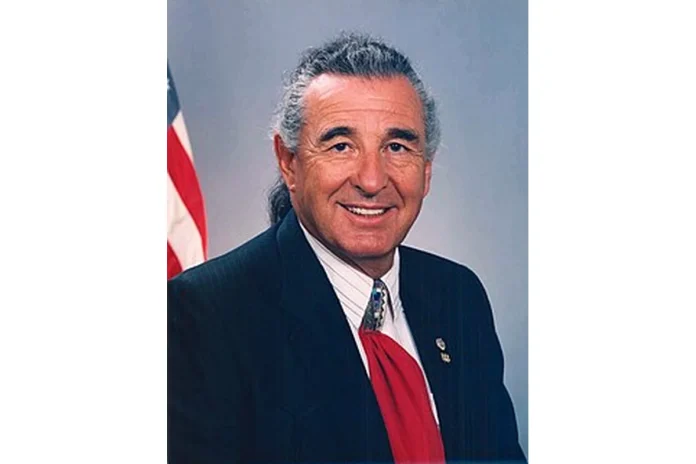
Ben Nighthorse Campbell Bio
Ben Nighthorse Campbell (born Benny Marshall Campbell; April 13, 1933 – December 30, 2025) was an American politician, judoka, jewelry designer, and United States Air Force veteran who represented Colorado in both chambers of Congress. A Democrat-turned-Republican, he served in the United States House of Representatives from 1987 to 1993 and in the United States Senate from 1993 to 2005. Campbell was the first Native American elected to the U.S. Senate since the 1920s and later became the first American Indian to chair the Senate Indian Affairs Committee. After leaving office, he worked as a lobbyist and founded Ben Nighthorse Consultants.
Outside of politics, Campbell competed internationally in judo, represented the United States at the 1964 Summer Olympics, and built a career as a noted Native American jewelry designer. He died on December 30, 2025, at his Colorado ranch at the age of 92.
Early Life and Background
Campbell was born Benny Campbell in Auburn, California, on April 13, 1933. His mother, Mary Vierra, was a Portuguese immigrant who arrived in the United States as a child through Ellis Island and settled near Sacramento. His father, Albert Campbell, was of predominantly Northern Cheyenne descent and also had Pueblo and Apache ancestry. The couple married in 1929, four years before Ben was born.
Campbell’s childhood was shaped by family hardship. His father struggled with alcoholism, and his mother suffered from tuberculosis, a contagious disease that kept her hospitalized for long stretches. As a result, Campbell and his sister Alberta spent much of their early years in nearby Catholic orphanages. During his teenage years, he was introduced to judo by Japanese immigrant families he met while working in local agricultural fields.
He attended Placer High School but dropped out in 1951 to enlist in the U.S. Air Force. He served in Korea during the Korean War as an air policeman and left the service in 1953 at the rank of Airman Second Class, earning the Korean Service Medal and the Air Medal. After his discharge, Campbell used the G.I. Bill to attend San Jose State University, earning a Bachelor of Arts in physical education and fine arts in 1957. He later received the name “Nighthorse” during a name-giving ceremony at the Northern Cheyenne reservation.
Path to US Politics
Before entering public office, Campbell built an unusual résumé that combined sport, craftsmanship, and community service. After the 1964 Olympics, he worked as a deputy sheriff in Sacramento County, coached the U.S. national judo team, ran his own dojo, and taught high school classes in physical education and art. He and his wife also raised quarterhorses and bought a ranch near Ignacio, Colorado, on the Southern Ute reservation in 1978.
Campbell was also a respected jewelry maker with a booth at Indian Market in Santa Fe. He learned metalsmithing from his father and developed techniques inspired by Japanese sword makers, ultimately winning more than 200 national and international awards for jewelry design under the Ben Nighthorse name. These experiences on the reservation and in Native art circles connected him to the communities he would later serve.
His political career began in 1982, when he was elected to the Colorado State Legislature as a Democrat. He served two terms and was named one of the 10 Best Legislators by his colleagues in a 1986 Denver Post survey. In 1986, he won a seat in the U.S. House of Representatives, launching a national political career that would last nearly two decades.
Ben Nighthorse Campbell Career
Early Career (1986–1992)
In 1986, Campbell won election to the United States House of Representatives for Colorado’s 3rd congressional district, defeating Republican incumbent Michael L. Strang. He was reelected twice and served three terms in the House. In 1989, he authored legislation that established the National Museum of the American Indian.
During his early House tenure, Campbell built a record as a pragmatic western lawmaker focused on Native American issues, agriculture, and fiscal policy. His growing visibility in Colorado politics positioned him for a Senate run when the seat opened in 1992.
Breakthrough (1992–1995)
The early 1990s marked a turning point in Campbell’s political career. After Senator Tim Wirth announced his retirement, Campbell won a competitive three-way Democratic primary against former Governor Richard Lamm and Boulder County Commissioner Josie Heath, taking 45 percent of the vote. He then defeated Republican State Senator Terry Considine in the general election.
His 1992 Senate victory made Campbell the first Native American elected to the United States Senate since Charles Curtis in the 1920s. He took office in January 1993 and quickly emerged as a leading voice on Native American affairs and federal budget policy.
In March 1995, after two years in the Senate, Campbell switched from the Democratic Party to the Republican Party. He cited the Senate’s defeat of the balanced-budget amendment as a final turning point, while others attributed the move to personal hostility within the Colorado Democratic Party.
Republican Era (1995–2005)
After his party switch, Campbell became a prominent moderate Republican. In 1998, he won reelection to the Senate by what was then the largest margin in Colorado history for a statewide race. During the impeachment trial of President Bill Clinton, Campbell voted to convict on both articles of impeachment, citing his oath of office.
In the 106th Congress, Campbell passed more public laws than any other member of Congress. He also became the first American Indian to chair the Senate Indian Affairs Committee. While in the Senate, he supported the Supreme Court’s Roe v. Wade decision and gradually became more conservative, reversing his position on late-term abortions and voting for the Defense of Marriage Act, though he later opposed the Federal Marriage Amendment.
In March 2004, Campbell announced he would not seek reelection due to health concerns, including treatment for prostate cancer. He retired in January 2005, and his seat was won by Democrat Ken Salazar later that year. He is the last Republican to have been elected to the Class 3 Senate seat from Colorado.
Notable Events and Milestones
Beyond politics, Campbell made history as a competitor on the San Jose State judo team and went on to represent the United States at the 1964 Summer Olympics in Tokyo, becoming the first Native American on the U.S. Olympic judo team. He won three consecutive U.S. National judo titles from 1961 to 1963 and a gold medal at the 1963 Pan American Games. In the jewelry world, he earned more than 200 national and international awards for his distinctive Native American designs.
Ben Nighthorse Campbell Career Wins
Campbell’s career is marked by a series of historic firsts and electoral victories spanning state, federal, and international stages. From his early legislative wins in Colorado to his record-setting Senate campaigns, he built a legacy of bipartisan accomplishment.
Electoral Highlights
Campbell first won elected office in 1982 with a seat in the Colorado State Legislature. In 1986, he captured Colorado’s 3rd congressional district by defeating incumbent Michael L. Strang and was reelected twice. His biggest electoral win came in 1992, when he won both a competitive Democratic primary and the general election to claim a U.S. Senate seat. Six years later, in 1998, he secured reelection by what was then the largest margin in Colorado history for a statewide race.
Other Wins & Achievements
Outside the political arena, Campbell was a three-time U.S. National judo champion (1961, 1962, 1963) and a gold medalist at the 1963 Pan American Games. He also won more than 200 national and international awards for jewelry design under the Ben Nighthorse name and was inducted into the Art of the Olympians organization in recognition of his artistic contributions.
Ben Nighthorse Campbell Family
Family Background and Heritage
Campbell was the son of Albert Campbell, a man of predominantly Northern Cheyenne descent with additional Pueblo and Apache ancestry, and Mary Vierra, a Portuguese immigrant who arrived in the United States as a child. His father struggled with alcoholism, and his mother battled tuberculosis, circumstances that led Campbell and his sister Alberta to spend significant time in Catholic orphanages during their youth. He later received the name “Nighthorse” during a Northern Cheyenne name-giving ceremony tied to his father’s Blackhorse family.
Personal Life
In 1966, Campbell married Linda Price, a public school teacher from Colorado. The couple had two children and four grandchildren. Linda Campbell later sponsored the USS Mesa Verde, a naval ship commissioned in 2007. Lake Nighthorse, a 120,000-acre-foot reservoir in southwestern Colorado completed in 2011, is named in his honor.