
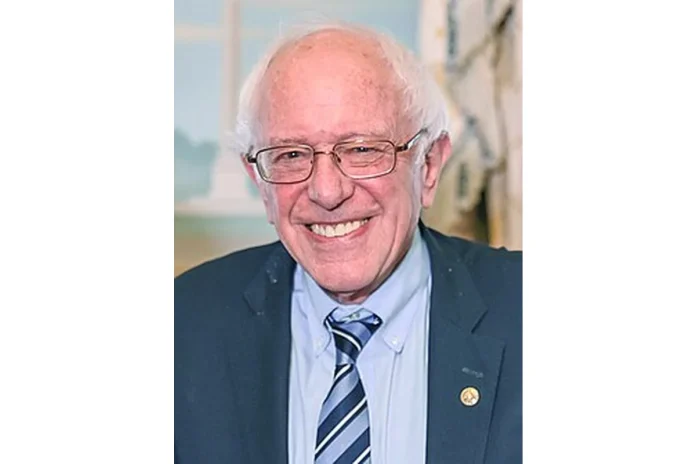
Bernie Sanders Bio
Bernard Sanders is an American politician and activist serving as the senior United States senator from Vermont since 2007. A self-described democratic socialist, Sanders is the longest-serving independent in U.S. congressional history and has caucused with Senate and House Democrats for most of his career. He co-founded the Congressional Progressive Caucus and mounted nationally prominent campaigns for the Democratic presidential nomination in 2016 and 2020.
Early Life and Background
Bernard Sanders was born on September 8, 1941, in Brooklyn, New York, to Elias Ben Yehuda Sanders and Dorothy Sanders. He grew up in a working-class Jewish household in Midwood, Brooklyn, attended James Madison High School, and studied at Brooklyn College before transferring to the University of Chicago, where he earned a Bachelor of Arts degree in 1964. While a student he was active in the civil rights movement with the Congress of Racial Equality and the Student Nonviolent Coordinating Committee.
After college, Sanders returned to New York City for several years working in education and social services before moving to Vermont in 1968. In Vermont he worked as a carpenter, filmmaker, and writer while becoming involved in local politics and community organizing. His early political activity included joining the Liberty Union Party and running several statewide third-party campaigns in the 1970s.
Path to US Politics
Sanders transitioned from activism and third-party campaigns to elected office by building local coalitions in Burlington, Vermont. He was elected mayor of Burlington in 1981 as an independent, defeating an incumbent in a close race and launching an eight-year mayoralty that focused on downtown revitalization, community housing initiatives, and participatory local governance. His tenure as mayor helped establish the Progressive Coalition in Burlington and raised his profile across Vermont and beyond.
Following four terms as mayor, Sanders ran for the U.S. House of Representatives and won election in 1990 to represent Vermont’s at-large district, becoming the first independent elected to the House in decades. He served in the House for sixteen years, co-founding the Congressional Progressive Caucus and establishing a national reputation as a persistent advocate for economic and social reforms. His House service set the stage for a successful 2006 campaign for the U.S. Senate.
Bernie Sanders Career
Early Career (1968–1990)
Sanders’s early career in Vermont combined grassroots activism with practical municipal governance. After moving to Vermont in 1968, he ran for a series of offices as a Liberty Union candidate and worked in nonprofit and educational roles. His 1981 election as mayor of Burlington marked his first significant electoral win and launched an era of municipal reforms that emphasized affordable housing, waterfront redevelopment, and community-based projects.
As mayor from 1981 to 1989, Sanders built a governing coalition of independents and progressives and balanced the city budget while expanding public services. Those municipal achievements broadened his appeal statewide and helped him mount a successful bid for Congress in 1990, when he won Vermont’s only House seat as an independent.
Breakthrough (1981–2006)
Sanders’s breakthrough as a national figure grew from his mayoral record and his years in the U.S. House of Representatives. In the House he co-founded the Congressional Progressive Caucus in 1991 and became known for a consistent critique of economic inequality and corporate influence in politics. He developed a reputation for pressing progressive amendments and for vocal opposition to policies he viewed as harmful to working families.
His 2006 campaign for the U.S. Senate culminated in election to the seat vacated by Jim Jeffords, making Sanders the first non-Republican elected to Vermont’s Class 1 Senate seat since the 19th century. In the Senate, he continued to press progressive priorities and won reelection multiple times, increasing his national profile through legislative activity and public advocacy on health care, labor, and climate policy.
Independent Era (1978–Present)
Sanders has identified and served as an independent since the late 1970s while maintaining a working relationship with Senate and House Democrats. His independent status allowed him to form coalitions across party lines while preserving a distinct progressive identity. He has chaired or led several Senate committees and Democratic caucus groups, including the Senate Veterans’ Affairs Committee, the Senate Budget Committee, and roles on health and outreach panels.
On a national scale, Sanders’s presidential campaigns in 2016 and 2020 galvanized grassroots fundraising and volunteer networks, popularized policy proposals such as Medicare for All and a $15 minimum wage, and shifted public debate on health care, higher education, and economic inequality. He endorsed the Democratic nominee in 2016 and again in 2020 after suspending his campaign, and he has continued to influence the broader progressive agenda through advocacy and organizational work.
Notable Events and Milestones
Key milestones in Sanders’s career include his narrow 1981 mayoral victory, the 1991 founding of the Congressional Progressive Caucus, his election to the U.S. Senate in 2006, and his two high-profile runs for the Democratic presidential nomination in 2016 and 2020. He chaired the Senate Veterans’ Affairs Committee from 2013 to 2015, the Senate Budget Committee from 2021 to 2023, and served in leadership roles on health and outreach committees through the mid-2020s. His 2016 campaign won 23 primaries and caucuses and reshaped policy conversations within the Democratic Party.
Bernie Sanders Career Wins
Sanders’s verified electoral wins span municipal, congressional, and statewide federal office. He won four terms as mayor of Burlington, multiple terms in the U.S. House representing Vermont’s at-large district, and has been reelected to the U.S. Senate several times since his initial 2006 victory. His campaigns have consistently combined grassroots organizing with sustained policy messaging.
Senate and House Highlights
Sanders was first elected to the U.S. House in 1990 and served until his election to the U.S. Senate in 2006. He has been reelected to the Senate in subsequent cycles, running as an independent who caucuses with Democrats. In the Senate he has sponsored and supported legislation and amendments addressing community health centers, veterans’ care, labor rights, and climate initiatives, and he played a key role in building support for progressive policy proposals within Congress.
Other Wins & Achievements
Beyond electoral victories, Sanders’s accomplishments include municipal reforms in Burlington such as waterfront redevelopment and community-trust housing, legislative provisions securing funding for rural health centers, and national influence through his presidential campaigns, which mobilized large small-donor fundraising networks and expanded public discussion of single-payer health care and income inequality. He has received honors including a readers’ Time Person of the Year poll recognition and honorary degrees acknowledging his public service.
Bernie Sanders Family
Family Background and Racing Lineage
Bernard Sanders was born to Polish-Jewish immigrant Elias Ben Yehuda Sanders and Dorothy Sanders in Brooklyn and grew up with one brother, Larry Sanders. His family background and the losses relatives suffered in the Holocaust shaped his early worldview and commitment to social justice. He has long described his Jewish identity as cultural and formative rather than strictly religious.
Personal Life
Sanders has been married twice and is currently married to Jane O’Meara Sanders since 1988. He is the father of Levi Sanders and considers his wife’s three children—Dave Driscoll, Carina Driscoll, and Heather Titus—to be part of his family. He maintains residences in Burlington, Vermont, and owns property in Washington, D.C., and Vermont.