
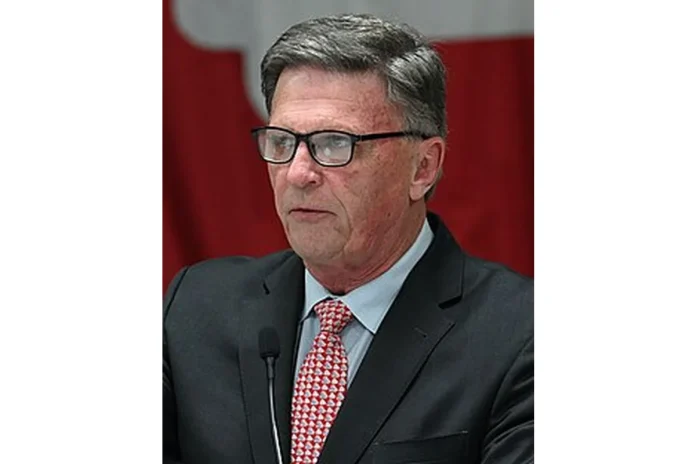
Bob Ehrlich Bio
Robert Leroy Ehrlich Jr. is an American lawyer and Republican politician who served as the 60th governor of Maryland from 2003 to 2007. Born in Arbutus, Maryland, on November 25, 1957, he built a long career in Maryland politics before becoming the first Republican elected governor of the state since Spiro Agnew left office in 1969. After leaving the governorship, Ehrlich returned to private legal work and remained a visible figure in Republican politics. He has practiced law, advised political campaigns, and continued to comment on Maryland and national affairs.
Before serving as governor, Robert Leroy Ehrlich Jr. represented Maryland’s 10th legislative district in the House of Delegates from 1987 to 1995 and Maryland’s 2nd Congressional district in the United States House of Representatives from 1995 to 2003. A Princeton University graduate, he later earned a Juris Doctor from Wake Forest University School of Law. He is widely recognized for his lengthy tenure in Maryland public life and his role in ending more than three decades of Democratic control of the governor’s office.
Early Life and Background
Robert Leroy Ehrlich Jr. was born in Arbutus, a southwest Baltimore suburb in Maryland, the son of Nancy Bottorf, a legal secretary, and Robert Leroy Ehrlich, a commission car salesman. Of German descent, he grew up in the Baltimore area during a period when Maryland politics was dominated by the Democratic Party. His parents’ professional lives gave him early exposure to both working-class trades and the legal profession, two worlds that would shape his later career.
Robert Leroy Ehrlich Jr. attended the Gilman School, a well-known private preparatory school in Baltimore. He then enrolled at Princeton University, where he attended on a partial scholarship and became involved in campus life. At Princeton, he served as captain of the football team and was a member of the Cap and Gown Club. He graduated with a Bachelor of Arts in politics in 1979 after completing a 140-page senior thesis titled “Alexander Solzhenitsyn: The Man and His Politics.”
Following his undergraduate years, Robert Leroy Ehrlich Jr. pursued legal studies at the Wake Forest University School of Law, where he earned his Juris Doctor in 1982. His academic training in both politics and the law gave him a strong foundation for a career that would blend public service with private legal practice. The combination of Ivy League political training and a practical legal education foreshadowed his future work as both a legislator and a practicing attorney.
Path to US Politics
After completing law school, Robert Leroy Ehrlich Jr. joined the Baltimore law firm Ober, Kaler, Grimes & Shriver, where he began practicing as an attorney. While building his legal career, he became increasingly active in Republican politics at the local and state levels. His interest in public policy and his political instincts led him to seek elected office in his home state of Maryland.
In November 1986, Robert Leroy Ehrlich Jr. won a seat in the Maryland House of Delegates, representing parts of Baltimore County. He served in that chamber from 1987 to 1995, gaining valuable legislative experience and a reputation as a rising figure in Maryland’s minority Republican Party. His steady progress in Annapolis set the stage for his move to national office.
When longtime 2nd district Representative Helen Delich Bentley announced in 1993 that she would not seek another term, Robert Leroy Ehrlich Jr. saw an opening to enter Congress. He launched his candidacy for the open seat and won the November 1994 election. His successful transition from the state legislature to the United States House of Representatives marked a defining step in his political rise.
Bob Ehrlich Career
Early Career (1987–1995)
Robert Leroy Ehrlich Jr. began his political career in the Maryland House of Delegates, where he represented the 10th legislative district from 1987 to 1995. His time in Annapolis allowed him to develop legislative skills, build relationships with fellow lawmakers, and refine his policy priorities. These formative years gave him a strong grounding in state government.
During his House of Delegates tenure, Robert Leroy Ehrlich Jr. earned a reputation as a hardworking lawmaker focused on practical results. He balanced his legislative duties with continued work at his Baltimore law firm, gaining perspective on how public policy intersected with private enterprise. This dual experience in law and politics prepared him for the larger stage of national office.
Breakthrough (1995–2002)
Robert Leroy Ehrlich Jr. won election to the United States House of Representatives in November 1994, representing Maryland’s 2nd Congressional district. He took office in 1995 and served in Congress until 2003, becoming a respected voice on economic and health-related issues. During his time in Washington, he won re-election by margins of at least 25% in every race, demonstrating consistent support among his constituents.
While serving in Congress, Robert Leroy Ehrlich Jr. sat on the House Energy and Commerce Committee and its subcommittees on health, telecommunications and the Internet, and environment and hazardous materials. He also served as co-chairman of the Congressional Biotechnology Caucus and was a member of the Congressional Steel Caucus. He introduced legislation aimed at helping people with disabilities maintain employment and supported stronger penalties for gun violence. In 1999, he voted to remove President Bill Clinton from office during the impeachment trial.
In 2002, Robert Leroy Ehrlich Jr. announced his candidacy for governor of Maryland, challenging the long Democratic hold on the office. He attacked outgoing Governor Parris Glendening’s record and tied his Democratic opponent, Lieutenant Governor Kathleen Kennedy Townsend, to that record. With running mate Michael Steele, an African-American and chair of the Maryland Republican Party, he promised to increase school funding, balance the budget, and protect the Chesapeake Bay. He won the race with 52% of the vote, becoming the first Republican elected governor of Maryland since Spiro Agnew left office in 1969.
Republican Era (2003–2007)
As governor, Robert Leroy Ehrlich Jr. identified “fiscal responsibility, education, health and the environment, public safety, and commerce” as the Five Pillars of his administration. He opposed sales and income tax increases and pushed for the legalization of slot machines as a way to raise new revenue. He also established a cabinet-level Department of Disabilities, the first such agency of its kind in the nation.
During his term, Maryland’s unemployment rate stayed at least half a percentage point below the national average and fell from 4.5% in 2003 to 3.9% in 2006, with the addition of about 98,000 private-sector jobs. In 2004, Ehrlich signed the Chesapeake Bay Restoration Act, which funded upgrades to water treatment plants to reduce pollution. He also opposed the 2006 federal approval of a United Arab Emirates firm taking control of port operations at the Port of Baltimore, and in 2006 he signed a law banning police traffic ticket quotas.
Notable Events and Milestones
One of the most significant moments of Robert Leroy Ehrlich Jr.’s career came when he became the first Republican elected governor of Maryland in more than three decades. His 2002 victory ended a long stretch of Democratic dominance in the state and reshaped Maryland politics. His tenure as governor and his later return to the political spotlight cemented his standing as a leading figure in Maryland Republican politics.
Bob Ehrlich Career Wins
Robert Leroy Ehrlich Jr. compiled a long record of electoral victories throughout his career in Maryland and national politics. His wins span local legislative races, multiple congressional terms, and a historic gubernatorial election.
Election Highlights
Robert Leroy Ehrlich Jr. won his first seat in the Maryland House of Delegates in 1986 and held it through 1994. He then won election to the United States House of Representatives in 1994 and went on to win every subsequent congressional race by margins of at least 25%. His most notable victory came in 2002, when he won the Maryland governorship with 52% of the vote against Kathleen Kennedy Townsend.
Other Wins & Achievements
Beyond electoral success, Robert Leroy Ehrlich Jr. achieved several policy milestones as governor, including the creation of the nation’s first cabinet-level Department of Disabilities and the signing of the Chesapeake Bay Restoration Act. He also earned recognition as a leading voice on biotechnology and disability issues during his time in Congress.
Bob Ehrlich Family
Family Background and Political Lineage
Robert Leroy Ehrlich Jr. was raised in the Baltimore suburb of Arbutus, Maryland, by his mother, Nancy Bottorf, a legal secretary, and his father, Robert Leroy Ehrlich, a commission car salesman. Of German descent, he grew up in a working household that valued hard work and professional achievement. His mother’s career in a law office exposed him early to the legal world.
Personal Life
Robert Leroy Ehrlich Jr. married Kendel Sibiski in 1993, and the couple has two sons, Drew Robert Ehrlich and Joshua Taylor Ehrlich. After leaving public office, the family remained active in Maryland life, and Kendel Ehrlich took a consulting role as a director of BankAnnapolis. The couple also hosted their own radio show on WBAL-AM Radio every Saturday from 2007 to 2010.