
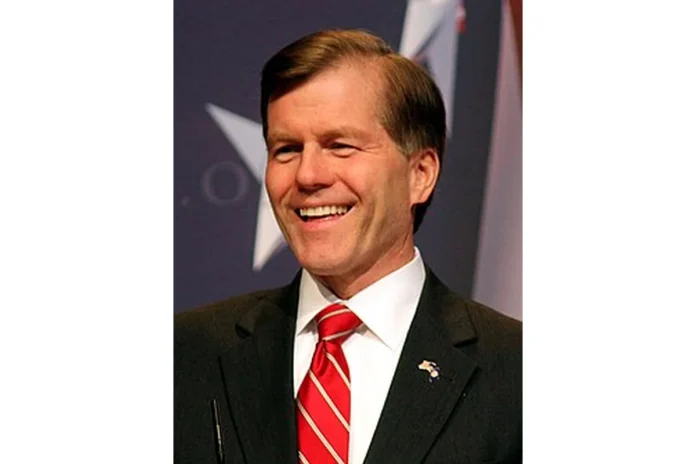
Bob McDonnell Bio
Robert Francis McDonnell, commonly known as Bob McDonnell, is an American politician, attorney, academic administrator, and former military officer who served as the 71st governor of Virginia from 2010 to 2014. A member of the Republican Party, he previously represented Virginia Beach in the Virginia House of Delegates from 1992 to 2006 and served as the 44th attorney general of Virginia from 2006 to 2009. He is also a former lieutenant colonel in the United States Army Reserve and has held academic roles at Regent University following his time in elected office.
McDonnell rose to statewide prominence on a jobs-focused platform, defeating Democratic state Senator Creigh Deeds by a 17-point margin in the 2009 gubernatorial election. His single term in office was defined by conservative policy priorities on taxation, transportation, energy, and government reform, as well as a high-profile federal corruption case that ended with the Supreme Court of the United States unanimously vacating his conviction in 2016.
Early Life and Background
Robert Francis McDonnell was born on June 15, 1954, in Philadelphia, Pennsylvania, in the United States. He grew up in a close family headed by his father, John Francis McDonnell, and his mother, Emma B. Meta McDonnell, who was née Meiller. The family environment and his Catholic schooling helped shape the disciplined outlook that would later inform his approach to public service and military service.
McDonnell attended Bishop Ireton High School, a secondary school where he began to develop interests in law, public policy, and service. He went on to earn a Bachelor of Business Administration from the University of Notre Dame, followed by a Master of Science from Boston University. He later returned to graduate study at Regent University, where he earned both a Master of Arts and a Juris Doctor, completing a 1989 thesis titled The Republican Party’s Vision for the Family: The Compelling Issue of The Decade that would later attract national attention during his campaign for governor.
Alongside his civilian education, McDonnell pursued a military career, ultimately attaining the rank of lieutenant colonel in the United States Army Reserve. His service in the reserves complemented his legal training and his growing interest in politics, giving him a distinctive profile that combined executive military experience with legal and policy credentials.
Path to US Politics
McDonnell’s entry into US politics came after years of legal practice, military service, and civic engagement in Virginia. He settled in Virginia Beach, where he built a professional life as an attorney and became increasingly active in Republican politics. In 1992, he won election to the Virginia House of Delegates, representing a Virginia Beach district and beginning a 14-year tenure in the state legislature.
During his time in the House of Delegates, McDonnell earned a reputation as a disciplined conservative lawmaker focused on tax policy, education, transportation, and social issues. He rose through the ranks of the House Republican caucus, serving in leadership roles that allowed him to shape the party’s legislative agenda. In 2005, he was elected attorney general of Virginia, and in February 2009, he resigned that office to campaign full-time for governor, ultimately winning the 2009 general election by a decisive margin.
Bob McDonnell Career
Early Career (1992–2006)
Bob McDonnell’s early political career began in 1992 when he won a seat in the Virginia House of Delegates representing Virginia Beach. Over the next fourteen years, he built a record on issues including abortion restrictions, tax relief, education reform, transportation funding, and family policy. His 1989 Regent University thesis, which laid out a 15-point conservative agenda, became a touchstone for press analysis of his legislative priorities, since ten of those points aligned with measures he pursued in the General Assembly.
In 2005, McDonnell won election as the 44th attorney general of Virginia, serving from 2006 to 2009. As attorney general, he played a key role in early negotiations on a major 2007 transportation package, weighed in on cultural and religious-property disputes, and took legal positions on federal health care reform and gun-related background checks following the 2007 Virginia Tech shooting. His tenure elevated his statewide profile and positioned him as a leading candidate for governor.
Breakthrough (2009–2010)
The defining breakthrough of McDonnell’s career came with the 2009 gubernatorial election, in which he ran on the campaign slogan “Bob’s for Jobs.” He defeated Democratic state Senator Creigh Deeds by a 17-point margin, capitalizing on voter concerns about the late-2000s recession to win in a difficult political environment. His victory was part of a broader Republican sweep in Virginia that year and immediately established him as a national figure within the party.
Following his inauguration in January 2010, McDonnell moved quickly to assert his policy agenda. He worked with the House of Delegates to defeat outgoing Governor Tim Kaine’s budget proposal and then released his own set of $268.8 million in proposed cuts, including reductions to K-12 education, health programs, and state agencies. He also issued 96 budget amendments and pursued a high-profile plan to privatize Virginia’s state-run liquor stores, arguing that retail alcohol sales were not an appropriate state activity and that proceeds should support transportation needs.
Republican Era (2010–2014)
During his tenure as governor, McDonnell focused on three core areas: jobs and economic development, transportation infrastructure, and energy policy. He authorized the issuance of nearly $2 billion in transportation bonds, proposed a regional sales-tax diversion to fund Northern Virginia and Hampton Roads congestion projects, and applied to toll Interstate 95 near the North Carolina border. On energy, he advocated offshore oil drilling for Virginia while supporting wind, solar, biomass, and other renewable resources, and he signed a law seeking to nullify the federal health insurance purchase requirement.
McDonnell’s term was also marked by social and cultural policy fights. He issued a Confederate History Month proclamation in 2010 that initially omitted any mention of slavery, later apologizing and calling the omission a “major error” before redesignating the 2011 observance as “Civil War in Virginia” month. He signed a 2012 ultrasound law, declined to commute the death sentence of Teresa Lewis, and withdrew Virginia from the second round of the federal Race to the Top education competition. The state unemployment rate fell from 7.4 percent in January 2010 to 5.2 percent in December 2013 during his administration.
Notable Events and Milestones
The most dramatic milestone of McDonnell’s career was his 2014 federal indictment alongside his wife, Maureen, on corruption charges stemming from gifts and loans from Virginia businessman Jonnie R. Williams Sr. He was convicted on most counts in September 2014, becoming the first Virginia governor to be indicted and convicted of a felony, and was sentenced to two years in prison followed by two years of supervised release. In June 2016, however, the Supreme Court of the United States unanimously overturned his conviction, and the Justice Department later moved to dismiss the charges against both McDonnells.
Bob McDonnell Career Wins
Bob McDonnell’s career wins are primarily political rather than electoral in the traditional multi-cycle sense, since Virginia governors are barred by the state constitution from serving consecutive terms. His signature victories include his 1992 election to the Virginia House of Delegates, his 2005 election as attorney general of Virginia, and his 2009 gubernatorial win by 17 points over Creigh Deeds. The latter remains one of the most decisive gubernatorial victories in modern Virginia history.
Virginia Statewide Races
McDonnell’s 2005 attorney general’s race and 2009 gubernatorial race marked his two highest-profile statewide wins. In 2005, he was elected attorney general of Virginia, and in 2009, he was elected the 71st governor of Virginia on his “Bob’s for Jobs” platform. His 17-point margin over Deeds was widely viewed as a referendum on economic stewardship during a deep recession, and it helped shape the early legislative direction of his administration.
Other Wins and Achievements
Beyond his three major electoral wins, McDonnell achieved significant policy milestones as governor, including the authorization of nearly $2 billion in transportation bonds, expansion of job-incentive authority for the governor, and a sharp drop in the state’s unemployment rate from 7.4 percent in January 2010 to 5.2 percent in December 2013. He also played a significant role in the post-2010 census redistricting process, ultimately vetoing an initial gerrymandered map and helping negotiate a revised set of district lines.
Bob McDonnell Family
Family Background and Political Lineage
Bob McDonnell was raised in Philadelphia by his father, John Francis McDonnell, and his mother, Emma B. Meta McDonnell, who was née Meiller. His parents’ emphasis on education, service, and faith helped shape his path toward a career in law, the military, and conservative politics, while his later graduate work at Regent University further cemented his commitment to a public-policy worldview rooted in family and traditional values.
Personal Life
McDonnell married Maureen Patricia Gardner in 1976, and the couple had five children. Their eldest daughter, Jeanine, served as a U.S. Army Signal Corps officer in Iraq. Despite McDonnell’s long public career as a defender of traditional marriage, he filed for divorce from Maureen in early November 2018, and the marriage was formally dissolved in 2020. After leaving the governorship, McDonnell served as a professor at Regent University and ran the McDonnell Group, a real estate consulting firm, with his sister.