
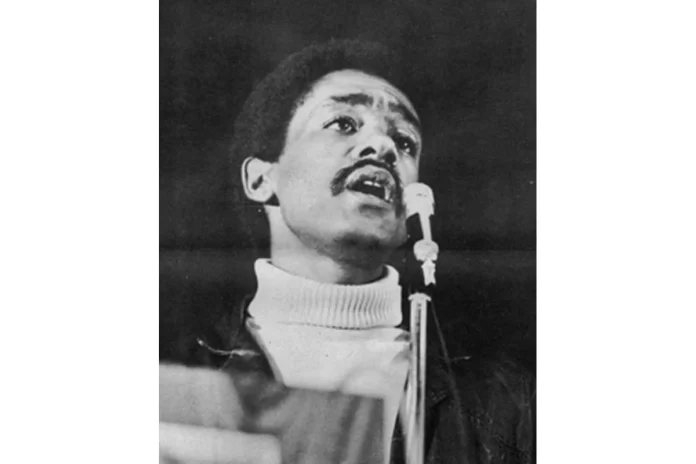
Bobby Seale Bio
Bobby Seale (born October 22, 1936) is an American political activist, revolutionary, and author who co-founded the Black Panther Party for Self-Defense with Huey P. Newton in October 1966. Headquartered initially in Oakland, California, the organization developed community programs and monitored police activity in Black neighborhoods, expanding from a local effort into a national movement. Seale gained wider public attention through his role as one of the original defendants in the Chicago Eight trial and through the New Haven Panther trials in 1970, where charges against him were eventually dropped.
Across decades of public life, Seale has written several books about the Panthers and continued his work as an educator and organizer. He has taught at colleges, supported youth programs, and remained connected to grassroots political work. In 2025, the city of Oakland proclaimed October 22 as Bobby Seale Day and named a street in his honor.
Early Life and Background
Bobby Seale was born on October 22, 1936, in Dallas, Texas, to George Seale, a carpenter, and Thelma Seale, a homemaker. The family lived in poverty during his early years and moved several times across Texas, including stays in San Antonio and Port Arthur, before relocating to the Codornices Village area of Berkeley, California, when Seale was eight years old. The relocation came during the broader Great Migration of African American families from the South to other parts of the country.
Seale attended Berkeley High School but dropped out in 1955 and enlisted in the United States Air Force. Three years later, a court-martial at Ellsworth Air Force Base in South Dakota convicted him of fighting with a commanding officer, leading to a bad conduct discharge. After leaving the military, Seale worked as a sheet metal mechanic for aerospace plants while earning his high school diploma at night.
After completing his diploma, Seale enrolled at Merritt Community College, where he studied engineering and politics until 1962. While at Merritt, he joined the Afro-American Association, a campus group focused on African and African American history, philosophy, and politics. It was through this group that Seale met Huey P. Newton, who would later become his partner in building the Black Panther Party.
Path to US Politics
Seale’s political direction sharpened in the early 1960s as he engaged with Black history and ideas of Black self-determination through the Afro-American Association. In June 1966, he began working at the North Oakland Neighborhood Anti-Poverty Center’s summer youth program, teaching Black American history and encouraging young people to serve their communities. During this work, he met Bobby Hutton, who later became the first recruited member of the Black Panther Party.
Inspired by the teachings of Malcolm X and by the need to organize against police brutality, Seale and Newton first created a campus-based group called the Soul Students Advisory Council. In October 1966, they founded the Black Panther Party for Self-Defense, with Newton named Minister of Defense and Seale as Chairman. The Party’s platform included the Ten-Point Program, addressing demands for full employment, decent housing, decent education, and the release of political prisoners.
Seale and Newton also co-wrote the doctrines “What We Want Now!” and “What We Believe,” outlining the Party’s practical goals and philosophical principles. The Party’s activities drew the attention of the Federal Bureau of Investigation, which kept Seale under surveillance as part of its illegal COINTELPRO program. Seale’s growing visibility set the stage for the legal confrontations that followed.
Bobby Seale Career
Early Career (1966–1968)
The Black Panther Party for Self-Defense was officially launched in October 1966, and Seale’s role as Chairman quickly placed him at the center of its operations. The organization opened its first office in Oakland and began patrolling neighborhoods to observe police conduct, an effort modeled on community self-defense. Seale and Newton used proceeds from selling copies of Quotations from Chairman Mao Zedong to purchase weapons for Party members.
By 1968, the Panthers had grown into a nationally recognized movement, and Seale had become a public spokesperson for its program. In that year, he wrote Seize the Time: The Story of the Black Panther Party and Huey P. Newton, an account of the Party’s early years. His growing public profile also made him a target during the wave of federal investigations into Black radical organizations.
Breakthrough (1968–1972)
Seale’s national profile rose sharply when he became one of the original “Chicago Eight” defendants charged with conspiracy and inciting a riot during the 1968 Democratic National Convention. Seale had traveled to Chicago as a last-minute replacement for activist Eldridge Cleaver and had been in the city for only two days of the convention. In court, Judge Julius Hoffman ordered Seale bound and gagged because of his objections to the hospitalization of his attorney.
Though never convicted on the conspiracy charges, Seale was sentenced on November 5, 1969, to four years in prison for sixteen counts of criminal contempt. His case was eventually severed from the other defendants, leaving the remaining group known as the Chicago Seven. The contempt sentence was later reversed on appeal.
While serving his sentence, Seale was tried in 1970 as part of the New Haven Black Panther trials, which involved the killing of Panther Alex Rackley. Prosecutor George W. Sams Jr. testified that Seale had ordered the killing, but the jury could not reach a verdict, and the charges were eventually dropped. The government suspended his contempt convictions, and Seale was released from prison in 1972.
Black Panther Era (1972–1974)
After his release, Seale returned to public political activity. In 1973, he ran for Mayor of Oakland as a Democrat in a race with nine candidates and an unusually high voter turnout of about 65 percent. He finished second with roughly 20 percent of the vote, trailing incumbent Mayor John Reading, who fell short of a majority and later won the runoff election.
In 1974, tensions between Seale and Newton escalated over a proposed film about the Panthers, and Seale left the Black Panther Party that year. After leaving, Seale stepped away from national politics and focused on writing, family, and education. His departure from the Party marked the end of his most active period with the organization.
Notable Events and Milestones
Among Seale’s most defining public moments were his court appearances during the Chicago Eight trial, where his being bound and gagged drew national attention to the proceedings, and his role in the New Haven Black Panther trials in 1970. His 1973 Oakland mayoral campaign also marked one of the most significant electoral efforts by a former Panther leader.
Bobby Seale Career Highlights
Bobby Seale’s public life is marked by a series of roles that blended activism, organizing, writing, and electoral politics. His leadership of the Black Panther Party, his trials in Chicago and New Haven, and his later work as an author and educator define the arc of his career. The sections below outline some of the positions and activities most closely tied to his public work.
Political Office and Campaigns
Seale’s most significant electoral campaign came in 1973, when he ran for Mayor of Oakland as a Democrat and finished second out of nine candidates with about 20 percent of the vote. The race drew unusually high turnout and reflected his continued influence in Oakland politics. He did not hold elected office in the years that followed.
Other Work and Achievements
In 1978, Seale published his autobiography, A Lonely Rage, and in 1987, he wrote a cookbook called Barbeque’n with Bobby Seale: Hickory & Mesquite Recipes, with proceeds going to non-profit social organizations. In 1998, he appeared in the television documentary series Cold War, and in 1999, he was a central figure in the documentary Public Enemy. In 2016, he co-authored Power to the People: The World of the Black Panthers with photographer Stephen Shames.
In 2002, Seale began dedicating his time to Reach!, a youth education organization, and also taught Black studies at Temple University in Philadelphia. He has visited more than 500 colleges to share his experiences and encourage community organizing. In 2025, the City of Oakland proclaimed October 22 as Bobby Seale Day and named the block of 57th Street and Martin Luther King, Jr. Way as Bobby Seale Way.
Bobby Seale Family
Family Background and Personal Lineage
Bobby Seale was born to George Seale, a carpenter, and Thelma Seale, a homemaker. The family moved several times across Texas before settling in Berkeley, California, when Seale was eight years old. Seale’s upbringing in working-class communities shaped his early awareness of racial and economic inequality.
Personal Life
Seale married Artie McMillan, and the couple had a son, Malik Nkrumah Stagolee Seale. The couple was married from the mid-1960s until 1977. Seale has also been in a relationship with Leslie Johnson beginning in 1971. After his release from prison in 1972, Seale returned to family life and later continued his work as a writer and educator.