
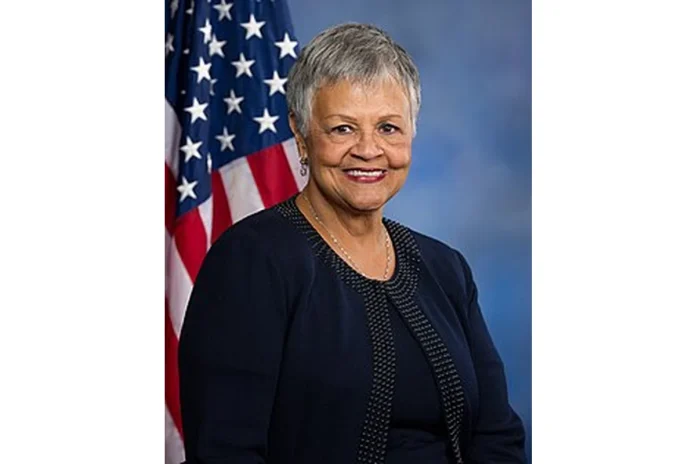
Bonnie Watson Coleman Bio
Bonnie Marie Watson Coleman (born February 6, 1945) is an American politician who has served as the U.S. Representative for New Jersey’s 12th congressional district since 2015. A member of the Democratic Party, she represents a district that includes Trenton and parts of Mercer and Hunterdon counties. Watson Coleman is the first African-American woman to represent New Jersey in the U.S. House of Representatives, a milestone she reached after a long career in New Jersey state government and the state legislature.
Before winning her seat in Congress, Watson Coleman served in the New Jersey General Assembly from 1998 to 2015, including four years as Majority Leader. She is a co-founder of the Congressional Caucus on Black Women and Girls and the America 250 Caucus. In November 2025, she announced that she will not seek reelection in 2026, bringing a close to more than four decades in public service.
Early Life and Background
Bonnie Marie Watson Coleman was born in Camden, New Jersey, on February 6, 1945, and raised in the Ewing Township area. She graduated from Ewing High School in 1963. Her father, John S. Watson, later served six terms in the New Jersey General Assembly, giving her an early view of public service and the inner workings of state government.
Watson Coleman briefly attended Rutgers University–Camden before completing her undergraduate degree much later in life. In 1985, she earned a Bachelor of Arts from Thomas Edison State College while already working in state government. She has also received honorary doctorate degrees from The College of New Jersey, Rider University, and Stockton University in recognition of her public service.
Path to US Politics
Watson Coleman began her career in the New Jersey State Division on Civil Rights in Newark as a field representative in the late 1960s. From 1974 to 1980, she served as the first director of the Office of Civil Rights, Contract Compliance and Affirmative Action in the New Jersey Department of Transportation. In 1980, she moved to the Department of Community Affairs as bureau chief and later assistant commissioner, where she oversaw divisions for aging, community resources, public guardian, and women.
After more than 28 years in state government, she joined her father in establishing a human resources development firm in 1994, but returned to public life after his death in 1996. In 1998, she won a seat in the New Jersey General Assembly for the 15th legislative district, the same seat her father had once held. She later became the first African-American woman to lead the New Jersey Democratic State Committee, serving as chair from 2002 to 2006, and was elected Assembly Majority Leader in 2006.
Bonnie Watson Coleman Career
Early Career (1998–2010)
Watson Coleman won her first General Assembly seat in 1998 alongside Democrat Reed Gusciora. During her early years in Trenton, she focused on civil rights, criminal justice reform, and economic development for urban communities. She served on the Governing Boards Association of State Colleges and on the board of trustees of Richard Stockton College, where she chaired the board from 1990 to 1991.
Her legislative record in the assembly included raising the minimum wage, expanding paid family leave, creating the Office of the Comptroller, and growing the state’s Urban Enterprise Zones. From 2006 to 2010, she served as Majority Leader, the highest-ranking woman in the chamber at that time.
Breakthrough (2014–2016)
When Representative Rush Holt announced he would not seek another term, Watson Coleman entered the 2014 race for New Jersey’s 12th congressional district. On June 3, she won the Democratic primary with 43 percent of the vote in a competitive field that included state senator Linda Greenstein.
On November 4, 2014, she defeated Republican nominee Alieta Eck with 60.9 percent of the vote, becoming the first African-American woman elected to represent a New Jersey district in Congress. She was sworn in to the 114th Congress in January 2015, joining the Homeland Security Committee and introducing early legislation on drone safety, maternity health coverage, and online ammunition sales. In March 2016, she co-founded the Congressional Caucus on Black Women and Girls with Representatives Robin Kelly and Yvette D. Clarke.
Democratic Era (2015–Present)
Watson Coleman has been described as a progressive and is a member of the Congressional Progressive Caucus and the Congressional Black Caucus. She has been easily reelected multiple times, including victories in 2016 (62.9 percent), 2018 (68.7 percent), 2020 (65 percent), 2022 (63 percent), and 2024, when she won the Democratic primary with about 87 percent of the vote.
Her legislative work in the House has covered civil rights, criminal justice, healthcare, and foreign policy. In 2021, she introduced the CROWN Act to prohibit hair discrimination, a bill that passed the House and was reintroduced in 2024. In 2022, she was arrested at an abortion rights rally outside the Supreme Court. She has co-sponsored a ceasefire resolution in response to the Gaza war, and in a March 2025 op-ed in Newsweek, she called for an arms embargo on Israel. On November 10, 2025, she announced she will not seek reelection in 2026.
Notable Events and Milestones
Watson Coleman’s signature milestones include her 2014 election as the first African-American woman to represent New Jersey in Congress, her 2016 co-founding of the Congressional Caucus on Black Women and Girls, and her 2017 resolution to censure President Donald Trump after the Charlottesville remarks. In 2018, she underwent surgery to remove a cancerous tumor; in 2021, she tested positive for COVID-19; and in June 2024, she had back surgery to treat lumbar spinal stenosis.
Bonnie Watson Coleman Career Wins
Watson Coleman has built a long record of electoral victories at the state and federal level, beginning with her first New Jersey General Assembly win in 1998 and continuing through six consecutive wins in Congress. She has consistently prevailed against both Republican challengers and intraparty opponents, often by wide margins.
U.S. House Highlights
Since 2014, Watson Coleman has won every congressional race she has entered, defeating Republican challengers in 2014, 2016, 2018, 2020, 2022, and 2024. Her strongest performance came in 2016, when she won her primary with 93.6 percent of the vote, and in 2020 and 2024, when she topped 87 percent in contested Democratic primaries. Her most recent victory came in the 2024 Democratic primary against former Princeton school board member Daniel Dart.
Other Wins & Achievements
Beyond her six congressional victories, Watson Coleman served as chair of the New Jersey Democratic State Committee from 2002 to 2006, becoming the first African-American woman to lead a state party in New Jersey. She has also received honorary doctorate degrees from The College of New Jersey, Rider University, and Stockton University.
| Position | Wins | Year |
|---|---|---|
| U.S. Representative, NJ-12 | 6 | 2014–2024 |
| NJ General Assembly, 15th District | Won in 1998 | 1998 |
Bonnie Watson Coleman Family
Family Background and Political Lineage
Watson Coleman comes from a family with a deep history in New Jersey politics. Her father, John S. Watson, served six terms in the New Jersey General Assembly for the 15th legislative district, the same seat she would later hold. His career in Trenton helped shape her own interest in public service and civil rights.
Personal Life
In 1972, Watson Coleman married Jim Carter, with whom she had one son, William Carter-Watson. They divorced in the early 1980s. In 1995, she married William Coleman, who had two sons from a previous marriage, including Jared C. Coleman. She is Baptist and resides in Ewing Township, New Jersey. She has publicly addressed her sons’ 2001 conviction for an armed robbery at a Mercer Mall store and has sponsored legislation, since signed into law, to prevent employers with more than 15 employees from asking job applicants about criminal history.