
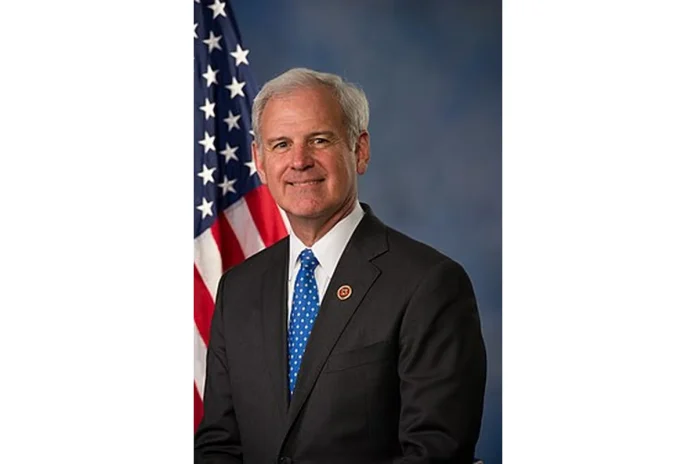
Bradley Byrne Bio
Bradley Roberts Byrne (born February 16, 1955) is an American attorney and Republican politician from the state of Alabama. He served as the U.S. Representative for Alabama’s 1st congressional district from 2014 to 2021, after winning a December 2013 special election. Throughout his career in public service, Byrne held roles on the Alabama State Board of Education, in the Alabama State Senate, and as chancellor of the Alabama Community College System.
Byrne first entered politics as a Democrat in 1994 before switching to the Republican Party in 1997. He later ran unsuccessfully for governor of Alabama in 2010 and for the U.S. Senate in 2020. After leaving Congress in 2021, he returned to the private sector and the law, and in 2022 was named president and chief executive officer of the Mobile Chamber of Commerce.
Early Life and Background
Bradley Roberts Byrne was born in 1955 in Mobile, Alabama, and was one of three children. He was raised in Baldwin County, Alabama, where his family has long maintained a farm. He attended UMS-Wright Preparatory School in Mobile, graduating in 1973, and went on to earn a Bachelor of Arts degree from Duke University in 1977. While at Duke, Byrne became a member of the Phi Delta Theta fraternity.
Byrne continued his education at the University of Alabama School of Law, where he earned his Juris Doctor in 1980. During law school he was a classmate of Mo Brooks, who would later serve alongside him in the Alabama congressional delegation. After completing his legal studies, Byrne entered private practice as a business attorney, laying the foundation for a career that blended law, business, and public service.
Path to US Politics
Byrne’s first run for elective office came in 1994, when he successfully won a seat on the Alabama State Board of Education as a Democrat. His tenure on the board placed him at the center of debates over science education and federal funding. In 1996 he joined a majority in rejecting $18 million in federal education money over concerns about federal control, though he later reversed his position and helped the board accept the funds.
In 1997 Byrne left the Democratic Party and joined the Republican Party, citing shifts in his south Alabama district and his own political beliefs. In 2002 he ran for the Alabama State Senate, representing part of Baldwin County, and won with 91 percent of the vote. He served in the State Senate from 2003 to 2007, representing the 32nd district. In 2007, Byrne was appointed chancellor of the Alabama Community College System, where he oversaw audits and reforms following a major fraud investigation.
Bradley Byrne Career
Early Career (1994–2007)
Byrne’s early political career began with his 1994 election to the Alabama State Board of Education, where he served as a Democrat. His time on the board included contentious votes over science curriculum standards and federal education dollars. These years helped establish Byrne as a thoughtful but conservative voice in Alabama’s education debates.
After switching to the Republican Party in 1997, Byrne continued to build his political profile. In 2002 he won an Alabama State Senate seat with 91 percent of the vote and served until 2007. During this period, he gained experience in budget writing, education policy, and constituent service, all of which prepared him for higher office.
Breakthrough (2007–2013)
In May 2007, Byrne was appointed chancellor of the Alabama Community College System, a position he used to drive significant reforms. He ordered audits that exposed financial and academic problems, particularly at Bishop State Community College in Mobile, leading to criminal fraud and theft charges against dozens of individuals. Byrne also worked with Alabama Attorney General Troy King to recover stolen funds. He resigned as chancellor on August 31, 2009, to seek the Republican nomination for governor in 2010.
Byrne’s 2010 gubernatorial campaign was unsuccessful, and during the primary he faced criticism from opponents who accused him of supporting evolution. In response, Byrne emphasized his Christian faith and his record supporting creationism in school textbooks. Following the campaign, he returned to business law, joining the firm Jones Walker in August 2010. In 2011, he helped found Reform Alabama, a nonprofit that pushed for state-government reforms, and briefly considered a run for chief justice of the Alabama Supreme Court in 2012.
Republican Era (2013–2021)
Byrne’s tenure in the U.S. House of Representatives began in December 2013, when he won a special election for Alabama’s 1st congressional district. He defeated Democratic nominee Burton LeFlore with 71 percent of the vote, becoming only the sixth person to represent the Mobile-based district since 1919. Byrne went on to win reelection three more times, typically with comfortable margins in a district rated R+15 by the PVI.
During his time in Congress, Byrne served on committees focused on education, veterans, and national security. By the end of 2019, he had voted in line with President Donald Trump’s position 96.8 percent of the time. He was a strong supporter of gun rights, pro-life policies, and efforts to repeal the Affordable Care Act, while opposing marijuana legalization, the Equality Act, and criminal-justice reform measures like the First Step Act. In 2020, Byrne ran for the U.S. Senate but was defeated in the first round of the Republican primary by Tommy Tuberville and Jeff Sessions.
Notable Events and Milestones
Among Byrne’s most notable moments in Congress was his participation in the October 2019 SCIF intrusion alongside Gary Palmer, Jim Jordan, and Mo Brooks, which delayed impeachment inquiry testimony and drew bipartisan criticism. He also released a 2020 campaign ad criticizing progressive House members and athletes who knelt during the national anthem. Earlier, in 2017, Byrne had endorsed Roy Moore in the Alabama Senate special election and notably did not withdraw his support after multiple allegations of misconduct surfaced against Moore.
Bradley Byrne Career Wins
Byrne compiled a strong record of electoral victories in Alabama, winning multiple state-level races before going on to claim a U.S. House seat in a 2013 special election. He earned his political breakthrough with that special-election win, and his subsequent House victories reflected his durable appeal in coastal Alabama.
Alabama’s 1st Congressional District Highlights
Byrne won the 2013 special election with 71 percent of the vote, defeating Burton LeFlore. He was reelected in 2014 with 68 percent, in 2016 unopposed, and in 2018 with 63.15 percent of the vote against Democrat Robert Kennedy Jr. His ability to win broad margins in a heavily Republican district made him a reliable vote for House Republican leadership.
Other Wins and Achievements
Before reaching Congress, Byrne won election to the Alabama State Board of Education in 1994, and in 2002 he won an Alabama State Senate seat with 91 percent of the vote. He was later appointed chancellor of the Alabama Community College System, where he led major reforms and fraud investigations, and in 2022 he was named president and chief executive officer of the Mobile Chamber of Commerce.
Bradley Byrne Family
Family Background and Personal Life
Byrne was one of three children and was raised in Baldwin County, Alabama, where his family has long operated a farm. He is a fan of the Alabama Crimson Tide and an Episcopalian, typically attending St. John’s Episcopal Church on Lafayette Square while in Washington. His brother, Dale Byrne, died from a heart attack in 2013 while Bradley was campaigning in his special-election race; Dale had suffered a respiratory illness contracted while serving with the Alabama National Guard in Iraq.
Personal Life
Byrne married Rebecca Dukes in 1982, and the couple has been together throughout his decades-long career in law and politics. After leaving Congress in 2021, Byrne returned to the law as of counsel with Adams and Reese, LLP, while taking on the role of president and chief executive officer of the Mobile Chamber of Commerce in June 2022.