
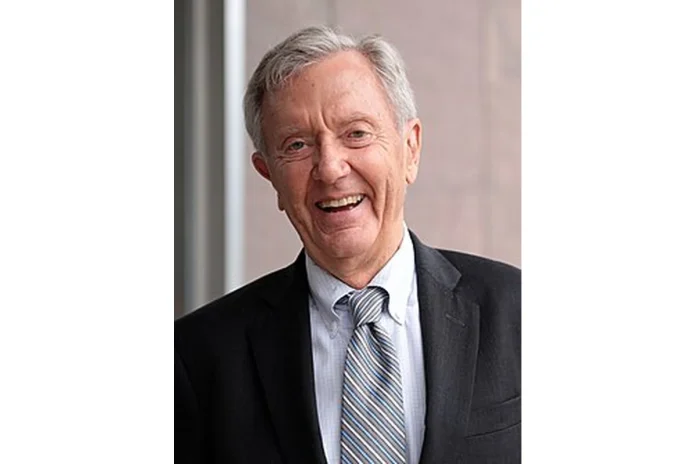
Bruce Babbitt Bio
Bruce Edward Babbitt (born 27 June 1938) is an American attorney and Democratic politician who served as the 16th governor of Arizona from 1978 to 1987 and as the 47th United States secretary of the interior from 1993 to 2001 under President Bill Clinton. A Harvard-trained lawyer, Babbitt built his career in western state government before moving to Washington, where he led a major federal department during the Clinton administration.
Over the course of more than four decades in public life, Babbitt has been a state attorney general, a two-term governor, a candidate for the Democratic presidential nomination in 1988, the head of the League of Conservation Voters, and a Cabinet secretary. Since leaving office he has practiced environmental law and served on conservation boards.
Early Life and Background
Bruce Edward Babbitt was born on June 27, 1938, in Los Angeles, California, into a prominent Roman Catholic family from Flagstaff, Arizona. He is the son of Frances B. (Perry) Babbitt and Paul James Babbitt Sr. The family owned a department store in Flagstaff, a ranch in northern Arizona, and multiple Indian trading posts, giving young Bruce an early grounding in the land and commerce of the American Southwest.
Babbitt attended the University of Notre Dame, where he earned his Bachelor of Science degree. He later attended Newcastle University in the United Kingdom as a Marshall Scholar and obtained a Master of Science degree there. He then completed his legal education at Harvard Law School, receiving his Juris Doctor and laying the groundwork for a career in public law.
Path to US Politics
Babbitt entered politics in Arizona after graduating from Harvard Law School. In the state election of November 1974, he defeated Republican incumbent N. Warner Lee to become Attorney General of Arizona. His early legal work also included serving as attorney for the Scottsdale Daily Progress newspaper, where he collaborated with publisher Jonathan Marshall on legislation that became Arizona’s “open meeting law.”
His rise accelerated in March 1978, when Governor Wesley Bolin died in office. Because Arizona does not have a lieutenant governor and Secretary of State Rose Mofford had been appointed rather than elected, Babbitt, as attorney general, stood next in the line of succession. He finished the term to which Raúl Héctor Castro had been elected in 1974, then won a full four-year term later in 1978 and was re-elected in 1982, opting not to run for a third term in 1986.
Bruce Babbitt Career
Early Career (1975-1977)
As Arizona Attorney General from 1975, Babbitt built a record that combined consumer protection, environmental advocacy, and government-reform litigation. His experience with open-government issues gave him a reputation for clean-government politics that resonated with Arizona voters.
He also took on civic work beyond the office, including a 1979 appointment by President Jimmy Carter to serve as a commissioner on the President’s Commission on the Accident at Three Mile Island, a six-month investigation of the March 1979 nuclear accident in Pennsylvania. He spoke at the 1980 Democratic National Convention, which renominated Carter.
Breakthrough (1978-1987)
Babbitt’s breakthrough came in 1978, when he succeeded Wesley Bolin as governor of Arizona and won election to a full term that same year. He was re-elected in 1982, becoming one of the most active governors of his era. His administration focused on tax reform, health care, and water management across a fast-growing state.
He was not afraid to confront major disputes. In 1982, Babbitt intervened in negotiations between the Cochise County sheriff and leaders of the Christ Miracle Healing Church and Center, and in 1983 he sent the Arizona National Guard to the strike against the Phelps Dodge mining company in Morenci, Arizona. In 1985, he served as chairman of the Democratic Governors Association and helped found the Democratic Leadership Council, organizations that shaped centrist Democratic strategy in the late twentieth century.
Democratic Era (1988-Present)
After leaving the governorship in 1987, Babbitt sought the 1988 Democratic presidential nomination. He proposed a national sales tax to address record budget deficits, drew positive press attention that USA Today described as a “boomlet,” and exited the race after poor showings in the Iowa caucuses and the New Hampshire primary. From 1988 to 1992, he served as head of the League of Conservation Voters.
In 1993, President Bill Clinton nominated Babbitt as the 47th United States secretary of the interior, a position he held for eight years. In 2000 he created the National Landscape Conservation System, a network of 15 U.S. National Monuments and 14 National Conservation Areas managed by the Bureau of Land Management. After leaving office in 2001, he joined the international law firm Latham & Watkins, and he has continued to serve on conservation and reform boards, including as a trustee of the World Wildlife Fund and a board member of the Amazon Conservation Association.
Notable Events and Milestones
Among his signature achievements were founding the National Landscape Conservation System, overseeing eight years at the Department of the Interior, and steering Arizona through the water and growth disputes of the 1980s. He was twice seriously considered for the U.S. Supreme Court, in 1993 and 1994, but was passed over in favor of Ruth Bader Ginsburg and Stephen Breyer. A 1998 federal grand jury investigation, later known as Wampumgate, ended without charges in 1999.
Bruce Babbitt Family
Family Background and Political Lineage
Babbitt was raised in a prominent Roman Catholic family with deep roots in Flagstaff, Arizona. His parents, Frances B. (Perry) Babbitt and Paul James Babbitt Sr., raised a family whose business interests included a department store, a ranch in northern Arizona, and several Indian trading posts, shaping his lifelong interest in land and western issues.
Personal Life
Babbitt married Harriet Coons, known as Hattie, in 1968. She has worked as an attorney in Arizona and Washington, D.C., and served as United States Ambassador to the Organization of American States from 1993 to 1997 and as Deputy Administrator of the United States Agency for International Development from 1997 to 2001 during the Clinton Administration. The couple has remained married and shares a long connection to public service.