
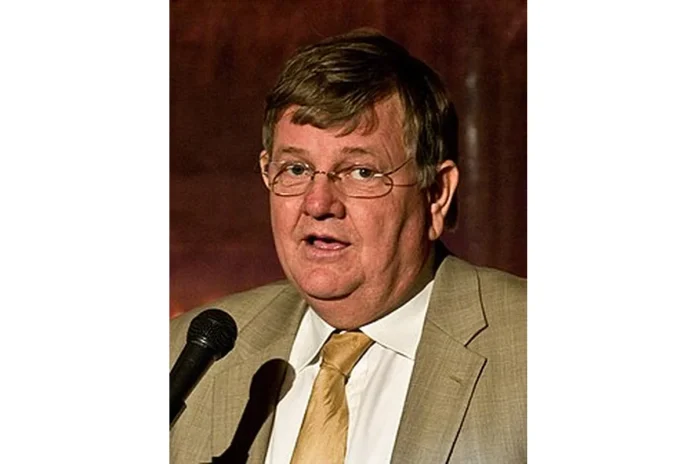
Dave Freudenthal Bio
David Duane Freudenthal (born October 12, 1950) is an American politician, attorney, and economist who served as the 31st Governor of Wyoming from 2003 to 2011. A member of the Democratic Party, he previously served from 1994 to 2001 as the United States Attorney for the District of Wyoming, making him one of the most experienced legal and executive figures in recent Wyoming history. He remains the most recent Democrat to win or hold statewide office in Wyoming.
Early Life and Background
Dave Freudenthal was born in Thermopolis, the seat of Hot Springs County in north central Wyoming. He was the seventh of eight children and grew up on a farm north of town, in a setting that gave him an early appreciation for rural life and the working economy of the American West.
He eventually graduated from Amherst College in Amherst, Massachusetts, in 1973 with a bachelor’s degree in economics. After finishing his undergraduate studies, he took a position with the Wyoming Department of Economic Planning and Development as an economist, and later became the state planning director for Democratic Governor Edgar Herschler, an early step into public service that shaped his long career in state government.
Path to US Politics
Freudenthal continued his education at the University of Wyoming College of Law, where he received his Juris Doctor degree in 1980. He then entered private legal practice, building a career that combined his training in economics with courtroom and advisory work across the state.
In 1994, upon the recommendation of Democratic Governor Mike Sullivan, Freudenthal was appointed United States Attorney for the District of Wyoming. He held that federal prosecutorial post until May 2001, when he was succeeded by Matt Mead, who would later become governor himself. The role gave him statewide visibility and a record of legal leadership that positioned him for a run at the governorship.
Dave Freudenthal Career
Early Career (1980–2001)
After law school, Freudenthal spent more than a decade in private legal practice, applying his economics background to energy, land use, and regulatory matters important to Wyoming. His work during this period helped him build relationships across the state’s business, legal, and political communities.
His appointment as United States Attorney for the District of Wyoming in 1994 marked his first major public office. Over the next seven years he led federal prosecutions in the state, earning a reputation as a steady, nonpartisan legal figure and laying the groundwork for a later transition to electoral politics.
Wyoming Governor Breakthrough (2002–2006)
In 2002, Freudenthal contested the Democratic primary for the Wyoming gubernatorial election and won with more than 50 percent of the vote against a field of opponents. He went on to win the general election on November 5, 2002, with 50 percent of the vote, becoming the 31st Governor of Wyoming.
He ran for reelection on November 7, 2006, and improved his vote count to 70 percent, sweeping every county in the state. Throughout his tenure he remained consistently popular with his constituents, even as a Democrat in a state that had turned almost solidly Republican, often taking pragmatic and at times conservative positions on state issues.
Second Term and Final Years (2007–2011)
The majority of Freudenthal’s two terms coincided with an energy boom and large surpluses in state government revenue. He used that period to invest in state priorities, while later working to manage the impact of the Great Recession by calling for cuts to state agencies as growth slowed.
In June 2007, following the death of Republican U.S. Senator Craig Thomas, Freudenthal appointed Republican John Barrasso to the United States Senate. State law required the governor to select an appointee from a shortlist compiled by the Wyoming Republican Party, and Barrasso went on to a long Senate career. Freudenthal announced on March 4, 2010, that he would not seek a third term, citing Wyoming’s term limits law. After leaving office, he briefly worked at the law firm of Crowell & Moring as senior counsel in the firm’s Cheyenne, Wyoming office before it closed.
Notable Events and Milestones
Among the defining moments of his career, Freudenthal’s 2006 sweep of all Wyoming counties stood out as a rare show of bipartisan support in a heavily Republican state. His appointment of John Barrasso to the U.S. Senate and his steady management of Wyoming through both an energy boom and the Great Recession further cemented his standing as a pragmatic and effective governor.
Dave Freudenthal Career Wins
Freudenthal’s electoral record is anchored by two decisive gubernatorial victories that made him one of the most successful Democratic candidates in modern Wyoming politics. His ability to win and then expand his margin demonstrated broad appeal that crossed party lines.
Wyoming Gubernatorial Highlights
Freudenthal first won the governorship on November 5, 2002, capturing 50 percent of the vote after securing the Democratic primary with more than 50 percent. He then won reelection on November 7, 2006, with 70 percent of the vote, carrying every county in Wyoming in one of the strongest performances by any governor in state history.
Other Wins and Achievements
Beyond his electoral successes, Freudenthal’s appointment as United States Attorney for the District of Wyoming in 1994 and his later selection of John Barrasso to the U.S. Senate in 2007 reflected the trust placed in him by leaders of both parties. His continued influence after leaving office has kept him engaged in Wyoming’s public and legal life.
Dave Freudenthal Family
Family Background and Public Service Lineage
Freudenthal grew up in a large family as the seventh of eight children on a farm near Thermopolis, Wyoming. His brother, Steve Freudenthal, served as Attorney General under Governor Edgar Herschler and was a member of the Wyoming House of Representatives, giving the family a notable record of public service in the state.
Personal Life
Freudenthal is married to Nancy D. Freudenthal, a native of Cody, Wyoming, who serves as a judge on the United States District Court for the District of Wyoming. The couple has four children. He is an Episcopalian. In 2008, while serving as governor, Freudenthal underwent surgery on his shoulder, during which Secretary of State Max Maxfield briefly served as acting governor.