
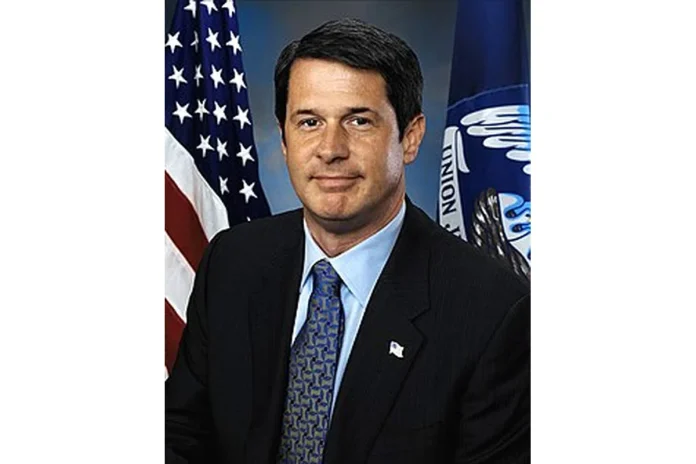
David Vitter Bio
David Bruce Vitter (born May 3, 1961) is an American politician and lawyer who served as a United States senator from Louisiana from 2005 to 2017. A member of the Republican Party, he previously served in the Louisiana House of Representatives from 1992 to 1999 and in the U.S. House of Representatives from 1999 to 2005. He was the first Republican from Louisiana to be popularly elected to the U.S. Senate in the modern era.
During his political career, Vitter advanced conservative policies on immigration, abortion, gun rights, fiscal issues, and chemical safety. He later ran for governor in 2015, lost the runoff, declined to seek reelection to the Senate, and subsequently worked as a lobbyist in Washington, D.C.
Early Life and Background
David Bruce Vitter was born on May 3, 1961, in New Orleans, Louisiana. He is the son of Audrey Malvina Vitter, née St. Raymond, and Albert Leopold Vitter. Vitter grew up in New Orleans and graduated in 1979 from De La Salle High School, a local Catholic school. While a student at De La Salle, he participated in the Close Up Washington civic education program, an early sign of his interest in public affairs.
Vitter went on to earn a Bachelor of Arts from Harvard College in 1983. He then attended Magdalen College, Oxford, where he received a second Bachelor of Arts in 1985 as a Rhodes Scholar. He completed his legal education with a Juris Doctor degree from the Tulane University Law School in New Orleans in 1988. After law school, Vitter worked as a practicing attorney and later served as an adjunct law professor at Tulane University and Loyola University New Orleans.
Path to US Politics
Before entering elected office, Vitter built his career as a lawyer and legal scholar in Louisiana. His work in legal practice and teaching at Tulane and Loyola University New Orleans helped establish his standing in conservative legal circles. These early experiences shaped his policy interests, which would later define his legislative agenda in the state legislature and in Congress.
Vitter first entered politics in 1992 when he won election to the Louisiana House of Representatives. He served in the state legislature from 1992 to 1999, focusing on ethics reform, term limits, and opposition to gambling. His success in the state legislature paved the way for his 1999 bid for the U.S. House of Representatives.
David Vitter Career
Early Career (1992–1999)
Vitter served in the Louisiana House of Representatives from 1992 to 1999, representing the 81st district. As a state legislator, he pushed for ethics reform and championed a successful term limits amendment to the Louisiana Constitution aimed at reducing the power of the long-entrenched Democratic legislature. The reform affected state legislative elections starting in 2007.
He also took a strong stance against gambling during his time in the state House. To advance his term limits agenda, Vitter created a Political Action Committee focused on building a Republican majority in the legislature. While Republicans made gains, Democrats maintained majority control of the chamber.
U.S. House of Representatives Breakthrough (1999–2005)
In 1999, Vitter won a special election to represent Louisiana’s 1st congressional district in the U.S. House of Representatives. He succeeded Republican Bob Livingston, who had resigned after disclosing personal misconduct. Vitter won the initial vote on May 1, 1999, beginning a six-year tenure in Congress.
During his time in the U.S. House, Vitter established himself as a reliable conservative voice on fiscal and social issues. He built a record that emphasized limited government and traditional values, setting the stage for his next major political step. In 2002, he briefly prepared to run for governor but withdrew from that race.
U.S. Senate Era (2005–2017)
Vitter was elected to the United States Senate in 2004, winning a majority of the vote in Louisiana’s jungle primary on November 2, 2004. His victory was historic: he was the first Republican in Louisiana to be popularly elected to the U.S. Senate. The previous Republican senator from the state, William Pitt Kellogg, had been chosen by the state legislature in 1876, before the Seventeenth Amendment took effect.
During his Senate tenure, Vitter focused on issues such as gun rights, abortion, immigration, fiscal responsibility, and chemical safety reform. He earned an A grade from the NRA Political Victory Fund for his support of Second Amendment rights and introduced legislation to prohibit federal funding for firearm confiscation during disasters. In 2016, after a five-year effort, he helped pass landmark legislation reforming the country’s chemical safety laws.
Vitter was re-elected to a second Senate term in 2010, defeating Democratic U.S. Representative Charlie Melancon with about 57 percent of the vote. He ran for governor of Louisiana in 2015 to succeed the term-limited Bobby Jindal, becoming the first sitting or former U.S. senator from Louisiana to launch a gubernatorial bid since 1904. In the November 21, 2015 runoff, Democrat John Bel Edwards defeated him by a margin of 56 percent to 44 percent.
After conceding the gubernatorial race, Vitter announced he would not seek reelection to the Senate in 2016 and retired from office at the end of his term. Following his Senate career, he joined the Washington, D.C. lobbying firm Mercury LLC. As of October 2019, he had lobbied for clients including a sanctioned Chinese surveillance company, the Libyan Government of National Accord, the Zimbabwean Ministry of Foreign Affairs, and a sanctioned Russian bank.
Notable Events and Milestones
In July 2007, Vitter’s phone number appeared in records related to the so-called D.C. Madam case. Vitter acknowledged a past personal failure, took responsibility for his sin, and asked for forgiveness in a public statement. Despite the controversy, he was re-elected to the Senate in 2010. The disclosure resurfaced during his 2015 gubernatorial bid and contributed to his defeat in the runoff.
David Vitter Career Wins
David Bruce Vitter compiled a series of notable electoral victories across more than two decades in public office. He won election to the Louisiana House of Representatives in 1991 and 1995, won a 1999 special election to the U.S. House of Representatives, was elected to the U.S. Senate in 2004, and was re-elected to the Senate in 2010. His 2004 Senate victory was particularly significant, as it made him the first Republican to be popularly elected to the chamber from Louisiana.
U.S. Senate Highlights
Vitter first won a U.S. Senate seat in 2004 by capturing a majority of the vote in Louisiana’s jungle primary. He was re-elected in 2010 against Democratic challenger Charlie Melancon, Independent Ernest Wooton, and intraparty rival Chet D. Traylor, securing about 57 percent of the total vote.
Other Wins and Achievements
Beyond his Senate wins, Vitter earned recognition for his legislative work on chemical safety reform. In 2016, his years-long effort resulted in landmark Senate legislation updating the country’s chemical safety laws, which he described as a major accomplishment. He also earned an A grade from the NRA Political Victory Fund for his consistent defense of gun rights.
David Vitter Family
Family Background and Public Service Lineage
David Bruce Vitter was born to Audrey Malvina Vitter, née St. Raymond, and Albert Leopold Vitter. He grew up in New Orleans, Louisiana, in a family environment that valued education and civic engagement. His brother, Jeffrey Vitter, is a computer scientist who served as chancellor of the University of Mississippi from January 2016 to January 2019.
Personal Life
Vitter married Wendy Baldwin in 1990. Wendy Vitter is a former prosecutor. The couple has four children. Throughout his political career, Vitter and his family lived in Louisiana, where he represented the state in the state legislature, the U.S. House, and the U.S. Senate.