
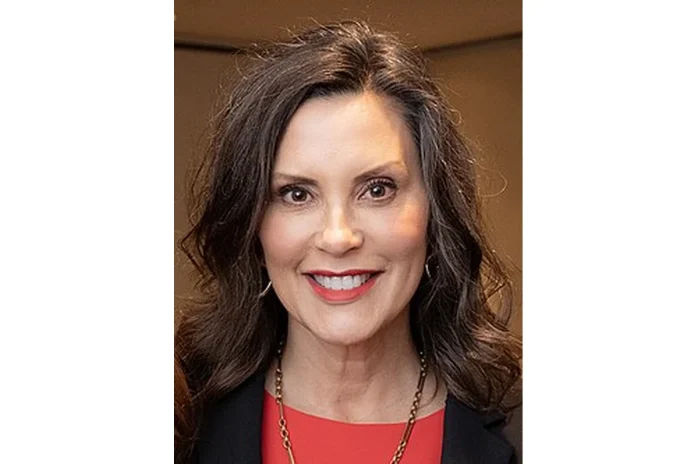
Gretchen Whitmer Bio
Gretchen Esther Whitmer is an American lawyer and politician who has served as the 49th governor of Michigan since 2019. A member of the Democratic Party, she is one of the most prominent state leaders in the country and is widely recognized for her work on healthcare, infrastructure, and education policy. Known in Detroit as “Big Gretch,” Whitmer gained a national profile during the COVID-19 pandemic and through her role delivering the 2020 Democratic response to the State of the Union. She was reelected in 2022 and remains an influential figure in Michigan and national Democratic politics.
Before becoming governor, Whitmer served in the Michigan House of Representatives from 2001 to 2006 and in the Michigan Senate from 2006 to 2015. She made history as the first woman to serve as Senate Democratic leader in Michigan. Whitmer also briefly served as the prosecutor for Ingham County in 2016 before launching her successful gubernatorial campaign in 2018.
Early Life and Background
Gretchen Esther Whitmer was born on August 23, 1971, in Lansing, Michigan. She grew up in the Lansing area and attended Forest Hills Central High School, where she developed an early interest in public affairs and community service. Her upbringing in the state capital gave her firsthand exposure to Michigan politics from a young age.
Whitmer is the daughter of Richard Whitmer and Sharon H. “Sherry” Reisig, who was born Hanna. Her family background provided a strong foundation for her later career, and she has often spoken about the values instilled in her during childhood. The loss of her mother, who died of glioblastoma at the age of 59 shortly after the birth of Whitmer’s first child, deeply shaped her perspective on life and resilience.
Whitmer attended Michigan State University, where she earned a bachelor’s degree in communication in 1993. She continued her education at the Michigan State University College of Law, earning a Juris Doctor degree, magna cum laude, in 1998. Her time at Michigan State laid the groundwork for her legal and political career, and she has remained a vocal advocate for the university system.
Path to US Politics
Whitmer’s entry into politics came in 2000 when she was elected to the Michigan House of Representatives, representing an East Lansing-area district. Her campaign focused on community issues and practical governance, themes that would continue to define her career. She served in the House from 2001 to 2006, building a reputation as a thoughtful legislator.
In March 2006, Whitmer won a special election to the Michigan State Senate, replacing Virg Bernero, who had been elected mayor of Lansing. She won a full term later that year and was reelected in 2010. Her effectiveness in the Senate led her colleagues to unanimously select her as Senate Democratic Leader in 2011, making her the first woman to lead a party caucus in the Michigan Senate.
Whitmer’s career took a brief but notable turn in 2016 when she served as the prosecutor for Ingham County for six months. This experience strengthened her understanding of the justice system and prepared her for higher office. The following year, she announced her candidacy for governor, setting the stage for a successful 2018 campaign.
Gretchen Whitmer Career
Early Career (2001–2015)
Whitmer’s early political career was defined by her steady rise through the Michigan Legislature. After winning her first race in 2000, she served four terms in the Michigan House, focusing on local concerns and bipartisan solutions. Her work earned her a reputation as a pragmatic lawmaker who could navigate complex policy debates.
Her transition to the Michigan State Senate in 2006 marked a turning point. As Senate Democratic Leader from 2011 to 2015, she helped pass Medicaid expansion under the Affordable Care Act and became a leading voice in state-level Democratic politics. Term limits prevented her from running for reelection in 2014, and she left the Senate in 2015.
Governorship Breakthrough (2018–2019)
In January 2017, Whitmer announced her campaign for governor, and by August 2018 she had secured the Democratic nomination with 52% of the primary vote. Her general election opponent was Republican Bill Schuette, the term-limited attorney general. Whitmer campaigned on improving Michigan’s “fundamentals,” emphasizing schools, roads, and water systems.
Whitmer defeated Schuette in the November 2018 election by nearly a 10-point margin, becoming the 49th governor of Michigan. Her victory signaled a shift in state politics and set the stage for ambitious policy initiatives. She took office in 2019 with a clear mandate to focus on infrastructure and healthcare.
Current Term Era (2019–Present)
Since taking office, Whitmer has prioritized healthcare access, infrastructure repair, and education investment. Her signature “fix the damn roads” campaign promise led to historic funding for Michigan roads and bridges, with over 16,000 lane miles repaired during her first term. In 2022, she signed a bipartisan $5 billion infrastructure deal that included significant investment in water systems and lead service line replacement.
Whitmer was reelected in 2022, defeating Republican nominee Tudor Dixon by nearly 11 points. Her second term has seen expanded gun violence prevention legislation, including universal background checks and a red flag law, as well as continued investment in renewable energy and manufacturing. She has also engaged in bipartisan work with federal leaders to protect Michigan’s economic interests.
Notable Events and Milestones
One of the most significant moments of Whitmer’s tenure came in October 2020, when the FBI thwarted a kidnapping plot against her by members of a far-right militia group. The indictment against six men associated with the Wolverine Watchmen drew national attention to threats against elected officials. In 2013, Whitmer gained national recognition for sharing her personal story of sexual assault during a debate on abortion rights, advocating for victims’ access to reproductive healthcare.
Gretchen Whitmer Career Wins
Whitmer’s electoral record includes victories at the state legislative, state executive, and national visibility levels. Her wins reflect a consistent ability to connect with Michigan voters across diverse regions and demographics.
Statewide Election Highlights
Whitmer won her first gubernatorial race in 2018 by nearly 10 points and followed it with a decisive reelection in 2022, winning by nearly 11 points. Her 2022 victory exceeded expectations in a difficult midterm environment for Democrats, with wins in 18 counties and expanded margins in key bellwether areas.
Earlier in her career, Whitmer won multiple state Senate races, including a 2006 special election and a full term later that year, followed by reelection in 2010. Her unanimous selection as Senate Democratic Leader in 2011 marked a historic first for women in the Michigan Senate.
Other Wins and Achievements
In 2023, Whitmer was inducted into the Michigan Women’s Hall of Fame in recognition of her contributions to the state. She has also been recognized for her policy achievements, including Medicaid expansion, the Michigan Reconnect program, and bipartisan infrastructure investment.
Gretchen Whitmer Family
Family Background and Personal Lineage
Whitmer was born to Richard Whitmer and Sharon H. “Sherry” Reisig, who was born Hanna. Her sister, Liz Whitmer Gereghty, is a school board trustee in Westchester County, New York, and briefly ran for Congress in 2023. Whitmer’s family has been a central part of her personal and political life, and she often credits her upbringing in Lansing for shaping her values.
Personal Life
In 2001, Whitmer married Gary Shrewsbury, a photographer, and the couple had two daughters. Although they divorced in 2008, they have remained close, and Shrewsbury worked on her 2018 gubernatorial campaign. In 2011, Whitmer married Marc P. Mallory, a dentist, and the couple has blended their family, including Mallory’s three sons from a previous marriage. Whitmer’s daughters both graduated from East Lansing High School and the University of Michigan, and her eldest daughter is openly lesbian. The family resides in Michigan, where Whitmer continues to balance her demanding role as governor with her commitment to family life.