
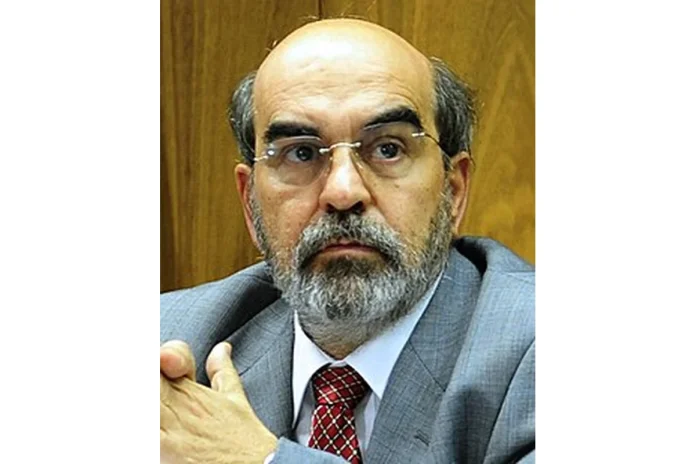
José Graziano da Silva Bio
José Graziano da Silva, born on 17 November 1949, is a Brazilian, American, and Italian agronomist, academic, writer, and international civil servant recognized globally for his work on food security and rural development. He coordinated Brazil’s Fome Zero policies and served as Extraordinary Minister for Food Security in President Luiz Inácio Lula da Silva’s administration, helping implement programs linked to Bolsa Família. In 2012 he became the first Latin American elected Director-General of the United Nations Food and Agriculture Organization, serving two terms through 2019.
His tenure at the FAO emphasized family farming, decentralization, and South-South cooperation, while also drawing controversy over certain appointments and statements regarding food situations in specific countries. He has published extensively on agrarian economics and has held academic posts in Brazil and abroad.
Early Life and Background
José Graziano da Silva was born in Urbana, Illinois, in the United States. His parents were Brazilians of Italian origin, originally from the Calabria region of Italy. This family background made him eligible for three citizenships: American by birth on U.S. soil, Brazilian, and Italian through ancestral descent. The mixed cultural heritage shaped his later academic interests in rural development and agriculture across Latin America.
He graduated as an agronomist in 1972 from the University of São Paulo’s Escola Superior de Agricultura Luiz de Queiroz. He earned an MBA from the same institution in 1974, completing a dissertation on the distribution of wealth in Brazil. He later received his doctoral degree from the State University of Campinas in 1980, followed by post-doctorate studies at the University of California, Berkeley, and at the Institute of Latin American Studies at the University of London.
His academic training combined agronomy, economics, and policy analysis, providing a foundation for his later roles in government and international organizations. From the beginning, his scholarly interests centered on agrarian economics and the social conditions of rural workers in Latin America.
Path to Politics
Since 1977, José Graziano da Silva devoted his professional efforts to issues related to rural development and the fight against hunger, working in academia, at the political level, and with organized labor groups. As a full professor at the State University of Campinas, he trained a new generation of Latin American professionals focused on food security. His involvement in policy formulation began in the late 1990s and early 2000s, when he became a key intellectual force behind emerging anti-hunger strategies in Brazil.
In 2001, he coordinated the formulation of the Fome Zero program, which became one of the main policy platforms of Luiz Inácio Lula da Silva’s presidential campaign. After Lula’s victory in late 2002, Graziano da Silva was appointed as Extraordinary Minister for Food Security. From 1 January 2003 to 23 January 2004, he led the implementation of Fome Zero, a program credited with lifting 28 million Brazilians out of poverty during the Lula administration.
When the government created the Ministry of Social Development and Fight Against Hunger in January 2004, his extraordinary ministry was absorbed into the new structure. He then transitioned to international work, joining the FAO in March 2006 as Assistant Director-General and Regional Representative for Latin America and the Caribbean. This role set the stage for his later campaign to lead the organization.
José Graziano da Silva Career
Early Career (1977-2003)
José Graziano da Silva began his academic and policy career in 1977, focusing on the problems of rural workers and agrarian economics in Brazil. He became a recognized author, publishing 25 books, including De boias frias an empregados rurais, which examined the transition of rural labor conditions, and O que é a questão agrária?, originally published by Brasiliense in 1980. His work attracted attention from policymakers seeking to address rural poverty.
Throughout the 1980s and 1990s, he balanced his teaching at the State University of Campinas with consulting work for government bodies and labor organizations. He chaired the Master’s and Doctoral Program in Economic Development, Space, and Environment at UNICAMP’s Institute for Economics, mentoring many young Latin American scholars. By the early 2000s, he was widely regarded as a leading expert on food security in the region.
Minister for Food Security Era (2003-2004)
As Extraordinary Minister for Food Security from January 2003 to January 2004, José Graziano da Silva oversaw the rollout of the Fome Zero program, a holistic anti-hunger initiative. The program combined cash transfers, support for family farmers, and civil society participation in policy design. Its centerpiece, the Bolsa Família cash transfer program, became a model for similar initiatives worldwide.
Under his leadership, Fome Zero emphasized gender-focused cash transfers directed to women, recognizing that direct support to women led to more effective household outcomes. The program also engaged civil society in monitoring and resource allocation, creating an innovative model of participatory policy design. These achievements positioned him as a leading voice on food security internationally.
FAO Leadership Era (2006-2019)
In March 2006, José Graziano da Silva joined the FAO as Assistant Director-General and Regional Representative for Latin America and the Caribbean. In that role, he secured a regional commitment to eradicate hunger by 2025 through the Hunger-Free Latin America and the Caribbean Initiative. He also pushed internal reforms, particularly the decentralization of FAO operations and the strengthening of national agricultural institutions.
On 26 June 2011, he was elected Director-General of the FAO by the agency’s 37th conference, receiving 92 of 180 votes on the second ballot and becoming the first Latin American to hold the position. His first term ran from 1 January 2012 to 31 July 2015. He was re-elected unopposed in 2015, winning 177 of 182 votes for a second term that ran from 1 August 2015 to 31 July 2019. His tenure focused on family farming, sustainable agriculture, and South-South cooperation.
Notable Events and Milestones
One of the most significant moments of his career was his 2011 election as FAO Director-General, marking a historic shift in global food governance toward Latin American leadership. His oversight of the Fome Zero program, which lifted millions out of poverty, remains a defining achievement. His tenure also included controversy, including public recognition of Venezuelan President Nicolás Maduro in 2013 and 2015 for reducing hunger, despite widespread food shortages in Venezuela, and a controversy involving the recruitment of Nadine Heredia Alarcón de Humala, wife of former Peruvian President Ollanta Humala, while she faced corruption allegations.
José Graziano da Silva Career Wins
Throughout his career, José Graziano da Silva has been recognized with numerous awards and honors from governments and international organizations. His honors include distinctions from Brazil, Italy, Benin, Madagascar, Burkina Faso, Cape Verde, Sudan, Uruguay, Slovenia, and Senegal, reflecting his broad diplomatic reach in food security work.
International Awards and Recognition
His most prominent awards include the Order of Rio Branco, bestowed by the Brazilian president, and the Paulista Medal for Scientific and Technological Merit, conferred by the São Paulo State government. He also received the Prêmio SOBER from the Brazilian Society of Rural Economics, Administration and Sociology. In 2013, he was given the title of Samoan chief, Tagaloaletoaolemalaeoletoto, during a regional FAO meeting in the South Pacific. That same year, he was made Grand Officier de l’Ordre National du Benin. In 2014, he became a member of the Board of Trustees of the Khalifa International Date Palm Award. In 2015, he was named Cavaliere di Gran Croce della Repubblica Italiana. In 2016, he was named Commandeur de l’Ordre National de la Republique de Madagascar.
Other Achievements
He received the Officier de l’Ordre National du Burkina Faso and the Order of the Two Niles from Sudan in 2018, along with the First Class Medal of Merit Citizenship from Cape Verde. In 2019, he was awarded the Medal of the Oriental Republic of Uruguay, the Medal Dr. Alvarado Barcellos Fagundes, the Order of Merit in the Diplomatic and International Field from Slovenia, and the Ordre national du Lion Commandeur. He has also published 25 books on rural development, food security, and agrarian economics.
José Graziano da Silva Family
Family Background and Heritage
José Graziano da Silva was born to Brazilian parents of Italian origin, with roots in the Calabria region of Italy. This family lineage granted him eligibility for three citizenships: American by birth, Brazilian by descent, and Italian by ancestry. His mixed heritage influenced his lifelong engagement with both Latin American and international development issues.
Personal Life
José Graziano da Silva is married to journalist and lawyer Paola Ligasacchi. The couple has two children and five grandchildren. His family life has remained largely private, despite his high-profile public career in Brazilian and international politics.