
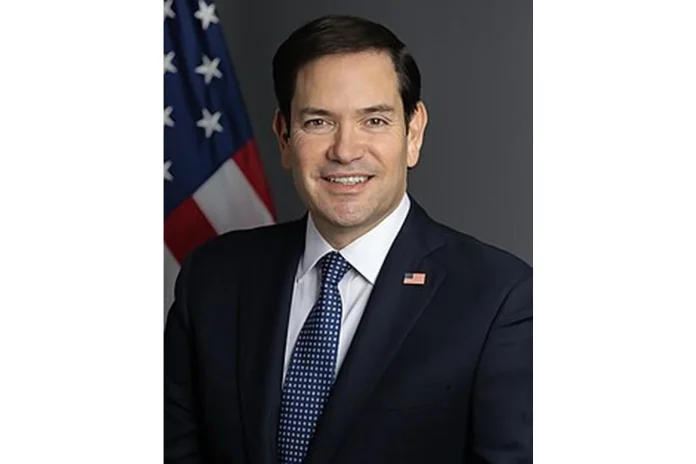
Marco Rubio Bio
Marco Antonio Rubio, born on May 28, 1971, is an American politician, attorney, and diplomat who has served as the 72nd United States Secretary of State since January 2025. A Republican from Miami, Florida, he also became acting national security advisor in May 2025 while continuing his role at the State Department, making him the highest-ranking Hispanic American official in United States history. Rubio previously represented Florida in the United States Senate from 2011 to 2025 and served earlier in the Florida House of Representatives, including as speaker of that body from 2006 to 2008. A Cuban American who is bilingual in Spanish and English, Rubio has focused on foreign policy, national security, and conservative domestic priorities throughout his career in public service.
He holds a Bachelor of Arts from the University of Florida and a Juris Doctor from the University of Miami School of Law. He launched an unsuccessful campaign for the Republican presidential nomination in 2016 before returning to the Senate, where he built a reputation as one of Congress’s most influential voices on Latin America and China policy.
Early Life and Background
Marco Antonio Rubio was born in Miami, Florida, to parents of Cuban and other Hispanic heritage. His father, Mario Rubio Reina, and his mother, Oriales García Rubio, raised their son in a working-class Miami neighborhood that was home to many Cuban American families. The household was bilingual, and Spanish became his first language, giving Rubio the lifelong ability to speak fluently in both Spanish and English.
Rubio attended South Miami Senior High School, where he distinguished himself as a student before continuing his studies at the University of Florida. He went on to earn his law degree from the University of Miami School of Law. His upbringing in a politically engaged Cuban American community in South Florida helped shape his early interest in government, public policy, and the concerns of immigrant families across the United States.
Path to US Politics
After completing his law degree, Marco Rubio entered local politics in West Miami, where he served as a city commissioner during the 1990s. That early experience in municipal government gave him practical insight into the issues facing small cities in South Florida and laid the foundation for his move to statewide office.
In 2000, he won election to the Florida House of Representatives to represent the 111th district. After the Florida legislature’s redistricting, he was elected from the 125th district in 2002, the 112th district in 2004, and the 115th district in 2006. He rose quickly through the Republican leadership ranks, serving as majority leader and then as speaker of the Florida House from November 2006 to November 2008. When state term limits forced him to leave the legislature in 2008, Rubio joined Florida International University as a faculty member, a role that allowed him to remain publicly active while preparing his next political step.
Marco Rubio Career
Early Career (1998–2010)
Marco Rubio’s first major political milestone came with his election to the Florida House of Representatives in 2000. Over the next decade he built a reputation as a reform-minded conservative leader focused on taxes, education, and economic growth, eventually ascending to the speakership in 2006. As speaker, he worked with Republican colleagues to advance a legislative agenda that included tax cuts and government restructuring.
After leaving the Florida House in 2008 due to term limits, Rubio spent two years teaching at Florida International University while laying the groundwork for a U.S. Senate campaign. In May 2009, he formally announced his candidacy for the seat being vacated by Republican Senator Mel Martínez. Despite early polls that showed him trailing the incumbent governor, Charlie Crist, Rubio surged to the top of the Republican primary field with strong support from the Tea Party movement. When Crist opted to run without a party affiliation in April 2010, Rubio secured the Republican nomination and went on to win the general election on November 2, 2010, capturing 49 percent of the vote.
Senate Career and 2016 Presidential Bid (2011–2019)
Marco Rubio was sworn in to the United States Senate in January 2011, joining Bob Menendez of New Jersey as one of only two Hispanic Americans serving in the chamber at that time. During his early Senate years he became a vocal advocate for a tougher U.S. embargo against Cuba and an influential voice on Latin American policy. He joined the bipartisan Gang of Eight in 2013 to craft comprehensive immigration reform legislation, a bill that passed the Senate 68 to 32 but was never taken up by the House.
In April 2015, Rubio announced a campaign for the Republican presidential nomination rather than seeking immediate reelection. He suspended his bid on March 15, 2016, after losing the Florida Republican primary to Donald Trump. Days later he launched a Senate reelection campaign, won the Republican primary in August 2016, and defeated Democratic nominee Patrick Murphy in the general election with 52 percent of the vote. In 2017 he was ranked among the most bipartisan senators in the 115th Congress, even as he remained one of the chamber’s most outspoken critics of China and a frequent defender of President Trump’s foreign policy decisions.
Trump Second Term and Secretary of State (2025–Present)
Marco Rubio endorsed Donald Trump for president in 2024 shortly before the Iowa caucuses and quickly emerged as a leading candidate for secretary of state in Trump’s second administration. In November 2024, President-elect Trump announced his intention to nominate Rubio, who was then confirmed unanimously by the U.S. Senate. Rubio was sworn in as the 72nd United States Secretary of State on January 21, 2025, becoming the first Latino to hold the position.
In May 2025, Trump announced that Rubio would additionally serve as acting national security advisor, a dual role last held by Henry Kissinger in the 1970s. Rubio also took on the duties of acting archivist of the United States and acting USAID administrator in early 2025. His tenure has been defined by continued hawkishness toward China and Iran, strong support for Israel and Taiwan, and an active diplomatic schedule addressing conflicts in Ukraine and the Middle East.
Notable Events and Milestones
Among Marco Rubio’s signature achievements are his unanimous confirmation as Secretary of State, his role in crafting the 2013 Gang of Eight immigration bill, and his unanimous 2013 Republican response to President Obama’s State of the Union, delivered in both English and Spanish. He also played a leading role in passing the Uyghur Forced Labor Prevention Act in 2021 and was the most prolific bill introducer in the Senate during the 118th Congress.
Marco Rubio Family
Family Background and Heritage
Marco Antonio Rubio was born to Mario Rubio Reina and Oriales García Rubio, who raised their son in a working-class neighborhood of Miami. His family is of Cuban and other Hispanic heritage, and in a 2026 speech at the Munich Security Conference Rubio described his family background as including Spanish and Italian roots from Seville and Casale Monferrato in the Kingdom of Piedmont.
Personal Life
In 1998, Marco Rubio married Jeanette Dousdebes in a Catholic ceremony at the Church of the Little Flower in Coral Gables. Dousdebes, a former bank teller and Miami Dolphins cheerleader, is also from a Hispanic family whose parents immigrated from Colombia. The couple has four children and lives in West Miami, Florida. Rubio is a Roman Catholic and attends Mass at the Church of the Little Flower, and he is fluent in Spanish as well as English.