
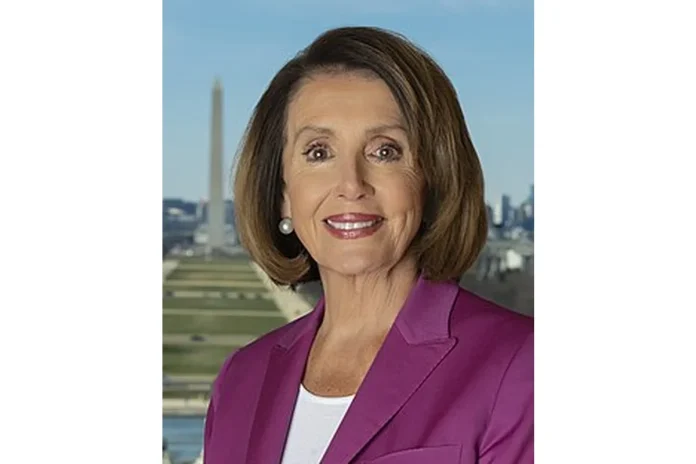
Nancy Pelosi Bio
Nancy Patricia Pelosi (née D’Alesandro; born March 26, 1940) is an American politician and one of the most influential figures in modern U.S. politics. A member of the Democratic Party, she served as the 52nd Speaker of the United States House of Representatives from 2007 to 2011 and again from 2019 to 2023, making her the first woman elected to the position. She led the House Democratic Caucus from 2003 to 2023, tying as the second-longest serving House party leader in U.S. history.
First elected to Congress in a 1987 special election, Pelosi has represented California’s 11th congressional district, which includes most of San Francisco, for nearly four decades. She is the dean of California’s congressional delegation and a central figure in major legislative battles, from the Affordable Care Act to the impeachment of President Donald Trump.
Early Life and Background
Nancy Patricia D’Alesandro was born on March 26, 1940, in Baltimore, Maryland. She grew up in a prominent political family as the daughter of Representative Thomas D’Alesandro Jr. and Annunciata M. “Nancy” D’Alesandro, with politics and public service a constant presence at the family dinner table. Her father served as both a U.S. congressman and mayor of Baltimore, giving her a front-row view of political life from an early age.
Pelosi attended the Institute of Notre Dame, an all-girls Catholic high school in Baltimore. She went on to earn a Bachelor of Arts degree from Trinity College in Washington, D.C., in 1962, where she studied political science. Her Catholic upbringing in Baltimore would later shape both her personal convictions and her public clashes with Church leaders over social policy.
Path to U.S. Politics
After graduating from college, Nancy D’Alesandro met businessman Paul Francis Pelosi, and the two married in Baltimore at the Cathedral of Mary Our Queen on September 7, 1963. The couple moved first to New York City and then to San Francisco in 1969, where Paul Pelosi’s brother, Ronald Pelosi, was a member of the city’s Board of Supervisors. While raising their five children, Pelosi became a volunteer for the Democratic Party in the 1960s and steadily built a reputation as a skilled organizer and fundraiser.
Pelosi’s formal political ascent began in 1976, when she was elected as a Democratic National Committee member from California, a role she held for two decades. In 1977, she became party chair for Northern California, and in 1981 she was selected to lead the California Democratic Party, serving until 1983. She chaired the San Francisco Democratic National Convention Host Committee in 1984 and served as finance chair of the Democratic Senatorial Campaign Committee from 1985 to 1986. These years of behind-the-scenes party work laid the foundation for her leap to national office in 1987.
Nancy Pelosi Career
Early Career (1987–2002)
Pelosi entered Congress in June 1987 by winning a special election for California’s 5th congressional district following the death of Representative Sala Burton. Her late husband, Phillip Burton, had been a close friend and political mentor, and she quickly earned a reputation as a strong voice for San Francisco. She was reelected to the seat every two years and steadily rose through the ranks of the House Democratic Caucus, including service on the powerful Appropriations Committee and the House Intelligence Committee.
In 2001, Pelosi was elected House minority whip, and a year later she was elevated to House minority leader. She became the first woman to lead a major political party in either chamber of Congress, cementing her status as a national political figure and a prolific fundraiser for House Democrats.
First Speakership Era (2007–2011)
In the 2006 midterm elections, Pelosi led House Democrats to a majority for the first time in 12 years, and she was elected Speaker of the House in January 2007, becoming the first woman to hold the office. Her speakership was defined by high-stakes legislative battles, including the passage of the Affordable Care Act in 2010, the Dodd–Frank Wall Street Reform and Consumer Protection Act, the American Recovery and Reinvestment Act of 2009, and the Don’t Ask, Don’t Tell Repeal Act. She also became a major opponent of the Iraq War and pushed back against the Bush administration’s efforts to partially privatize Social Security.
As Speaker, Pelosi steered the Fair Minimum Wage Act of 2007 through the House as part of the 100-Hour Plan and worked to expand access to federally funded stem-cell research. She also elevated the visibility of climate change, infrastructure investment, and gun control on the legislative agenda, even as Republicans attacked her as a symbol of coastal liberal politics.
Second Speakership Era (2019–2023)
After Republicans took back the House in the 2010 midterms, Pelosi remained House Democratic leader and reclaimed the gavel in January 2019 following the 2018 midterms, becoming the first former speaker to return to the office since Sam Rayburn in 1955. Her second speakership was defined by two impeachments of President Donald Trump, first in December 2019 and again in January 2021, with the Senate acquitting Trump both times. She also shepherded major Biden administration bills through the House, including the American Rescue Plan Act of 2021, the Infrastructure Investment and Jobs Act, the CHIPS and Science Act, and the Inflation Reduction Act of 2022.
Pelosi’s second speakership also featured a high-profile visit to Taiwan in August 2022, making her the highest-ranking U.S. government official to visit the island in 25 years. The trip triggered a new round of tensions with China, including major military exercises around Taiwan and personal sanctions against Pelosi by Beijing.
Late House Career (2023–Present)
Following the 2022 midterms, when Republicans narrowly retook the House, Pelosi stepped down as Speaker and later retired as House Democratic leader, with Representative Hakeem Jeffries succeeding her. In November 2025, she announced she would not seek reelection in 2026 and would retire from Congress in January 2027. In December 2024, she was hospitalized in Luxembourg after fracturing her hip in a fall during a bipartisan congressional trip and underwent hip replacement surgery at a U.S. military hospital in Germany.
Notable Events and Milestones
Pelosi’s most recognizable moments include presiding over the passage of the Affordable Care Act in 2010, leading two impeachments of President Trump, and her 2022 visit to Taiwan that drew international headlines. In 2024, she received the Presidential Medal of Freedom, recognizing her decades of public service. She has also been a longtime advocate for human rights, including confronting Chinese authorities at Tiananmen Square in 1991 and championing pro-democracy dissidents abroad.
Nancy Pelosi Career Wins
Although “wins” in politics differ from races on a track, Pelosi’s career has been defined by a long string of election victories, legislative achievements, and historic firsts. She has won reelection in her San Francisco district more than 20 times and has rarely faced serious opposition at home.
Congressional Election Highlights
Pelosi first won her congressional seat in a 1987 special election and has held it continuously since. Her most recent campaigns have continued to be competitive on paper but lopsided in practice, and her status as dean of California’s congressional delegation underscores her longevity. She has also helped lead the Democratic Party to majority control of the House twice, in 2006 and 2018.
Other Achievements
Beyond elections, Pelosi’s list of achievements includes the Affordable Care Act, the Dodd–Frank Act, two presidential impeachments led from the Speaker’s chair, and the 2024 Presidential Medal of Freedom. In November 2025, she announced that she would not seek reelection in 2026, signaling the closing chapter of one of the most consequential congressional careers in modern American history.
Nancy Pelosi Family
Family Background and Political Lineage
Pelosi is the daughter of Representative Thomas D’Alesandro Jr. and Annunciata M. “Nancy” D’Alesandro, giving her a direct lineage to political office that shaped her worldview. She grew up in a tight-knit Italian-American family in Baltimore, where political discussion was a daily routine, and she has often credited her parents with instilling in her the values of public service and community engagement.
Personal Life
Nancy Pelosi married businessman Paul Francis Pelosi on September 7, 1963, in Baltimore. The couple has five children, including Christine Pelosi, an author and Democratic activist, and Alexandra Pelosi, a journalist and filmmaker. They also have nine grandchildren. The family resides in the Pacific Heights neighborhood of San Francisco, and Pelosi also owns a home and vineyard in St. Helena, California, along with other California properties. In October 2022, an intruder attacked Paul Pelosi at the couple’s San Francisco home, an incident that drew national attention to the safety of senior political figures.