
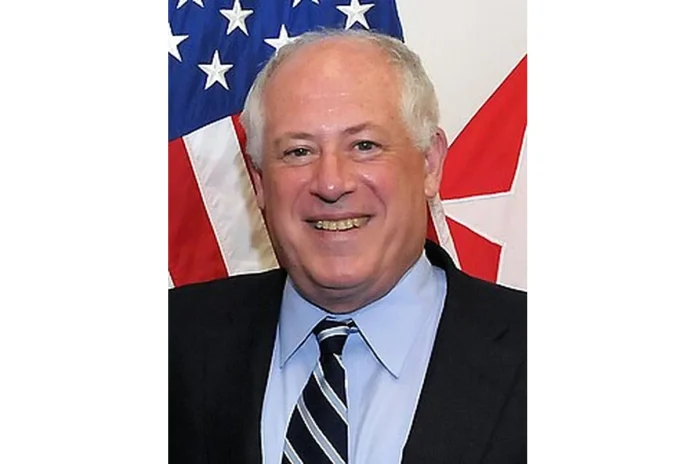
Pat Quinn Bio
Patrick Joseph Quinn, widely known as Pat Quinn, is an American politician, attorney, and longtime activist who served as the 41st Governor of Illinois from 2009 to 2015. A member of the Democratic Party, he rose to the state’s highest office after the impeachment of his predecessor and built a reputation for ethics reform, fiscal discipline, and progressive social policy. Over the course of his career, Quinn also served as Illinois State Treasurer, the 45th Lieutenant Governor of Illinois, and a commissioner on the Cook County Board of (Property) Tax Appeals.
Before entering elected office, Quinn became one of the most recognizable citizen-activists in Illinois history. He founded the Coalition for Political Honesty, organized record-breaking petition drives, and helped pass landmark reforms on legislative pay, redistricting, and consumer protection. His work in and out of government has shaped Illinois politics for more than four decades.
Early Life and Background
Patrick Joseph Quinn was born on December 16, 1948, in Chicago, Illinois. He is the son of Patrick Joseph “P. J.” Quinn and Eileen Prindiville. Raised in a tight-knit Chicago family, Quinn grew up alongside classmates who would later achieve national distinction, including Congressional Medal of Honor recipient Lester W. Weber, who was killed in action in Vietnam in 1969.
Quinn attended Fenwick High School, a Catholic college preparatory school in Oak Park, Illinois, where he developed an early interest in public service and civic organizing. He went on to earn a Bachelor of Science in Foreign Service (BSFS) from Georgetown University in Washington, D.C., an experience that exposed him to national politics and policy debates during a turbulent era in American history.
He later returned to the Midwest to attend Northwestern University School of Law, where he earned his Juris Doctor (JD) degree. His legal training sharpened the analytical skills he would later bring to government, while his activist instincts pushed him toward organizing and reform work rather than a traditional legal career.
Path to Politics
Quinn’s path to politics began not in a law office or campaign headquarters, but on college campuses across Illinois. In 1972, he worked as an organizer for Dan Walker’s insurgent primary campaign for governor, traveling statewide during the first election in which 18-year-olds could vote. After Walker’s victory, Quinn served in the new governor’s administration from January 1973 to July 1975, working as an ombudsman and assistant to the governor for labor and worker safety.
That experience convinced him that lasting change required mobilizing citizens directly. In July 1975, he co-founded the Coalition for Political Honesty, a volunteer initiative petition and referendum organization, and served as its secretary-treasurer until December 1982. Under his leadership, the Coalition collected 635,128 signatures for the 1976 Political Honesty Initiative, an all-time record, and successfully pressured the Illinois General Assembly to end the century-old practice of advance pay for legislators.
In 1980, the Coalition led the petition drive for the landmark Cutback Amendment, which reduced the size of the Illinois House of Representatives from 177 to 118 members and abolished cumulative voting. Approved by 68.7 percent of voters, it remains the first and only constitutional amendment in Illinois history passed through a binding citizen-initiated referendum. The Associated Press named the Cutback Amendment movement the top Illinois story of 1980.
Pat Quinn Career
Early Career (1982–1990)
Following the success of the Cutback Amendment, Quinn continued his petition work and was elected as a Commissioner on the Cook County Board of (Property) Tax Appeals in 1982, a position he held until 1986. He also led the successful 1982 effort to place the Citizens Utility Board on the Chicago ballot, which led to the creation of the CUB in 1983 and gave Illinois consumers an independent voice before the Illinois Commerce Commission.
Quinn later served as revenue director in the administration of Chicago Mayor Harold Washington. During this period, he also organized additional petition campaigns, including a 1981 drive to expand the power of initiative and referendum in Illinois and a 1977 statewide push for open primaries.
Treasurer and Lieutenant Governor (1990–2009)
In 1990, Quinn won election as Treasurer of Illinois, becoming the state’s chief financial officer and a strong voice for fiscal accountability. He served in that role from 1991 to 1995. Over the next several years, he ran statewide for several offices, including secretary of state in 1994, U.S. Senate in 1996, and lieutenant governor in 1998, eventually returning to the statewide stage in 2002.
Paired on the ticket with U.S. Representative Rod Blagojevich in the 2002 Democratic primary, Quinn won the nomination for Lieutenant Governor of Illinois and was elected in the general election. He was sworn in as the 45th Lieutenant Governor of Illinois in 2003, the first Democrat to hold the office since 1977. Quinn and Blagojevich were reelected in 2006, and Quinn distinguished himself by advocating for environmental protection, consumer rights, and the passage of the Let Them Rest in Peace Act.
Governorship (2009–2015)
On January 29, 2009, the Illinois State Senate voted 59-0 to remove Governor Rod Blagojevich from office on corruption charges, and Quinn was sworn in as the 41st Governor of Illinois. Coming into office during the worst economic downturn since the Great Depression and amid twin corruption scandals involving his predecessor and former Governor George Ryan, Quinn declared an “era of reform” and made ethics a centerpiece of his administration. He created the Illinois Reform Commission, signed a strengthened Illinois Governmental Ethics Act, and pushed through House Joint Constitutional Amendment 31, which gave Illinois voters the power to recall a sitting governor.
Quinn signed six state budgets into law, cutting state spending by more than $5 billion while still funding education, healthcare, public safety, and human services. He championed a $31 billion capital construction plan known as “Illinois Jobs Now!,” the $14 billion Move Illinois tollway program, and the $1 billion Illinois Clean Water Initiative, infrastructure investments that repaired nearly 8,980 miles of roads, 1,475 bridges, and more than 1,050 schools, and supported more than 111,070 jobs. His administration also created Put Illinois to Work, an employment program The New York Times called “a job program that works.”
On the social policy front, Quinn signed the Religious Freedom and Marriage Fairness Act on November 20, 2013, making Illinois the 16th state to legalize same-sex marriage. He had earlier signed civil-union legislation in 2011, expanded healthcare access under the Affordable Care Act, abolished the death penalty in March 2011, and created the Illinois Secure Choice Savings Program, the first state-mandated auto-IRA program in the country.
Notable Events and Milestones
One of the most defining moments of Quinn’s governorship came in March 2011 when he signed legislation abolishing the death penalty in Illinois, a decision he said was impossible to apply fairly. The move was hailed by Cardinal Joseph Bernardin’s legacy of a “consistent ethic of life,” supported by the 14th Dalai Lama, and praised in a 2011 email by Robert F. Prevost, the future Pope Leo XIV, who called it a “courageous decision.” In 2011, Quinn received the Courageous Leadership Award from Death Penalty Focus for that signature act.
Pat Quinn Career Highlights
Quinn’s career is distinguished by a series of high-profile election wins that took him from tax-appeals commissioner to Illinois governor. He won election as Cook County Board of Tax Appeals Commissioner in 1982, as Illinois State Treasurer in 1990, as Lieutenant Governor in 2002 and again in 2006, and as Governor in 2010. His 2010 victory over Republican State Senator Bill Brady, by a margin of less than 1 percent out of about 3.5 million votes cast, was ranked by Politico as one of the top upsets of that election year.
Governorship Highlights
As governor, Quinn secured a full term in the 2010 election after initially ascending to the office in January 2009. He went on to win general reelection in 2010, defeating Bill Brady. By the time he left office in January 2015, Illinois had added nearly 300,000 private-sector jobs and dropped its unemployment rate to 6 percent, its lowest level since before the recession.
Other Wins and Achievements
Quinn’s signature policy wins included abolishing the death penalty, legalizing civil unions in 2011 and same-sex marriage in 2013, launching the Illinois Secure Choice auto-IRA program, and signing the largest infrastructure package in state history. He also led the national effort to permit recall elections for governors, served on the Sierra Club’s “Green Governor” shortlist, and was honored with the Courageous Leadership Award from Death Penalty Focus in 2011 for his role in ending capital punishment in Illinois.
Pat Quinn Family
Family Background and Lineage
Quinn was born into a Chicago family headed by his father, Patrick Joseph “P. J.” Quinn, and his mother, Eileen Prindiville. His upbringing in the city shaped his lifelong interest in working-class issues, urban infrastructure, and good-government reform.
Personal Life
Quinn was married to Julie Hancock from 1982 to 1986, when the couple divorced. He later married Monica Walker in 2025. Quinn has no publicly listed children. Throughout his career he has been known for a modest personal style, often appearing at public events with a simple “Pat Quinn” name badge rather than formal titles.