
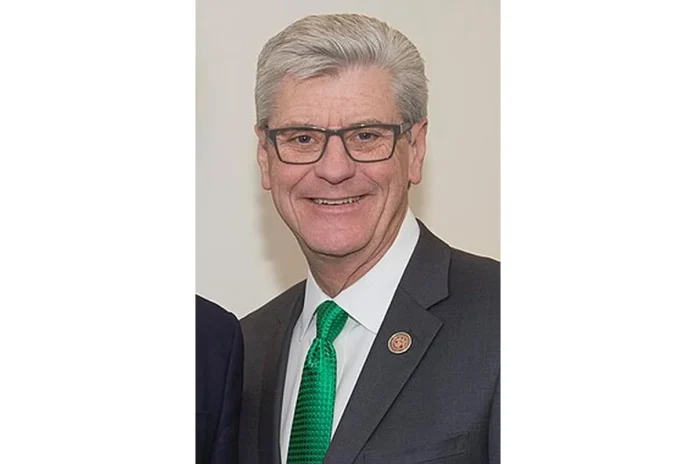
Phil Bryant Bio
Dewey Phillip Bryant, known as Phil Bryant, is an American politician and public servant who served as the 64th governor of Mississippi from 2012 to 2020. A member of the Republican Party, he previously held office as the 31st lieutenant governor of Mississippi from 2008 to 2012 and as the 40th state auditor of Mississippi from 1996 to 2008. His tenure as governor focused on education reform, anti-abortion legislation, and state budget management.
Beyond elected office, Bryant worked as a deputy sheriff in drug law enforcement and as an insurance claims investigator. He later served as an adjunct professor teaching Mississippi political history at Mississippi College. Since leaving the governorship, he has remained active in policy and consulting work.
Early Life and Background
Dewey Phillip Bryant was born on December 9, 1954, in Moorhead, a small town in Sunflower County in the Mississippi Delta. He is the son of Dewey C. Bryant, a diesel mechanic, and Estelle R. Bryant, a stay-at-home mother who raised three boys. His family later moved to Jackson, the state capital, where his father worked for Jackson Mack Sales and eventually became service manager at the company.
Bryant attended Council McCluer High School during his junior and senior years in the Jackson area. After graduating, he continued his education at Hinds Community College before transferring to the University of Southern Mississippi, where he earned a bachelor’s degree in criminal justice. He later completed a master’s degree in political science at Mississippi College in Clinton and received an Honorary Doctorate of Laws from the same institution.
Path to US Politics
Before entering public service, Phil Bryant worked as a deputy sheriff in Hinds County from 1976 to 1981, where he served undercover in drug law enforcement. He also built experience as an insurance claims investigator during the same period. These early roles gave him direct exposure to law enforcement and public administration, shaping his later policy priorities.
Bryant transitioned into elected office when he joined the Mississippi House of Representatives, where he served as Vice Chairman of the House Insurance Committee. During this time, he sponsored the Capital Gains Tax Cut Act of 1992, demonstrating his interest in tax policy and fiscal issues. His steady rise through state-level positions eventually positioned him for statewide office.
Phil Bryant Career
Early Career (1976–2007)
Phil Bryant began his public service career as a deputy sheriff in Hinds County from 1976 to 1981, working undercover in drug law enforcement. He also worked as an insurance claims investigator during the same period. These dual roles gave him firsthand experience in criminal justice and private-sector claims work.
After his time as a deputy sheriff, Bryant won a seat in the Mississippi House of Representatives. He served as Vice Chairman of the House Insurance Committee and sponsored the Capital Gains Tax Cut Act of 1992, establishing himself as a policy-minded legislator focused on economic issues.
Breakthrough (1996–2011)
Bryant was appointed to serve as Mississippi State Auditor by Governor Kirk Fordice following the resignation of Steve Patterson. He was sworn in on November 1, 1996, and subsequently won a full term in 1999 and reelection in 2003. During his tenure, he convinced the Mississippi State Legislature to grant law enforcement officers in the auditor’s office investigative division full powers of arrest.
In 2007, Bryant won election as the 31st Lieutenant Governor of Mississippi, defeating Democratic State Representative Jamie Franks. This victory positioned him as a leading figure in the state Republican Party and set the stage for his gubernatorial bid.
In 2011, Phil Bryant won the Republican primary and then defeated Democratic nominee Johnny DuPree, the Mayor of Hattiesburg, on November 8, capturing 60.98 percent of the vote. He was sworn in as the 64th Governor of Mississippi on January 10, 2012.
Republican Era (2012–2020)
During his first term, Bryant signed into law a bill requiring doctors at abortion clinics to have admitting privileges at local hospitals. He also presented an education policy framework titled “Framing Mississippi’s Future” in 2012, and during the 2013 legislative session signed several education bills including the Literacy Based Promotion Act, the Pre-K Collaborative Act, the Mississippi Charter School Act, and the Mississippi Student Religious Liberties Act. The Literacy Based Promotion Act in particular was later credited with driving rapid gains in student reading performance and was nicknamed the “Mississippi Miracle.”
On April 5, 2016, Bryant signed HB-1523, which allows government employees and private businesses to cite religious beliefs to deny services to same-sex couples seeking a marriage license. In March 2018, he signed the Gestational Age Act, banning most abortions after 15 weeks of pregnancy. He later signed a law scheduled to take effect July 1, 2019, banning abortions after six weeks of pregnancy. During his second term, Bryant also announced emergency budget cuts to most state agency budgets in February 2017 to address revenue shortfalls, and in January 2019 he expressed support for expanding civil forfeiture practices.
Notable Events and Milestones
One of Phil Bryant’s signature moments came in 2015, when he won reelection against Democratic nominee Robert Gray, a truck driver, capturing 66.6 percent of the vote on November 5. Because Mississippi limits governors to two lifetime terms, he was ineligible to seek a third term in 2019. His signing of the Gestational Age Act in 2018 drew national attention and legal challenges, with U.S. District Judge Carlton Reeves later striking down a related measure as unconstitutional.
Phil Bryant Career Wins
Phil Bryant won every statewide election he contested after 1996, building a record that includes three terms as State Auditor, one term as Lieutenant Governor, and two terms as Governor of Mississippi. His electoral strength within the Republican Party was particularly strong, as shown by his dominant 91.7 percent showing in the 2015 Republican primary.
Mississippi Gubernatorial Highlights
Phil Bryant won the 2011 Mississippi gubernatorial election by defeating Democratic nominee Johnny DuPree with 60.98 percent of the vote. He secured his second and final term in 2015 by defeating Democratic nominee Robert Gray with 66.6 percent of the vote. Both victories reflected his strong standing among Mississippi voters during his time in statewide office.
Other Wins and Achievements
Bryant won election as State Auditor in 1999 and again in 2003 after his initial appointment in 1996. In 2007, he won election as Lieutenant Governor of Mississippi by defeating Democratic candidate Jamie Franks. These successive wins established him as one of the most consistent electoral performers in Mississippi politics during his era.
| Position | Wins | Year |
|---|---|---|
| State Auditor (full term) | 1 | 1999 |
| State Auditor (reelection) | 1 | 2003 |
| Lieutenant Governor | 1 | 2007 |
| Governor | 1 | 2011 |
| Governor (reelection) | 1 | 2015 |
Phil Bryant Family
Family Background and Lineage
Phil Bryant is the son of Dewey C. Bryant, a diesel mechanic who later worked at Jackson Mack Sales in Mississippi’s capital city, and Estelle R. Bryant, a stay-at-home mother who raised three boys. His father’s career in the diesel mechanics trade shaped the family’s early years in the Mississippi Delta before they relocated to Jackson.
Personal Life
Phil Bryant married Deborah Hays in 1976, and the couple has remained together throughout his career in public service. He is known by the nickname Phil, a shortened form of his middle name Phillip.
Phil Bryant Post-Governorship and Upcoming Projects
After leaving office in 2020, Phil Bryant became a founding member of BSS Global, a consulting firm. In November 2025, he was appointed by U.S. Secretary of Education Linda McMahon to the governing board of the National Assessment of Educational Progress. He also filed a defamation suit against Mississippi Today in July 2024 over reporting tied to the Mississippi welfare funds scandal; the suit was dismissed in September 2025 on First Amendment grounds. No criminal charges have been filed against Bryant in connection with that investigation.