
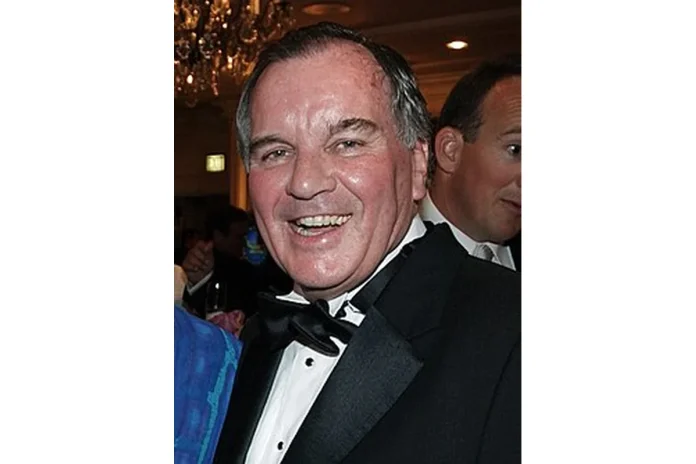
Richard M. Daley Bio
Richard Michael Daley (born April 24, 1942) is an American politician and lawyer who served as the 54th Mayor of Chicago, Illinois, from 1989 to 2011. Elected to the office at age 47, he was reelected five times before declining to run for a seventh term. At 22 years, his tenure became the longest in Chicago mayoral history, surpassing the 21-year term of his father, former Mayor Richard J. Daley. Richard M. Daley is a member of the Democratic Party and is widely regarded as one of the most influential big-city mayors of his generation.
As Mayor, Richard M. Daley took control of the Chicago Public Schools, expanded tourism, and oversaw the creation of Millennium Park and the redevelopment of Navy Pier. He also led major downtown building projects and pushed environmental initiatives. His administration drew both praise and criticism, particularly over contracting practices, privatization of public assets, and structural budget deficits. Before becoming mayor, he served in the Illinois State Senate and as Cook County State’s Attorney.
Early Life and Background
Richard Michael Daley was born on April 24, 1942, in Chicago, Illinois. He is the fourth of seven children and the eldest son of Richard J. Daley and Eleanor Guilfoyle Daley. His father later became Mayor of Chicago in 1955, shaping much of the city’s mid-century political life. Richard M. Daley grew up in Bridgeport, a historically Irish-American neighborhood on Chicago’s South Side that long served as the family’s political home.
He is a brother of William M. Daley, who served as White House Chief of Staff and United States Secretary of Commerce under President Bill Clinton; John P. Daley, a Cook County Board of Commissioners member; and Michael Daley, an attorney. Richard M. Daley was raised Roman Catholic and attended De La Salle Institute, a Catholic high school in Chicago. He later transferred from Providence College in Rhode Island to DePaul University, where he earned his bachelor’s degree in 1964 and later a Juris Doctor degree, passing the Illinois Bar Examination on his third attempt.
Path to US Politics
Richard M. Daley’s path into politics began in his family’s Bridgeport neighborhood, where his father Richard J. Daley dominated the local Democratic organization. He was elected to his first office as a delegate to the 1969 Illinois Constitutional Convention, the body that drafted the current Constitution of Illinois, ratified by voters in 1970. After his father died in 1976, Richard M. Daley succeeded him as the 11th Ward Democratic committeeman, a party post he held until 1980, when his brother John P. Daley took over.
Richard M. Daley built his legal credentials at DePaul University College of Law and entered public service through the Cook County State’s Attorney’s office before winning a seat in the Illinois State Senate. There he developed the legislative and coalition-building skills that would later define his mayoral style. His combination of family political lineage, prosecutorial experience, and Democratic Party connections positioned him as a leading candidate for mayor of Chicago by the late 1980s.
Richard M. Daley Career
Early Career (1969–1988)
Richard M. Daley began his public career in 1969 as a delegate to the Illinois Constitutional Convention. After earning his Juris Doctor from DePaul University and passing the Illinois Bar, he worked as a lawyer in Chicago, though he never tried a case in court. He served as Cook County State’s Attorney, where he gained experience in criminal justice policy, an area that would later shape his tenure as mayor.
In the Illinois State Senate, Richard M. Daley built a reputation as a practical party loyalist with deep ties to Chicago’s labor unions and Democratic committeemen. Following his father’s death in 1976, he briefly led the 11th Ward Democratic organization before his brother took over the role in 1980. By 1988, he had assembled the political alliances and financial backing needed to mount a successful bid for mayor of Chicago.
Chicago Mayor: First and Second Terms (1989–1995)
Richard M. Daley was elected the 54th Mayor of Chicago in 1989, succeeding Harold Washington. One of his first acts was to centralize control over city contracts, a power he took from the City Council. He piloted recycling programs, extended a hiring freeze, and presided over what was widely described as the most docile City Council in decades. He also became the first Chicago mayor to lead the city’s Gay and Lesbian Pride Parade, signaling an early willingness to engage with the gay community.
Reelected in 1991 and 1995, Richard M. Daley expanded his political base by appointing African American leaders to high positions and pledging services across all neighborhoods. In 1995, he assumed control of the Chicago Public Schools, appointing Paul Vallas as chief executive officer and launching major reforms. His second term also saw the adoption of a Domestic Partners Ordinance in 1997, extending city employee benefits to same-sex partners.
Chicago Mayor: Third and Fourth Terms (1995–2003)
During his third and fourth terms, Richard M. Daley focused on economic development and downtown revitalization. He oversaw the construction of Millennium Park on an abandoned rail yard and spearheaded the conversion of Navy Pier into a major tourist attraction. The Hired Truck program, however, became a major scandal, prompting federal investigations into corruption, bribery, and patronage.
In 2002, Richard M. Daley received the Golden Plate Award from the American Academy of Achievement. He continued to push environmental initiatives, including green building programs that later earned national recognition. Throughout this period, he maintained high approval ratings and decisively won reelection, becoming one of the most powerful mayors in modern American history.
Chicago Mayor: Fifth and Sixth Terms (2003–2011)
On February 26, 2003, Richard M. Daley won 78.5% of the vote against challenger Reverend Paul Jakes Jr. In the early hours of March 30, 2003, he ordered city crews to demolish the runway of Meigs Field airport by cutting large X’s into the pavement without notifying the City Council, the governor, or federal authorities, a move that drew national headlines and fines from the Federal Aviation Administration.
His administration pioneered long-term privatization deals, including a 99-year lease of the Chicago Skyway for $1.83 billion in 2006 and a 75-year, $1.16 billion lease of the city’s parking meters in 2008. He led Chicago’s unsuccessful bid to host the 2016 Summer Olympics, which was eliminated in the first round in Copenhagen in October 2009. On September 7, 2010, with his approval rating at 35%, he announced he would not seek a seventh term, and his term ended on May 16, 2011, when Rahm Emanuel succeeded him.
Notable Events and Milestones
Richard M. Daley’s signature act in office was the midnight demolition of Meigs Field in 2003, an episode that crystallized his reputation for decisive, top-down governance. He also oversaw the creation of Millennium Park, the conversion of Navy Pier, and the negotiation of landmark long-term leases for the Chicago Skyway and city parking meters. He was inducted into the Chicago Gay and Lesbian Hall of Fame in 2006 as a Friend of the Community.
Richard M. Daley Career Wins
Richard M. Daley was elected Mayor of Chicago six times, in 1989, 1991, 1995, 1999, 2003, and 2007, and his 22-year tenure made him the longest-serving mayor in Chicago history. His earliest political victory came in 1969 as a delegate to the Illinois Constitutional Convention, and his first mayoral win came in 1989, defeating challengers in a Democratic primary and general election. His final victory, in 2007, extended his term through 2011.
Mayoral Election Highlights
Richard M. Daley’s most decisive victory came in his 2003 reelection, when he took 78.5% of the vote against Reverend Paul Jakes Jr. He was consistently returned to office with broad support from Chicago’s business community and traditional Democratic constituencies. His 2007 reelection extended his run of consecutive wins to six, cementing his place as Chicago’s longest-serving mayor.
Other Wins & Achievements
In 1999, Richard M. Daley received the Arbor Day Foundation’s Lifetime Stewardship Award. In 2002, he received the Golden Plate Award of the American Academy of Achievement, and in 2009, the National Building Museum presented him with an Honor Award as a “visionary in sustainability.” In 2017, he received the ULI Chicago Lifetime Achievement Award.
| Office | Wins | Year of First Win |
|---|---|---|
| Illinois Constitutional Convention Delegate | 1 | 1969 |
| Mayor of Chicago | 6 | 1989 |
Richard M. Daley Family
Family Background and Political Lineage
Richard M. Daley comes from one of the most prominent political families in Chicago history. He is the eldest son of former Mayor Richard J. Daley and Eleanor Guilfoyle Daley. His siblings include William M. Daley, a former White House Chief of Staff and United States Secretary of Commerce; John P. Daley, a Cook County Board of Commissioners member who succeeded him as 11th Ward Democratic committeeman; and Michael Daley, an attorney.
The Daley family has held the 11th Ward Democratic committeeman post for 60 years, with Richard M. Daley serving from 1976 to 1980 and John P. Daley holding it from 1980 onward. Richard M. Daley grew up in the family’s Bridgeport home and was educated at De La Salle Institute, the same high school his father attended.
Personal Life
Richard M. Daley married Margaret “Maggie” Corbett in 1972, and the couple had four children: daughters Nora and Elizabeth, and sons Patrick and Kevin. Their second son, Kevin, died at age two in 1981 from complications of spina bifida. Maggie Daley died on November 24, 2011, after a decade-long battle with metastatic breast cancer. Maggie Daley Park in the Chicago Loop commemorates her, and her nonprofit After School Matters continues to serve Chicago’s young people.