
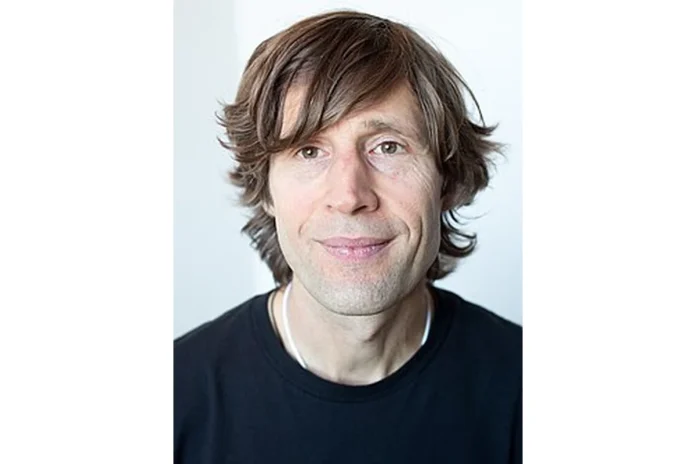
Rodney Mullen Bio
John Rodney Mullen, born August 17, 1966, is an American professional skateboarder widely regarded as one of the most influential figures in the history of the sport. He is credited with inventing numerous foundational tricks, including the flatground ollie, kickflip, heelflip, impossible, and 360-kickflip, and has been called the godfather of modern street skating. Over the course of his career, Mullen has appeared in more than twenty skateboarding videos, co-authored an autobiography, founded multiple skateboard companies, and contributed to the design of skateboard trucks and composite decks.
Beyond competitive skateboarding, Mullen is a frequent public speaker on creativity, innovation, and resilience, and he holds research and advisory positions at major American institutions. He continues to skate, develop products, and engage with scientific and educational communities as of the mid-2020s.
Early Life and Background
Early Life and Background
John Rodney Mullen was born and raised in Gainesville, Florida, where his family lived on a farm. His father was a dentist and property developer, and his mother was a child prodigy and accomplished pianist who graduated from high school at the age of fourteen. As a child, Mullen slept in boots designed to correct a severe pigeon-toe condition, yet he displayed remarkable dexterity with his feet, according to Phil Chiocchio, the former owner of the Florida skatepark Sensation Basin.
Mullen began skateboarding on New Year’s Day of 1977, at the age of ten, after a neighborhood friend introduced him to a skateboard. His strict father was initially opposed to the sport, fearing injury and the counterculture surrounding it, but relented on New Year’s Day. Mullen practiced for many hours each day in the family garage while wearing a comprehensive set of protective pads, a condition of the arrangement with his father. The rural setting, with limited access to pools or vert terrain, naturally guided him toward freestyle skateboarding on flat ground.
Mullen attended P. K. Yonge Developmental Research School, where he maintained a 4.0 GPA. He later studied biomedical engineering and mathematics at the University of Florida, though he eventually left school to focus on skateboarding. Despite his accomplishments, Mullen struggled with extreme shyness and anxiety as a teenager, and he battled anorexia during this period. His time on tour with the Bones Brigade included an episode in which he ran away from the team van during a rest stop in Maryland.
Path to Professional Skateboarding
Mullen’s competitive career began in 1978, when he placed fifth in the Boy’s Freestyle category at the US Open Championships at Kona Skatepark in Jacksonville, Florida, after owning a skateboard for only a little more than a year. Bruce Walker, a skateboard manufacturer, saw his performance and sponsored him through Walker Skateboards from 1978 to 1980. During this formative period, Walker professional Jim McCall became Mullen’s biggest influence, and he was also encouraged by other Florida-based skaters, including Ed Womble, George McClellan, Clyde Rodgers, Tim Scroggs, and Kelly Lynn.
Mullen won thirty successive amateur competitions in the late 1970s, mostly in Florida, culminating in a victory at the Oceanside Nationals in June 1979. In 1980, the fourteen-year-old Mullen defeated world champion Steve Rocco at the Oasis Pro competition, where he also met a young Tony Hawk, who was only twelve at the time. Shortly thereafter, he turned professional as a member of the renowned Bones Brigade team sponsored by Powell Peralta, having been recommended to company co-founder Stacy Peralta by fellow Floridian and Bones Brigade member Tim Scroggs.
Rodney Mullen Career
Early Career (1980–1989)
Throughout the 1980s, Mullen competed voraciously as a member of the Bones Brigade, frequently frustrating competitors and judges with his consistency and progressive ability. He skated a mix of styles during this era, including some vert, before the sport became more clearly delineated between freestyle and vert. In 1983, at the age of fourteen, Mullen won his first world freestyle skateboard championship, and over the following decade he won thirty-four out of thirty-five freestyle contests, establishing the most successful competitive run in the history of the sport.
In early 1989, Mullen left the Bones Brigade to join World Industries as a principal investor alongside longtime friend and former rival Steve Rocco, helping to form the first skateboarder-owned company. Professional skateboarder Mike Vallely later joined the company for a brief period. The venture was risky, as Powell Peralta was an established brand and Rocco’s upstart company had been struggling, but World Industries would later develop into the Dwindle Distribution, which became the world’s largest skateboard manufacturer in the twenty-first century.
Freestyle Dominance and Bones Brigade (1983–1990)
Mullen’s freestyle career reached its peak during the 1980s, when his near-unbeatable competitive record redefined the discipline. His technical innovations, including the flatground ollie, the kickflip, the heelflip, the impossible, the 360-flip, and the double flip, were developed during this period and became foundational to the future of street skateboarding. In response to the praise he has received for inventing the flatground ollie, Mullen has noted that adapting the trick from vert to flat ground took only minutes once he understood the mechanics.
His dominance was so complete that he often used contests as a testing ground for new tricks, sometimes performing them for the first time in competition. The Bones Brigade video series showcased his development, and his segments remain some of the most studied pieces of skateboarding footage ever produced.
Transition to Street and Plan B (1991–1994)
As freestyle’s popularity declined, Mullen was urged to transition to street skating, though he was initially reluctant, fearing that doing so would compromise the integrity of his foundation. In 1991, he joined Plan B Skateboards, where owner Mike Ternasky encouraged and guided his evolution into street skating. Mullen showcased this transformation in the 1992 Plan B video Questionable, in which he introduced two newly invented tricks, the kickflip underflip and the Casper slide, and seamlessly blended freestyle and street techniques.
Mullen’s participation in Plan B dissolved after Ternasky was killed in a car crash on May 17, 1994. Mullen later reflected that the team was never the same after Ternasky’s death, crediting the late founder with giving him a second chance in skateboarding and driving him forward.
World Industries, A-Team, and Enjoi (1994–2000)
Following Ternasky’s death, Mullen continued his role as a principal investor at World Industries, helping the company grow into a major industry force. In 1997, he founded the A-Team alongside Marc Johnson, Gershon Mosley, Dave Mayhew, and Chet Thomas with the intention of forming a super team. When the A-Team folded in 2000, Mullen transitioned from founder to company rider for Enjoi Skateboards, joining his former A-Team colleague Marc Johnson, who had founded Enjoi and recruited riders including Chris Cole, Bobby Puleo, and Jerry Hsu.
That same year, Mullen engaged in the development of his own skateboard truck design, which would later become the foundation for the company Tensor. He filed a United States Patent in 2000 to support this innovative work, with the design intended to eliminate undesired ride characteristics such as hanger-jiggle and wheel bite. Tensor would go on to recruit team riders including Daewon Song, Chris Cole, Chris Haslam, Salman Agah, Ryan Sheckler, Kanten Russell, and Gailea Momolu.
Almost and Dwindle Distribution (2000–2014)
Mullen left Enjoi to co-found Almost Skateboards with Daewon Song, recruiting Cooper Wilt, Chris Haslam, Greg Lutzka, and Ryan Sheckler to form the company’s initial core. In 2002, World Industries, under the holding name Kubic Marketing, was sold to Globe International for US$46 million, making both Rocco and Mullen, as a principal investor, instant multimillionaires. Mullen began working for Globe under the Dwindle Distribution brand and continued contributing to the design of experimental and composite deck constructions for Dwindle’s other brands, such as Blind and Darkstar.
At Almost, Mullen took on a research and development role that included work on Impact Support, Double Impact, and Uber Light deck technologies. The Uber Light design, developed in collaboration with the CL Composites company, used a deck-in-a-deck construction featuring an internal carbon fiber foam deck that was ultra-light and nearly as stiff as metal, dramatically improving lateral rigidity and pop while maintaining the look and feel of a standard seven-ply deck.
Almost Era and Public Speaking (2014–Present)
The Almost company celebrated its tenth anniversary with an event at the Berrics indoor skate complex in early March 2014, and Mullen attended the venue for the first time. As part of the celebration, he completed an interview with the Berrics titled A Beautiful Mind, in which he discussed his evolving relationship with skateboarding and the joy of rolling around and playing. The first video footage of Mullen skateboarding in nine years was published on Tony Hawk’s RIDE YouTube channel in July 2014, showing him skating at musician Ben Harper’s residence.
Mullen has continued to engage in public speaking, having been invited to present on topics such as innovation, creation, community, and resilience. In 2012, he presented at TED at the University of Southern California in a talk entitled How Context Shapes Content. In 2014, he delivered presentations at O’Reilly Media’s Strata and Velocity conferences in Santa Clara, California, and he has also been invited to present at the Lemelson Center at the Smithsonian’s National Museum of American History. Mullen serves as a Director’s Fellow at the MIT Media Lab and a Distinguished Research Scholar with the Smithsonian Institution, and he has also addressed NASA’s Jet Propulsion Lab and the Royal Society.
Notable Events and Milestones
Mullen’s most significant milestone remains his transformation of the ollie from a vert-only trick to a flat ground maneuver, an invention that opened the door to more complex flip tricks and laid the foundation for modern street skateboarding. In May 2013, he was inducted into the Skateboarding Hall of Fame in Anaheim, California, with fellow professional Steve Caballero and musician Ben Harper sharing their experiences of Mullen prior to the award. In 2002, he won the Transworld Skateboarding Readers’ Choice Award for Skater of the Year, and in 2003 he was voted the all-time greatest action sports athlete on the Extreme Sports Channel’s Legends of the Extreme countdown.
Rodney Mullen Career Wins
Rodney Mullen’s competitive record in freestyle skateboarding is widely considered the most dominant run in the history of the sport. Between 1983 and the early 1990s, he captured thirty-four out of thirty-five freestyle contests, a streak that established him as the most successful competitive skateboarder of his era.
Freestyle Highlights
Mullen won his first world freestyle skateboard championship at the age of fourteen, in 1983, after years of amateur success in Florida. Over the following decade, he won thirty-four of thirty-five freestyle contests, a record that has never been matched. In later years, he transitioned this competitive mindset into street skating, where he continued to test new tricks and push the technical boundaries of the sport.
Other Wins & Achievements
In 2002, Mullen won the Transworld Skateboarding Readers’ Choice Award for Skater of the Year, and in 2003, he was voted the all-time greatest action sports athlete on the Extreme Sports Channel’s Legends of the Extreme countdown. Transworld included him in its 30 Most Influential Skaters of All Time list, released in December 2011, where he was elected into the third position, behind Tony Hawk and Mark Gonzales.
Rodney Mullen Family
Family Background and Personal Life
Mullen was raised in Gainesville, Florida, by a father who was a dentist and property developer and a mother who was a child prodigy and accomplished pianist. The family lived on a farm, and Mullen credits the rural setting with shaping his approach to skateboarding. As of 2013, Mullen resides in California with his girlfriend, Lori Guidroz, and he has described himself as a self-described juvenile who prefers to skate at night and on his own, away from public observation.
Aside from skateboarding, Mullen has been interested in mathematics, physics, biomedical engineering, computer coding, and music. He has learned Linux and described himself as a hacker. He owns a pair of high-powered audio speakers, each weighing around two hundred pounds, through which he plays a diverse range of music. In 2013, musicians Ben Harper and Lee Hartney revealed a close friendship with Mullen, describing him as a brother, and Harper has undertaken intensive skateboarding practice in his fifties with Mullen’s assistance.