
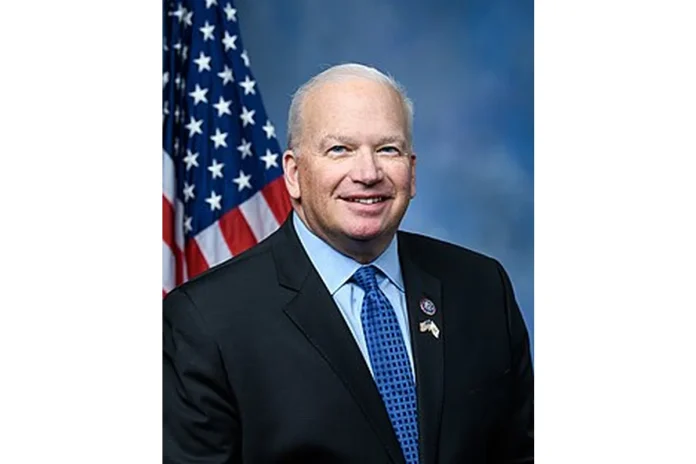
Scott Fitzgerald Bio
Scott Lawrence Fitzgerald (born November 16, 1963) is an American politician and former newspaper publisher serving as the U.S. representative for Wisconsin’s 5th congressional district. A Republican, he has spent more than three decades in public service, first in the Wisconsin State Senate and later in the U.S. House of Representatives. Fitzgerald also served in the U.S. Army Reserve for 27 years, retiring at the rank of lieutenant colonel.
Before entering Congress in 2021, Fitzgerald represented the 13th district in the Wisconsin State Senate from 1995 to 2021 and rose to become one of the chamber’s most powerful Republicans, leading his caucus through several legislative sessions. His congressional district covers many of Milwaukee’s northern and western suburbs, including Waukesha, West Bend, Brookfield, and Mequon.
Early Life and Background
Scott Lawrence Fitzgerald was born in Chicago, Illinois, on November 16, 1963, and grew up in a family with deep roots in Wisconsin public service. At age 11, he moved with his family to Hustisford, Wisconsin, where he spent his formative years in a small-town Midwestern setting. His father, Stephen “Steve” Fitzgerald, went on to serve as Sheriff of Dodge County for 14 years and later as the U.S. marshal for the Western District of Wisconsin.
Fitzgerald graduated from Hustisford High School in 1981 and went on to earn a Bachelor of Science from the University of Wisconsin–Oshkosh in 1985. That same year, he was commissioned as a lieutenant in the U.S. Army Reserve’s Armor Branch, beginning a military career that would last nearly three decades. The combination of small-town life, family ties to law enforcement, and disciplined military service helped shape his approach to public office.
Path to US Politics
Fitzgerald’s entry into public life was shaped by a steady climb through local institutions. In 1990, he purchased the Dodge County Independent News in Juneau, Wisconsin, operating the community newspaper for nearly a decade and gaining firsthand experience with small business and local issues. He sold the paper in 1996 to the Watertown Daily Times, where he stayed on as associate publisher for several years.
His political career began in 1994, when he challenged Republican incumbent Barbara Lorman in a three-way primary and won with 6,098 votes. The victory launched a long tenure in the Wisconsin State Senate representing the 13th district. He also continued his military service, completing the United States Army Command and General Staff College and serving in a number of assignments, including battalion commander, before retiring in 2009 at the rank of lieutenant colonel.
Scott Fitzgerald Career
Early Career (1995-2010)
After winning his 1994 primary, Fitzgerald took his seat in the Wisconsin State Senate and quickly established himself as a reliable conservative voice. His district covered much of the Beaver Dam micropolitan statistical area and stretched across parts of Dodge, Columbia, Dane, Jefferson, Washington, and Waukesha Counties, blending rural and suburban constituencies.
Through the late 1990s and 2000s, Fitzgerald built a reputation for fiscal discipline and rose through the Senate’s leadership ranks. He served as minority leader, co-chair of the Joint Committee on Finance, and chair of the Senate Corrections Committee, gaining experience in budget negotiations and criminal justice policy that would define his later career.
Wisconsin State Senate Leadership (2011-2020)
Fitzgerald’s influence peaked after Republicans swept the 2010 elections. His colleagues elected him majority leader for the 2011-12 legislative session, and he continued to lead the chamber’s Republicans for the rest of his time in the legislature. The 2011 session coincided with Governor Scott Walker’s budget repair bill and large public employee protests at the Capitol.
During this period, Fitzgerald was a central figure in several high-profile policy battles. He supported Walker’s bill limiting collective bargaining for most public workers, pushed legislation to limit the powers of the incoming Democratic administration after the 2018 elections, and defended the state’s 2011 legislative maps after a court ruled them an unconstitutional gerrymander. In 2020, amid the COVID-19 pandemic, he opposed delaying the spring election and a statewide face mask mandate.
U.S. House of Representatives Era (2021-Present)
In September 2019, Fitzgerald announced his campaign for Wisconsin’s 5th congressional district just two weeks after 21-term incumbent Jim Sensenbrenner announced his retirement. Because state senators serve staggered four-year terms, he did not have to give up his Senate seat to run, and the Republican primary quickly cleared in his favor. He won the primary with 77 percent of the vote and went on to win the general election.
Since joining Congress, Fitzgerald has continued to align with the most conservative wing of the House Republican caucus. He was among the 120 Republicans who objected to counting Arizona’s and Pennsylvania’s electoral votes in the 2020 presidential election, and he voted to provide Israel with support following the October 7 attacks. His district, long considered the most Republican in Wisconsin, has remained reliably conservative.
Notable Events and Milestones
Fitzgerald’s career includes a series of defining moments, from his 1994 primary upset to his long run as Wisconsin Senate majority leader and his eventual move to Congress. His defense of the state’s 2011 legislative maps before the U.S. Supreme Court, his role during the 2011 protests, and his opposition to pandemic-era voting and mask rules all marked him as a leading voice for Wisconsin conservatives.
Scott Fitzgerald Career Wins
Scott Lawrence Fitzgerald has compiled a lengthy record of election victories spanning more than 25 years in Wisconsin politics. His wins include a 1994 primary upset, six Senate reelections, a commanding 2020 congressional primary, and a general election victory in a reliably Republican district.
Wisconsin State Senate Highlights
Fitzgerald first won his state Senate seat in 1994 by unseating Republican incumbent Barbara Lorman in a competitive three-way primary, drawing 6,098 votes. He was then reelected six times, representing the 13th district continuously from 1995 until he joined Congress in 2021. His longevity in the chamber allowed him to rise from committee chair to minority leader and ultimately to majority leader.
U.S. House Highlights
Fitzgerald’s transition to Congress came after he won the 2020 Republican primary for Wisconsin’s 5th congressional district with 77 percent of the vote, becoming the only substantive candidate in the race. He then won the general election in one of Wisconsin’s most Republican districts, beginning his tenure in the U.S. House of Representatives in January 2021.
Scott Fitzgerald Family
Family Background and Public Service Lineage
Fitzgerald comes from a family with a long record of involvement in Wisconsin law enforcement and Republican politics. His father, Stephen “Steve” Fitzgerald, served 14 years as Sheriff of Dodge County and later as the U.S. marshal for the Western District of Wisconsin. In February 2011, Governor Scott Walker’s administration appointed Steve Fitzgerald to head the Wisconsin State Patrol.
Fitzgerald’s younger brother, Jeff Fitzgerald, represented the 39th Assembly District, which covered the northeastern portion of Scott’s state Senate seat, and served as Assembly Speaker during the 2011-12 legislative session. The brothers’ overlapping districts reflected the family’s deep ties to local government in Dodge and surrounding counties.
Personal Life
Scott Fitzgerald and his wife, Lisa Fitzgerald, have three sons. He is a practicing Roman Catholic, and the family has long been based in the Hustisford area of Dodge County, where Fitzgerald first became involved in community life through his newspaper business and local politics.