
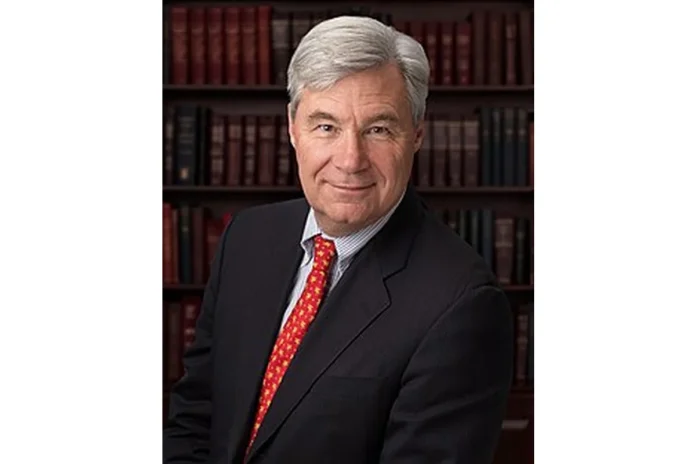
Sheldon Whitehouse Bio
Sheldon Whitehouse (born 20 October 1955) is an American politician and attorney who has served as the junior United States senator from Rhode Island since 2007. A member of the Democratic Party, he previously served as United States Attorney for the District of Rhode Island from 1994 to 1998 and as the 71st attorney general of Rhode Island from 1999 to 2003. He is widely recognized as a leading voice on climate change and campaign finance reform in the U.S. Senate.
Whitehouse has built a career in public service that spans federal prosecution, state law enforcement, and legislative leadership. He became chair of the United States Senate Committee on the Budget in 2023 and has delivered hundreds of floor speeches on environmental policy and the influence of undisclosed political spending. His work has made him one of the most prominent progressive voices in the chamber.
Early Life and Background
Sheldon Whitehouse was born on October 20, 1955, in New York City. He is the son of Mary Celine (née Rand) and career diplomat Charles Sheldon Whitehouse, who served as the U.S. Ambassador to Thailand and Laos. His grandfather, Edwin Sheldon Whitehouse, was also a diplomat, reflecting a family tradition of public service that shaped his early worldview.
Among his great-great-grandfathers were Episcopal Bishop Henry John Whitehouse and railroad executive Charles Crocker, a founder of the Central Pacific Railroad. Whitehouse grew up in a family with deep historical roots in American civic and religious life, and he was also a descendant of William Bradford, governor of Plymouth Colony, and theologian Archibald Alexander. These ancestral connections gave him a strong sense of American history and public duty.
Whitehouse attended St. Paul’s School in Concord, New Hampshire, where he received his secondary education. He went on to graduate from Yale College in 1978 with a Bachelor of Arts degree. He then earned his Juris Doctor from the University of Virginia School of Law in 1982, providing the legal foundation that would launch his career in law and government.
Path to US Politics
After law school, Whitehouse clerked for Justice Richard Neely of the Supreme Court of Appeals of West Virginia from 1982 to 1983. He then returned to Rhode Island, where he served as a special assistant attorney general from 1985 to 1990, including time as chief of the Regulatory Unit overseeing utilities. These early roles gave him hands-on experience in both the courts and state government.
Whitehouse served as executive counsel to Rhode Island Governor Bruce Sundlun beginning in 1991 and later became the governor’s director of policy. He helped manage the state’s response to the Rhode Island banking crisis that erupted early in Sundlun’s term. In 1992, Sundlun appointed him Director of Business Regulation, where he oversaw the state’s workers’ compensation insurance system and gained valuable executive experience.
In 1994, President Bill Clinton appointed Whitehouse as United States Attorney for the District of Rhode Island. He held the position for four years and, with the 1996 conviction of mobster Gerard Ouimette, became the first prosecutor to secure a conviction of an organized crime figure under Clinton’s three-strikes law. In 1998, Whitehouse was elected Rhode Island’s 71st attorney general, serving until 2003 and laying the groundwork for his later run for federal office.
Sheldon Whitehouse Career
Early Career (1994–2003)
As U.S. Attorney for Rhode Island from 1994 to 1998, Whitehouse built a record of aggressive federal prosecution. His conviction of Gerard Ouimette under the three-strikes law demonstrated his willingness to use tough-on-crime statutes against organized crime figures. He also handled a wide range of federal cases during a period when the office tackled drug trafficking, public corruption, and civil rights matters across the state.
Elected attorney general of Rhode Island in 1998, Whitehouse took on major consumer protection and public health cases. He initiated a lawsuit against the lead paint industry that, after a mistrial, ultimately led to a separate ruling holding former manufacturers responsible for creating a public nuisance, though that ruling was later overturned by the Rhode Island Supreme Court in 2008. His tenure established him as a prominent state-level legal figure.
Senate Elections Breakthrough (2006–2018)
Whitehouse launched his campaign for the U.S. Senate on April 4, 2005, challenging Republican incumbent Lincoln Chafee. He raised more than $600,000 by September of that year, including $360,000 of his own money, more than doubling Chafee’s fundraising. He campaigned heavily against the Iraq War and U.S. dependence on foreign oil, themes that would shape his Senate career.
After winning the Democratic primary by a wide margin, Whitehouse defeated Chafee with 53 percent of the vote in the 2006 general election. His victory made him the first Democrat to win the Rhode Island Senate seat since John Pastore in 1970. He was reelected in 2012 with 64.9 percent of the vote, defeating Republican Barry Hinckley by roughly 30 points.
Whitehouse won a third term in 2018, defeating Republican Robert Flanders by 23 points. He secured a fourth term in 2024, defeating Republican Patricia Morgan by about 20 points. These successive victories cemented his position as one of the most durable Democratic incumbents in New England politics.
Budget Committee Chair Era (2023–Present)
In 2023, Whitehouse became chair of the United States Senate Committee on the Budget. According to Politico, he turned the committee into a de facto climate panel during his tenure, seeking to subpoena executives of leading oil companies and pushing for a carbon tax. He has used the chairmanship to elevate the debate over climate policy in federal budget discussions.
Whitehouse has continued his long-running campaign against undisclosed political spending, often called dark money, particularly as it relates to the U.S. Supreme Court. In March 2021, he convened a Senate Judiciary subcommittee hearing titled “What’s Wrong with the Supreme Court: The Big-Money Assault on Our Judiciary” and later wrote to Attorney General Merrick Garland seeking investigations into Justice Brett Kavanaugh and Justice Clarence Thomas. His advocacy has kept campaign finance at the center of national political debate.
Notable Events and Milestones
Since 2012, Whitehouse has spoken on the Senate floor about climate change every week the Senate has been in session, delivering his 250th such speech on July 24, 2019. In 2015, he authored a Washington Post editorial calling for prosecution of fossil fuel industry executives under the Racketeer Influenced and Corrupt Organizations Act. He has also been a vocal supporter of gun control, voting for the Bipartisan Safer Communities Act of 2022.
Sheldon Whitehouse Career Wins
Sheldon Whitehouse has compiled a strong record of electoral victories since first reaching the U.S. Senate in 2006. His wins reflect consistent support from Rhode Island voters across four consecutive Senate cycles.
Senate Election Highlights
Whitehouse’s first Senate victory came in 2006, when he defeated Republican incumbent Lincoln Chafee with 53 percent of the vote. He followed that with a dominant 2012 reelection, winning 64.9 percent against Barry Hinckley, and a 2018 win over Robert Flanders. In 2024, he won a fourth term by defeating Patricia Morgan by about 20 points.
Other Wins and Achievements
Before his Senate career, Whitehouse won election as Rhode Island attorney general in 1998. In 2023, he was elevated to chair the Senate Budget Committee, a position that gave him significant influence over federal fiscal and climate policy. He has also been recognized as one of the Senate’s most active voices on environmental issues.
Sheldon Whitehouse Family
Family Background and Political Lineage
Whitehouse comes from a family with deep ties to American diplomacy and civic life. His father, Charles Sheldon Whitehouse, was a career diplomat who served as U.S. Ambassador to Thailand and Laos, and his grandfather Edwin Sheldon Whitehouse was also a diplomat. Among his great-great-grandfathers were Episcopal Bishop Henry John Whitehouse and railroad executive Charles Crocker, a founder of the Central Pacific Railroad.
Personal Life
In 1986, Whitehouse married Sandra Thornton, a marine biologist who works with the nonprofit Ocean Conservancy. She is the granddaughter of James Worth Thornton and Elena Mumm Thornton Wilson, and her step-grandfather was the prominent essayist and critic Edmund Wilson. The couple lives in Rhode Island with their two children, and Whitehouse is a practicing Episcopalian.