
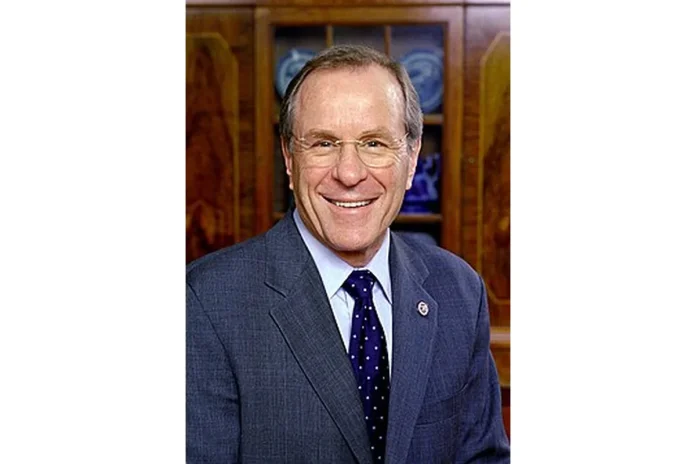
Ted Kulongoski Bio
Theodore Ralph Kulongoski, born on November 5, 1940, is an American politician, judge, and lawyer best known for serving as the 36th governor of Oregon from 2003 to 2011. A member of the Democratic Party, he built one of the most varied careers in Oregon state government, holding senior positions in the legislative, executive, and judicial branches over several decades. He is the only Oregonian to have served in all three branches of the state government.
Beyond the governorship, Kulongoski served in the Oregon House of Representatives, the Oregon State Senate, and as Oregon Attorney General and a justice of the Oregon Supreme Court. He also worked as a labor lawyer in Eugene, Oregon, and, after leaving office, joined the faculty at Portland State University’s Mark O. Hatfield School of Government. He continues to participate in public life through state commissions and policy work.
Early Life and Background
Theodore Ralph Kulongoski was born in St. Louis, Missouri, in 1940. His father, also named Theodore Kulongoski, was the son of Polish immigrants and died of cancer in 1941, when his son was about a year old. His mother, Helen Newcomer, raised him on her own. After his father’s death, Kulongoski spent the rest of his childhood in a Catholic boys’ home, an experience that shaped his early years and his sense of discipline.
After finishing high school, Kulongoski enlisted in the United States Marine Corps. Following his military service, he used the benefits of the G.I. Bill to attend the University of Missouri, where he earned both his Bachelor of Arts and his Juris Doctor by 1970. His legal training would become the foundation for his later work as a labor lawyer and as a public official in Oregon.
Path to US Politics
After graduating from law school, Kulongoski moved to Eugene, Oregon, and began his career as a labor lawyer. His early legal work focused on workplace issues and gave him practical experience in the kinds of disputes he would later address in public office. In 1974, he won election to the Oregon House of Representatives, beginning a long tenure in state government that would last for decades.
By 1978, Kulongoski had moved up to the Oregon State Senate, where he continued to build a reputation as a careful, consensus-minded legislator. In 1980, he ran for the United States Senate against Republican incumbent Bob Packwood, an effort that ended in defeat but raised his profile within the Oregon Democratic Party. He mounted an early bid for governor in 1982, losing to Republican incumbent Victor G. Atiyeh, and these early campaigns set the stage for his later statewide victories.
Ted Kulongoski Career
Early Career (1974–1992)
Kulongoski’s early career combined legal practice with steady advancement in the Oregon Legislature. After winning his Oregon House seat in 1974 and his Oregon Senate seat in 1978, he became known for measured, bipartisan work on labor and consumer issues. His unsuccessful 1980 U.S. Senate race and 1982 governor’s bid did not slow his rise, and in 1987 Governor Neil Goldschmidt appointed him state insurance commissioner.
As insurance commissioner, Kulongoski reformed Oregon’s workers’ compensation system, a change widely credited with lowering costs for businesses while maintaining benefits. That work strengthened his standing as a problem solver, and in 1992 he won election as Oregon Attorney General, defeating Republican Rich Rodeman. He used the office to focus on reforming the juvenile justice system, further broadening his record of public service.
Oregon Supreme Court and 2002 Gubernatorial Win (1996–2003)
In 1996, Kulongoski chose not to seek re-election as attorney general and instead won a seat on the Oregon Supreme Court. He served as a justice until 2001, when he resigned to make his second run for governor. In the 2002 Democratic primary he secured the nomination and went on to face Republican Kevin Mannix and Libertarian Tom Cox in the general election.
Kulongoski ran a low-key campaign that emphasized his reputation as a consensus-builder and his pragmatic approach to the state’s budget crisis. He won with about 49 percent of the vote, defeating Mannix by roughly 36,000 votes. He was sworn in as Oregon’s 36th governor on January 13, 2003, inheriting a sizable budget deficit, high unemployment, and a troubled public employees’ pension system.
Reelection and Second Term (2006–2011)
Kulongoski won a contested Democratic primary in May 2006 with 54 percent of the vote, turning back challenges from former State Treasurer Jim Hill and Lane County Commissioner Pete Sorenson. In the general election he faced Republican Ron Saxton, Constitution Party candidate Mary Starrett, Libertarian Richard Morley, and Pacific Green Party candidate Joe Keating, and won a second term on November 7, 2006, taking roughly 51 percent of the vote to Saxton’s 43 percent.
During his second term, Kulongoski signed legislation recognizing domestic partnerships and expanding anti-discrimination protections for LGBT Oregonians. He also joined a national food stamp challenge in 2007 to highlight the difficulty of living on a $21 weekly food stamp allotment, announced Oregon’s entry into the Climate Registry to track greenhouse gas emissions, and joined the National Governors Association and the Democratic Governors Association. In May 2010 he suffered a vitreous hemorrhage in his eye and underwent surgery at Oregon Health & Science University to restore his vision.
Notable Events and Milestones
Kulongoski’s career includes service in all three branches of Oregon state government, a distinction shared by very few Oregon politicians. He is remembered for reforming the state’s workers’ compensation insurance system as insurance commissioner, modernizing juvenile justice policy as attorney general, and signing landmark domestic partnership and anti-discrimination bills as governor. His 2002 and 2006 gubernatorial victories made him a defining figure in Oregon Democratic politics of his era.
Ted Kulongoski Family
Family Background and Public Lineage
Ted Kulongoski was raised in St. Louis, Missouri, by his mother, Helen Newcomer, after his father, Theodore Kulongoski, died of cancer when he was about one year old. His father was the son of Polish immigrants, giving the family deep roots in the immigrant experience of the early twentieth century. After his father’s death, Kulongoski was raised in a Catholic boys’ home, an environment that shaped his values and discipline before his military service and law school years.
Personal Life
Kulongoski is married to Mary Oberst, his longtime partner and a familiar figure at Oregon political events. Public information about his home life remains limited, and the couple is known primarily for their shared involvement in civic and community work in Oregon. After leaving the governorship, Kulongoski continued to live in Oregon while teaching at Portland State University and serving on state commissions.