
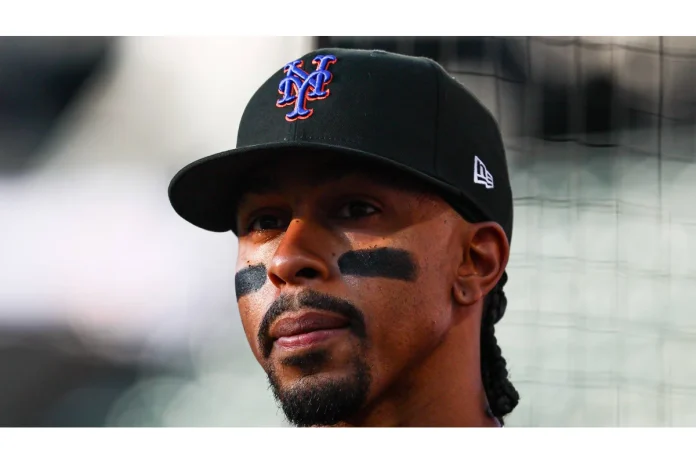
New York Mets Overview
The New York Mets are an American professional baseball team based in the New York City borough of Queens. The Mets compete in Major League Baseball (MLB) as a member club of the National League (NL) East Division. They are one of two major league clubs based in New York City alongside the American League’s New York Yankees.
One of baseball’s first expansion teams, the Mets were founded in 1962 to replace New York’s departed National League franchises, the Brooklyn Dodgers and the New York Giants. The team’s blue and orange colors were chosen to evoke those two predecessors. The club is owned by hedge fund manager Steve Cohen, who purchased the franchise in 2020, and is currently managed by Carlos Mendoza. The team’s official mascot is Mr. Met, widely believed to be the first human-form mascot in Major League Baseball history.
Founding and Organizational Origins
The New York Mets were founded in 1962 as part of Major League Baseball’s first major wave of expansion. The franchise was created to bring National League baseball back to New York after the Brooklyn Dodgers moved to Los Angeles and the New York Giants moved to San Francisco following the 1957 season. The team’s name, the Mets, was a shortening of “Metropolitans,” a name with deep roots in New York baseball history.
The push for a new National League team in New York was accelerated by attorney William Shea, who proposed a third major league called the Continental League. When that plan collapsed, National League officials agreed to add two expansion teams, and the Mets were admitted to the league along with the Houston Colt .45s. For their first two seasons, the Mets played home games at the Polo Grounds in upper Manhattan, the former home of the Giants.
The early Mets organization was built from scratch, with Joan Whitney Payson serving as the franchise’s founding owner. The team’s iconic primary logo was designed by sports cartoonist Ray Gotto, featuring the word “Mets” in orange script across a blue silhouette of the New York City skyline. The interlocking “NY” cap logo was borrowed directly from the final-era Giants, while the blue cap recalled the Brooklyn Dodgers.
Growth Into MLB Competition
The Mets took the field for the first time in 1962 under manager Casey Stengel, a Hall of Famer who had led the Yankees through some of their greatest seasons. Their inaugural year produced a 40–120 record, one of the worst in modern major league history. The team’s early years were defined by growing pains as the franchise built its player development system, scouting network, and front office from the ground up.
The franchise moved into its own ballpark in 1964, playing at Shea Stadium in Flushing, Queens, a facility named after William Shea to honor his role in bringing National League baseball back to the city. By the late 1960s, a wave of young pitching talent including Tom Seaver, Jerry Koosman, and Nolan Ryan had transformed the organization. That core powered the team’s rise into serious contention within the National League.
Beyond their home division, the Mets built key rivalries that shaped their identity. The Atlanta Braves rivalry intensified after both teams were placed in the National League East in 1994. The New York Yankees rivalry traces back through the histories of the Giants, Dodgers, and Yankees, while the Philadelphia Phillies rivalry reflects a broader New York–Philadelphia sports tension. Each rivalry has produced defining moments across the decades.
New York Mets Competitive Journey
Across more than six decades of competition, the New York Mets have built a record defined by dramatic highs and long stretches of struggle. The franchise has made the postseason eleven times, capturing two World Series titles, five National League pennants, six NL East division crowns, and five Wild Card berths. Their arc includes one of the most surprising championships in baseball history, a second title that came in equally dramatic fashion, and a series of competitive rebuilds led by passionate ownership and a loyal fanbase.
Early Seasons and Development (1962–1968)
The Mets’ first seven seasons produced consistent last-place finishes, including the 40–120 campaign of 1962 and a 53–100 record in 1963. The club used these years to stockpile young talent, most notably winning the 1966 regular-season rotation of Seaver, Koosman, Ryan, and Gary Gentry into one of the most promising pitching staffs in baseball. Attendance at Shea Stadium regularly led the league, despite the team’s on-field struggles.
By 1967, the Mets had begun to show signs of life, climbing out of the basement and reaching as high as ninth place. The 1968 season brought further improvement, with the club finishing above .500 at the end of August. These gradual gains set the stage for the breakthrough that would follow in 1969, when the franchise completed one of the most stunning turnarounds in professional sports history.
Breakthrough in 1969: The Miracle Mets
The 1969 New York Mets remain one of the most celebrated teams in American sports history. Under manager Gil Hodges, the Mets won 100 games and rolled through the National League East before sweeping the Atlanta Braves in the first-ever National League Championship Series. They then defeated the heavily favored Baltimore Orioles in five games to win the World Series, a stunning upset that earned the team the nickname the “Miracle Mets.”
Breakthrough in 1973 and the 1980s Resurgence
After several losing seasons, the Mets returned to the World Series in 1973 under manager Yogi Berra, falling to the Oakland Athletics in seven games. The franchise then endured another extended downturn before rebuilding around young stars Dwight Gooden, Darryl Strawberry, and Gary Carter in the mid-1980s.
The 1986 Mets are widely regarded as one of the most talented teams ever assembled. They won 108 games and captured the World Series title with a dramatic six-game victory over the Boston Red Sox. The decade also featured six National League East division titles between 1969 and 1988 and the development of a hard-nosed team identity that still resonates with fans.
Modern Program and Current Direction (2000–Present)
The Mets returned to the World Series in 2000, falling to the Yankees in a memorable all-New York “Subway Series.” They won a fifth National League pennant in 2015 and reached the National League Championship Series again in 2024 under owner Steve Cohen. The October 2020 purchase of the franchise by Cohen, a billionaire hedge fund manager, ushered in a new era of aggressive spending, highlighted by the December 2024 signing of outfielder Juan Soto to a 15-year contract valued at $765 million, the largest in professional sports history.
The current front office is led by president of baseball operations David Stearns and manager Carlos Mendoza, who was hired in November 2023 after the dismissal of Buck Showalter. The team plays its home games at Citi Field, the Queens ballpark that opened in 2009 on the former site of Shea Stadium. The Mets’ broadcast home is SportsNet New York (SNY), with Gary Cohen, Keith Hernandez, and Ron Darling forming the primary television booth.
Philosophy and Competitive Strengths
The Mets organization has historically centered its identity around strong starting pitching, a tradition that runs from Seaver and Koosman through Dwight Gooden, Tom Glavine, and Jacob deGrom. Under Steve Cohen’s ownership, the franchise has embraced an aggressive free-agent philosophy, pairing premium pitching acquisitions with star position players. The team’s farm system has also produced impact talents, including Pete Alonso, who set the franchise single-season RBI record in 2022.
Key Milestones and Major Moments
The franchise’s defining moments include the 1969 World Series upset of the Baltimore Orioles, the 1986 World Series championship over the Boston Red Sox, and the second no-hitter in team history, thrown on April 29, 2022, against the Philadelphia Phillies. In September 2022, Pete Alonso set the franchise single-season RBI record, surpassing marks previously held by Mike Piazza and David Wright. The 2024 season featured a remarkable midseason turnaround, and the signing of Juan Soto later that offseason marked the largest contract in professional sports history.
New York Mets Achievements and Results
Over six decades of competition, the New York Mets have accumulated two World Series championships, five National League pennants, six NL East division titles, and five Wild Card berths. The franchise’s trophy case also includes numerous individual accolades, with several of its players and broadcasters honored in the National Baseball Hall of Fame and through the Ford C. Frick Award.
World Series Achievements
The Mets have won two World Series championships, in 1969 and 1986. The 1969 title, won over the Baltimore Orioles in five games, is considered one of the greatest upsets in World Series history. The 1986 championship came against the Boston Red Sox in seven games, with the Mets winning 108 regular-season games en route to the title. The franchise has also appeared in the World Series in 1973, 2000, and 2015, finishing as runner-up each time.
National League Achievements
The Mets have captured five National League pennants, in 1969, 1973, 1986, 2000, and 2015. The franchise has also qualified for the postseason as a Wild Card team in 1999, 2000, 2016, 2022, and 2024. Their postseason appearances have featured dramatic series, including the 1999 NLCS against the Atlanta Braves and the 2024 National League Championship Series against the Los Angeles Dodgers.
Divisional Achievements
The Mets have won six National League East division titles, claiming the crown in 1969, 1973, 1986, 1988, 2006, and 2015. The 1986 and 1988 titles were won consecutively, establishing the Mets as the dominant National League East club of the late 1980s. The 2006 division championship came during a season that ended in a heartbreaking NLCS loss to the St. Louis Cardinals.
Series and Rivalry Achievements
The Mets’ rivalry with the Atlanta Braves became one of the National League’s defining competitions after both teams were placed in the NL East in 1994. Their rivalry with the Philadelphia Phillies intensified through the mid to late 2000s, while the Subway Series rivalry with the New York Yankees has produced memorable moments in interleague play. The 2000 World Series between the Mets and Yankees remains one of the most anticipated Fall Classics in recent memory.