
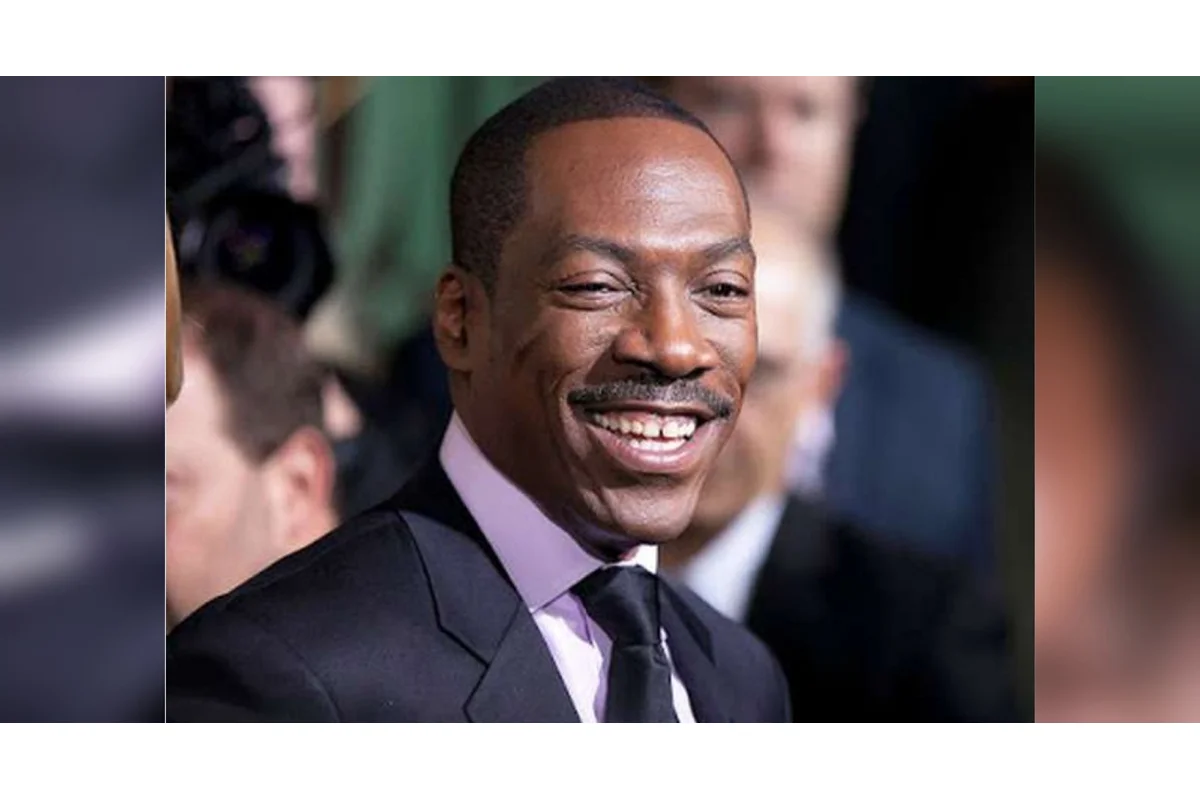
Eddie Murphy comedy legacy is defined by his rare ability to succeed as a stand-up comedian and Hollywood star, a path few have navigated with his level of success. Alongside Robin Williams and Steve Martin, Murphy is one of the select comedians who transitioned from the stage to commanding dramatic and comedic roles on the big screen, reshaping comedy in both arenas.
Starting as a revitalizing force on Saturday Night Live, Murphy’s talent breathed new life into the show when it faced cancellation, showcasing his magnetic stage presence. His solo stand-up special, Eddie Murphy Raw, remains the highest-grossing stand-up film ever produced, highlighting his monumental success in this art form before his film career took off.
From Breakthrough Roles to Box Office Dominance
Murphy’s feature film debut at age 20 with 48 Hrs. essentially created the buddy cop genre, swiftly becoming the top box office release of 1982. His follow-up, Trading Places, saw him outshine fellow cast member Dan Aykroyd, asserting himself as a powerhouse talent early on. The film’s success cemented Murphy’s star status and showcased his sharp comedic timing and charisma.
In 1984, Murphy reached a new height with Beverly Hills Cop, portraying Axel Foley, a role originally envisioned for Sylvester Stallone. His effortless charm and comedic skill propelled the film to box office dominance and set a new standard for comedy-action hybrids. Over the next twenty years, Murphy sustained his momentum with hits like Coming to America, The Nutty Professor, and by lending his voice to the Shrek franchise, where he stood out even against fellow comedic icon Mike Myers.
Transitioning to Dramatic Roles and Industry Recognition
After a period of career downturn, Murphy expanded his range by embracing dramatic parts, most notably his portrayal of James “Thunder” Early in Dreamgirls, directed by Bill Condon. This role garnered him an Oscar nomination, underscoring his versatility and reaffirming his stature as a major Hollywood figure beyond comedy.
Despite his extraordinary achievements, Murphy remains humble about his place in entertainment history. Recognizing the importance of having influences to look up to, he openly credits performers who came before him as the true pinnacles of his craft.
Eddie Murphy’s Reflection on Comedy’s Highest Standard
In a thoughtful interview with The New York Times, Murphy reflected on his groundbreaking career in comedy and film, asserting that while many great performers followed him, none have surpassed the art’s ultimate legends. He identified a ceiling that remains unbeaten in both stand-up and movies:
“I haven’t witnessed the next level,”
he said.
The ceiling of the whole art form, standup comedy, that’s Richard [Pryor]. And the ceiling for movies, for me, is [Charlie] Chaplin. I haven’t seen anyone come along that was better than Chaplin.
—Eddie Murphy
Murphy’s admiration for Richard Pryor is well-documented, as both brought sharp intellect and boldness to their comedy, setting extraordinary standards. The connection to Charlie Chaplin, a silent film era icon, reveals Murphy’s deep respect for the foundations of cinematic comedy despite the decades separating their careers.
How Chaplin’s Legacy Influences Murphy’s Comic Artistry
Though best known for pioneering sound and voice-driven comedy, Murphy also excels in physical humor and nuanced facial expressions, a craft pioneered by Chaplin during the silent film era. Chaplin’s influence can be observed in Murphy’s ability to convey complex emotions through subtle micro-expressions, elevating his performances beyond mere verbal wit.
Whether in Beverly Hills Cop or his other films, Murphy’s mastery of nonverbal comedic performance echoes Chaplin’s legacy. This enduring impact aligns Murphy with Chaplin not only as a performer but as a transformative figure in the history of comedy and film.
The Broader Significance of Murphy’s Comedy Legacy
Eddie Murphy’s reflections emphasize the cyclical nature of artistic influence, where each generation builds upon the milestones of the past. Acknowledging Richard Pryor as the summit of stand-up and Charlie Chaplin as the pinnacle of comedic film underscores Murphy’s profound respect for the craft and its history. His career, blending commercial success with critical recognition, continues to inspire new talents striving to break through the so-called ultimate ceiling.
As Murphy’s legacy remains vibrant through his continued work and influence, audiences and performers alike are reminded that mastery in comedy involves honoring the greats who set the bar while pushing the art form forward. In recognizing these towering figures, Murphy positions himself not just as a comedy legend but as a devoted student of the evolving craft.

Related semantic context: related coverage · external reference.
