

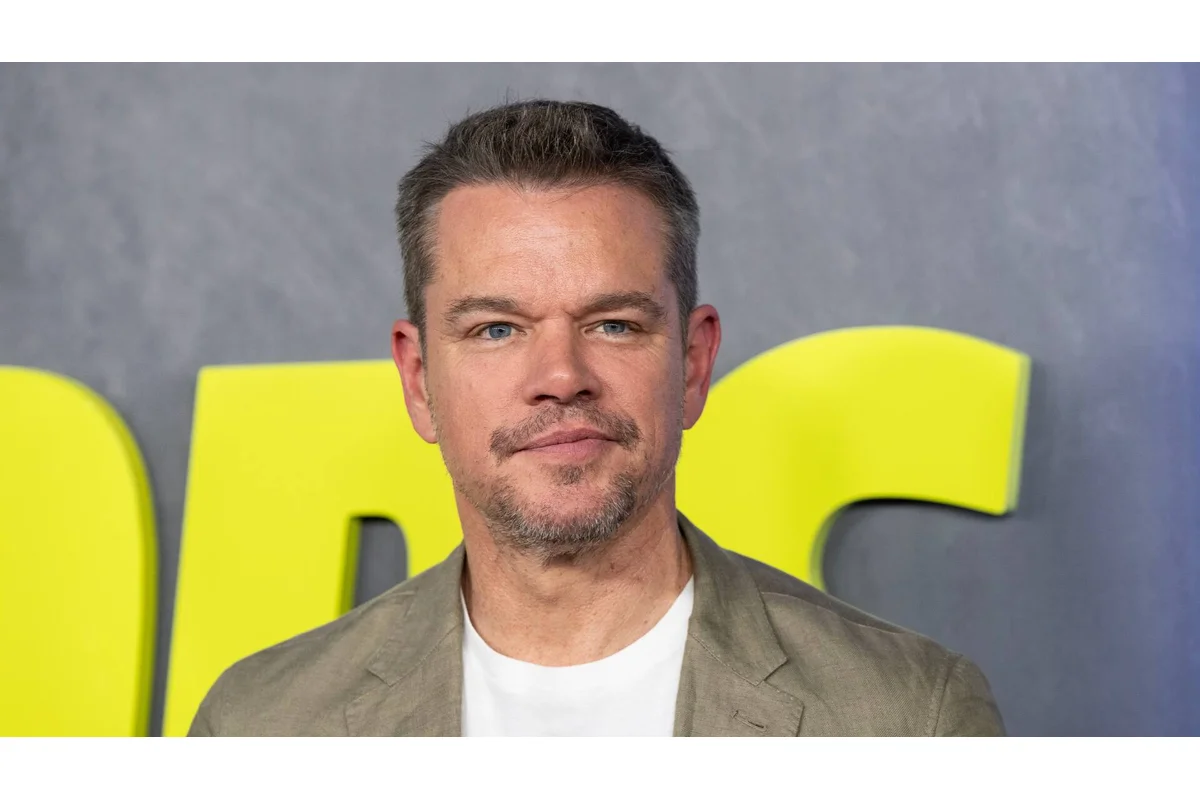
Amanda Knox has reignited her public disagreement with Matt Damon after he suggested that individuals who face cancel culture might have preferred serving jail time instead. Damon, 58, made these remarks during a recent episode of Joe Rogan’s podcast, where he implied that jail sentences have a defined end, unlike the lasting consequences of being “canceled.”
Matt Damon’s Perspective on Cancel Culture and Imprisonment
During the podcast, Damon expressed his view that jail time is a temporary punishment while cancel culture is unending. He stated,
“I bet some of those people would have preferred to go to jail for 18 months or whatever and then come out and say, ‘No, but I paid my debt. Like, we’re done. Like, can we be done?’”
He added,
“Like, the thing about getting kind of excoriated publicly like that, it just never ends.”
Amanda Knox’s Response Highlights Her Own Experience
Knox, who spent nearly four years in an Italian prison after being wrongly convicted in the 2007 murder case of her British roommate Meredith Kercher, shared Damon’s comments on social media with a pointed reaction. She wrote,
“Another thing Matt Damon could have run by me before putting out into the world.”
Knox further engaged with critics in the comment section of her post, emphasizing the enduring challenges of imprisonment beyond physical confinement. She explained,
“You don’t get to go to prison in secret. It comes with its own stigma and lasting trauma. You don’t just get to ‘be done with it,’ personally or socially.”
Discussion on the Emotional Toll of Cancellation Versus Imprisonment
Journalist Katherine Brodsky weighed in on the debate, acknowledging the severe impact of both punishment types. She observed,
“Well, literally going to jail…not so good. But frankly, given that some of these ‘cancelled’ people have taken their own lives, yeah, maybe they would have preferred to go to jail for 18 months and be done with it — instead, there’s no end to it. No coming back. No being ‘square.’”
Knox responded,
“People commit suicide in prison, too,”
to which Brodsky added,
“I just don’t think he meant it in such a literal way.”
Background of Knox’s Wrongful Conviction and Advocacy Work
Knox and her then-boyfriend Raffaele Sollecito were convicted for the 2007 murder of Meredith Kercher in Perugia, Italy, spending nearly four years incarcerated before their acquittal in 2011. Following her release, Knox has dedicated herself to prison reform advocacy, drawing from her personal ordeal.
Knox’s Criticism of Matt Damon’s Role in ‘Stillwater’
Knox’s opposition to Damon extends to his role in the 2021 crime thriller Stillwater, directed by Tom McCarthy, which was inspired by her case. The film centers on a father, played by Damon, who travels to France to visit his daughter imprisoned for a murder she claims she did not commit.
Knox told Variety at the time,
“I don’t think that the filmmakers can honestly say that they went far enough away from my case so that it wouldn’t be recognizably my case. And I think that that’s clear in all of the coverage where everyone’s like, ‘Oh, this is recognizably the Amanda Knox case.’ And from that audiences can then draw conclusions about me, whether or not those conclusions are accurate or not.”
Her main grievance was the portrayal of the character based on her being somewhat responsible for the murder, which she felt perpetuated false assumptions linking her to Kercher’s death. Knox stated,
“There’s been this ongoing idea that, ‘Well, as long as we call it fiction, then no one would honestly apply the ideas or feelings or conclusions that I bring with my imagination to the story to the real person.’ And that’s simply not true,”
adding,
“And then Matt Damon and the director can walk away with a great story in their pocket, but meanwhile, I’m still living with the consequences of people thinking that I am somehow involved in this crime that I am not involved in.”
The Lasting Implications of Public Perception and Media Representations
This exchange underscores how public figures’ commentary on cancel culture and punishment can deeply affect individuals with firsthand experiences. Knox’s responses highlight the ongoing struggle against social stigma and trauma following wrongful imprisonment, contrasting it with Damon’s perspective on the finite nature of jail sentences.
As debates on cancel culture continue to unfold, Knox’s story and activism serve as a reminder of the personal complexities involved when public judgment extends beyond formal penalties, often leaving lasting scars on those targeted.
Related semantic context: related coverage · external reference.
