
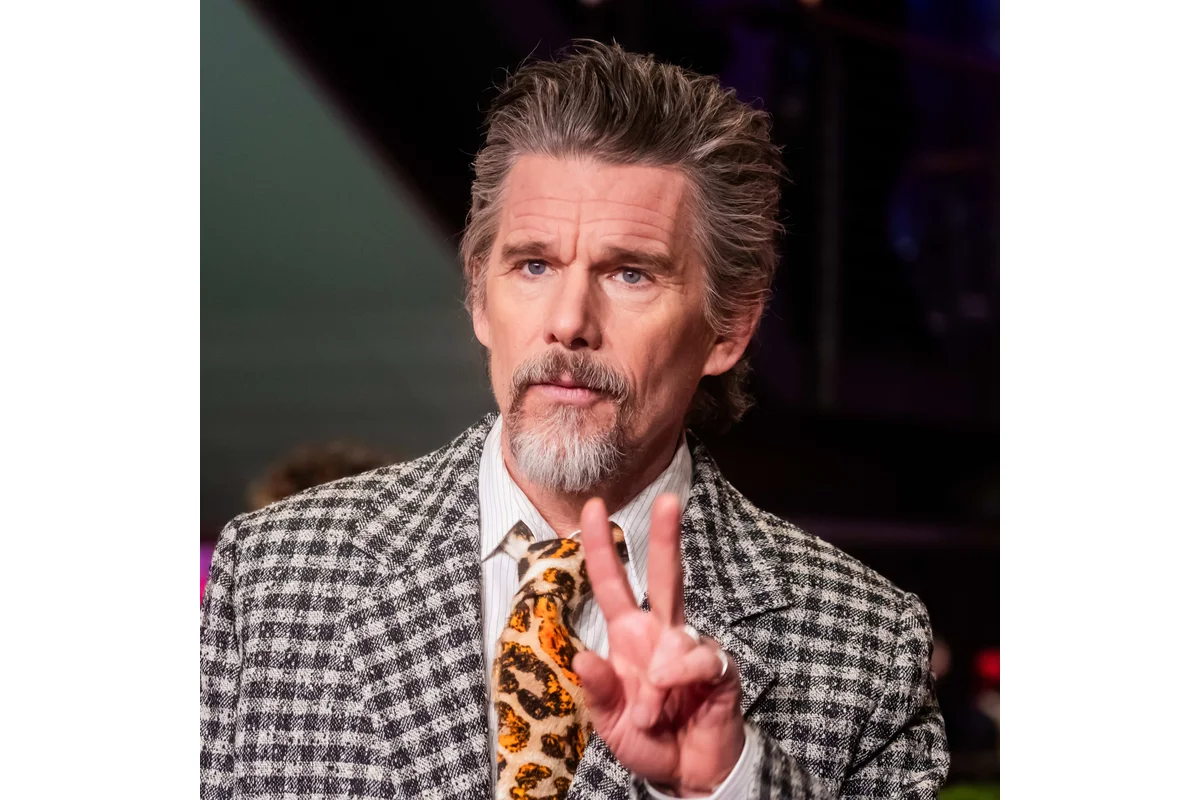
Ethan Hawke’s “Gattaca” role marked a defining moment in his career, portraying Vincent Freeman, a man battling genetic discrimination in a near-future society. Released in 1997, the film presented Hawke with an adult character driven by desperation and determination, showcasing a significant evolution in his acting journey.
From Early Roles to a More Mature Character in Gattaca
Before “Gattaca,” Ethan Hawke was recognized for youthful roles, such as the idealistic Jesse in Richard Linklater’s “Before Sunrise” and Troy, the aimless college graduate in Ben Stiller’s “Reality Bites.” These characters portrayed Hawke as one of the many “hipster dreamers,” navigating the challenges of early adulthood. However, his role as Vincent Freeman was an essential departure, demanding a more mature portrayal of a man forced into adulthood under extraordinary circumstances.
Unlike his previous parts, Vincent Freeman is defined by urgency and limitation. Born through natural conception rather than genetic engineering, Vincent’s life expectancy was capped at 30 years due to a heart condition, and his genetics make him ineligible for his dream job as an astronaut. This personal setback sets the tone for the film, establishing a rigid, dystopian society where DNA dictates destiny.
The Challenges of Vincent Freeman’s Dystopian World
Vincent’s story is told through a stark and methodical voiceover narration, underscoring the coldly rational rules of this future society. To break free from the constraints imposed by his “substandard” genetics, he assumes the identity of Jerome Eugene Morrow, a former swimming star paralyzed in an accident. Played by Jude Law in his breakthrough role, Jerome provides Vincent with valid DNA samples, enabling him to bypass rigorous genetic screenings.
This deception forces Vincent into a life of meticulous preparation, including scrubbing his body daily to remove any trace of his true genetic material and outfitting himself with devices to avoid detection in routine checks. Hawke’s ability to embody this duality—the cold, emotionless façade imposed by society and Vincent’s relentless internal drive—is a testament to his skill at portraying complex characters with subtlety and depth.
Powerful Chemistry Between Hawke and Jude Law
The dynamic between Hawke’s Vincent and Law’s Jerome adds emotional weight to the film. Andrew Niccol’s screenplay explores the contrast between Jerome’s genetic superiority, which he scorned, and Vincent’s outsider status, driving the narrative tension. Both actors delivered performances that felt authentic and compelling, highlighting the desperation, hope, and quiet dignity that define their characters’ lives.
Alongside them is Uma Thurman as Irene, a colleague and romantic interest who inhabits this subdued world with restrained style and emotional complexity. Thurman’s silver dress during their interactions serves as a rare break from the society’s uniform aesthetic, hinting at the suppressed yearning beneath the surface.
Crafting a Convincing Vision of the Future
“Gattaca” succeeds not just through performances but in its atmospheric depiction of a futuristic society. Production designer Jan Roelfs, known for his work with Peter Greenaway, utilized real-world locations like Frank Lloyd Wright’s Marin County Civic Center to create authentic and timeless architectural settings. The use of 1960s-style cars blended with modern electric engine sounds reinforced the futuristic yet familiar ambiance.
The society’s clean, black-and-white fashion, designed by Colleen Atwood, emphasizes the lack of personal expression within the film’s world, where conformity and genetic purity are paramount. Neon green and yellow lighting highlights the dystopian setting further, a visual style that remains effective nearly three decades after the film’s release. By eschewing heavy CGI, relying instead on tactile design elements, director Andrew Niccol and his team created a haunting vision that feels tangible and unsettling.
Significance of Gattaca in Hawke’s Career and Its Lasting Impact
“Gattaca” offered Ethan Hawke a pivotal opportunity to demonstrate his range, shifting him beyond roles rooted in youthful idealism. The film allowed him to tackle themes of identity, resilience, and societal pressure in ways that deepened his craft. This experience laid the foundation for later performances that continue to reflect maturity and introspection.
In the years since “Gattaca,” Hawke has evolved as an actor, taking on roles that draw from his growing personal and professional wisdom. His more recent work, such as “Blue Moon,” signals another turning point, evidencing his ongoing artistic growth and the expansion of his on-screen persona.
“Gattaca” remains a milestone not only for Hawke but also in science fiction cinema, shaping conversations about genetics, ethics, and human ambition. Its enduring influence and the layered complexity of Hawke’s role suggest that both the actor and the film are likely to be remembered for years to come.
“Gattaca” is currently available for digital rental or purchase.
Related semantic context: related coverage · external reference.
