
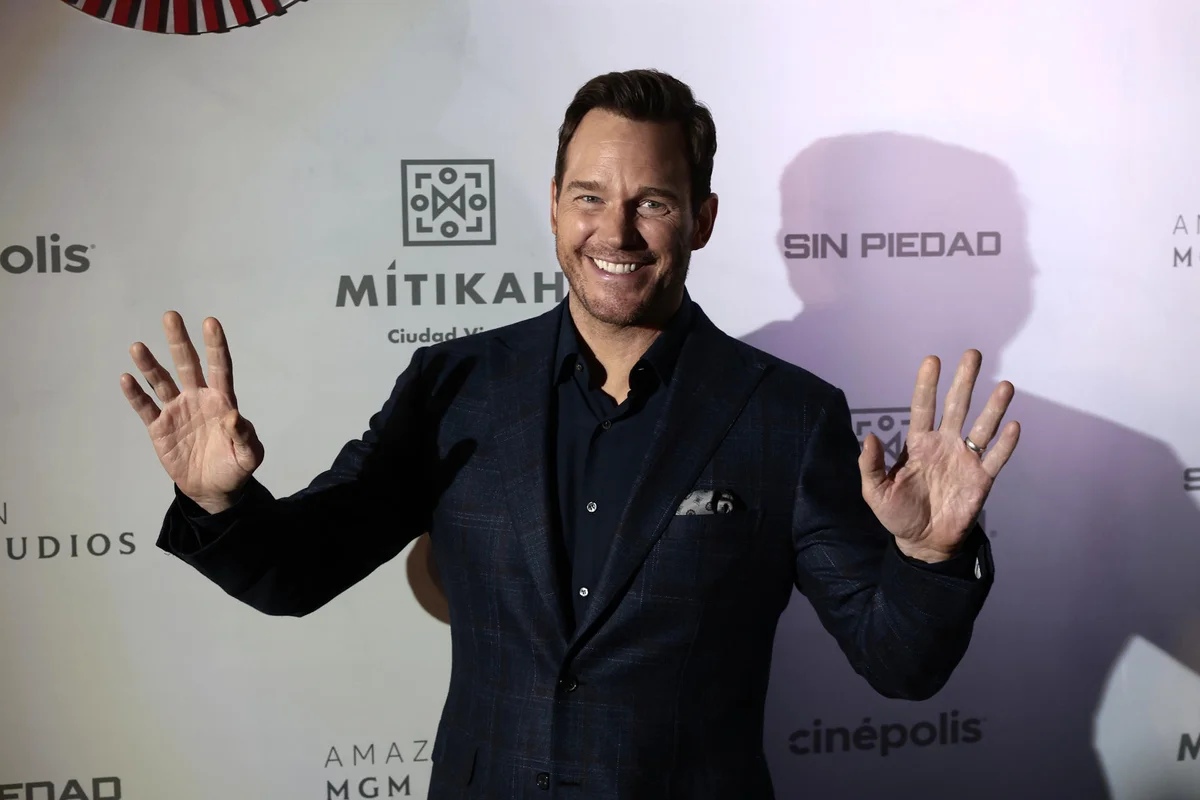
Chris Pratt has openly dismissed concerns about artificial intelligence actors replacing human performers, expressing confidence in the ongoing importance of human talent in the film industry. Speaking at the New York premiere of the movie Mercy, he addressed the rising debate over AI-generated actors like Tilly Norwood, explaining why he sees no danger to his career or others in Hollywood from this emerging technology.
Chris Pratt’s Response to the Rise of AI Performers
In recent months, the entertainment world has grappled with the appearance of Tilly Norwood, a fully AI-created actress developed by Dutch comedian Eline Van der Velden. Reports that talent agents showed interest in hiring the synthetic actress sparked a backlash from multiple established stars, including Emily Blunt and Melissa Barrera, who criticized the concept as diminishing genuine artistic connection and undermining human performers.
Despite the growing unease among many actors, Chris Pratt remained resolute when questioned by Variety about his thoughts on AI actors. He stated plainly,
“I don’t feel like someone’s gonna replace me,”
emphasizing his skepticism toward the hype around synthetic performers. Pratt called the surrounding panic “all bulls***” and dismissed Tilly Norwood’s presence as unproven:
“I’ve never seen her in a movie. I don’t know who this b**** is. It’s all fake until it’s something.”
Pratt, 46, whose career includes starring roles in Everwood, Parks and Recreation, Guardians of the Galaxy, and Jurassic World, highlighted his perspective that while AI may disrupt the industry, it will not supplant the human soul essential to filmmaking. He noted that the technology could serve as
“an amazing tool in the right hands,”
but expressed confidence that
“great filmmakers would continue to make great films.”
He articulated the irreplaceable nature of authentic human experiences in art, saying,
“I don’t think you’re going to replace the human soul of a director or a writer or an actor or a singer or any of this stuff that requires human yearning and suffering and vision in art.”
The Controversy Surrounding AI Actress Tilly Norwood
Tilly Norwood is a digital performer created to blur the line between fiction and reality within the entertainment space. Unveiled at the Zurich Film Festival last summer, she quickly amassed over 93,000 Instagram followers, producing AI-generated video appearances portraying her in various scenarios, including red carpet events and mock trailers across multiple genres.
The introduction of Tilly Norwood provoked strong reactions from the industry’s unions, most notably SAG-AFTRA, which raised alarms about how AI-generated content could exploit stolen performances and threaten the livelihoods of real actors by devaluing human contributions to artistry.
Many actors voiced their opposition, including Natasha Lyonne, Sophie Turner, Toni Colette, and Ralph Ineson, who criticized the advent of AI performers as undermining the foundation of their craft. In response, Van der Velden emphasized that Tilly is not intended as a replacement for human actors but rather as a creative project designed to provoke discourse. She explained,
“Like many forms of art before her, she sparks conversation, and that in itself shows the power of creativity.”
Van der Velden described AI as a “new tool, a new paintbrush,” akin to animation, puppetry, or CGI, which have historically expanded storytelling methods without eliminating traditional live performances. She said,
“I’m an actor myself, and nothing – certainly not an AI character – can take away the craft or joy of human performance.”
She detailed the extensive craftsmanship behind developing Tilly, likening it to drawing characters or shaping roles in traditional media.
“It takes time, skill, and iteration to bring such a character to life,”
Van der Velden stated, asserting that Tilly represents experimentation rather than substitution and insists that AI characters should be judged on their own merits within their own genre.
AI’s Expanding Influence Beyond Hollywood
The discussion surrounding AI performers extends beyond film to the music industry, where AI-created artists are similarly generating controversy. A notable case is Sienna Rose, a soul singer with millions of Spotify listeners who was revealed to be an AI-generated entity. Since releasing her initial EP, Velvet Embrace, she produced multiple projects culminating in the album Honey on the Moon, all without existing as a real person.
Sienna Rose’s rapid success on streaming platforms—garnering 2.7 million monthly listeners—has not come with disclosures about her non-human origins, raising concerns among musicians and industry veterans. Kev Nixon, a songwriter and producer with a 50-year career that includes work with Madonna, Bryan Adams, and Robert Plant, expressed frustration that AI-generated content is saturating the market, drowning out emerging real artists. He said,
“This is ripping off new artists by not giving them a chance and the system is now completely clogged up [with AI songs]. The chances of emerging artists getting their songs up on platforms and getting attention is almost nil…which is preventing them getting paid.”
Nixon called out the unfairness of AI artists taking financial opportunities away from novice musicians, stating,
“The money Sienna has been paid should be going to a young girl who’s just made her first record and that could change her life. That is a criminal thing to happen.”
Industry and Public Reactions Signal a Turning Point
The emergence of AI actors and musicians reveals a growing tension between technological innovation and the preservation of human artistry. While figures like Chris Pratt remain confident that AI will never replace genuine human performance, many performers and creative professionals continue to express anxiety about the future of their crafts amid AI’s rapid development.
Organizations such as SAG-AFTRA are actively raising concerns about AI’s potential to exploit existing creative material and destabilize established careers. Meanwhile, creators like Van der Velden argue for viewing AI characters as a new artistic medium that complements rather than competes with human performance.
As AI technology advances, it may indeed reshape parts of Hollywood and the music industry, but the debate highlights a fundamental question: how can these innovations be balanced to enhance storytelling and creativity without eroding the human elements that give art its depth and meaning?
For now, stars such as Chris Pratt suggest that the unique human qualities of emotion, experience, and vision will sustain the industry’s core, even as new tools and technologies continue to evolve.
Related semantic context: related coverage · external reference.
