
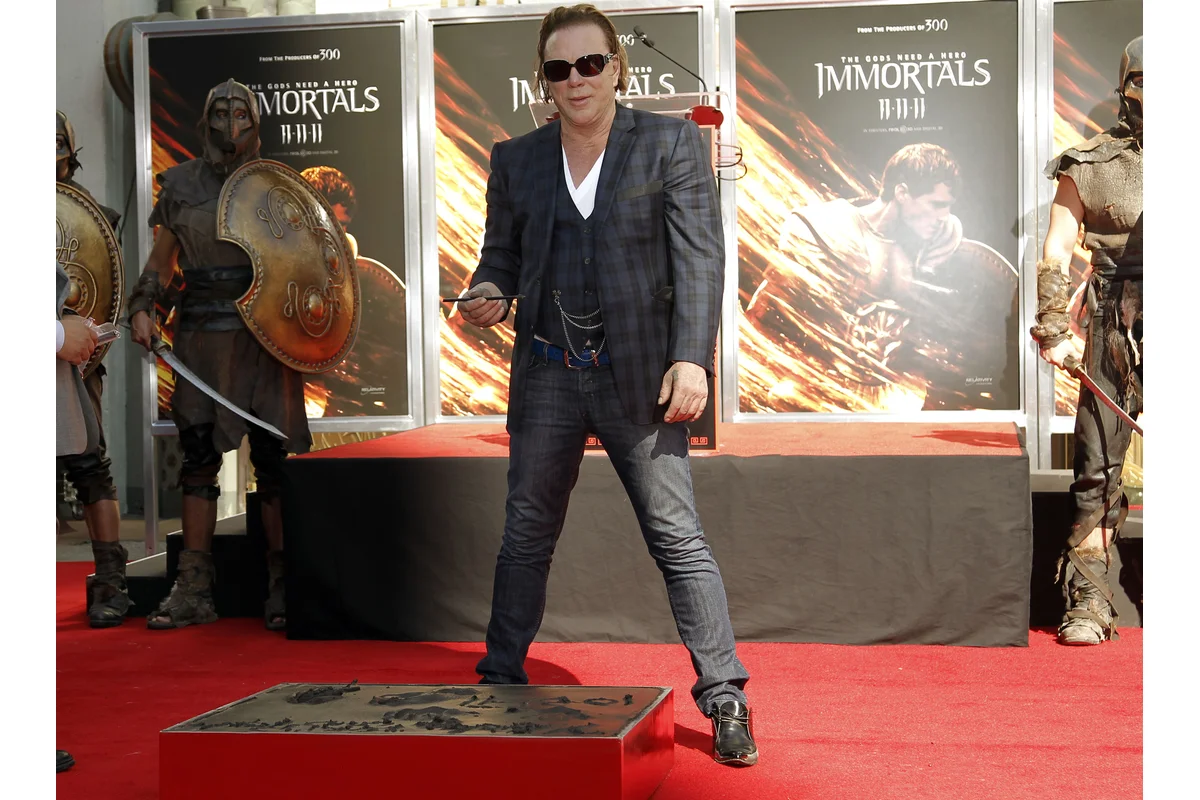
During the recent Golden Globes weekend in Los Angeles, while the city’s most luxurious hotels were bustling with glamorous festivities, Mickey Rourke found himself departing the Sunset Marquis hotel after a six-day stay, carrying only bags of his belongings and accompanied by his rescue dogs. The former Golden Globe winner was moving to a temporary apartment in Koreatown, Los Angeles, after being evicted from his Beverly Grove home. This marked another painful chapter in the actor’s long-standing battle with financial instability.
Rourke, known for his rise to fame in the 1980s and a celebrated comeback crowned by his performance in “The Wrestler,” has oscillated between living lavishly and struggling with basic housing and bills. His financial struggles have become emblematic of a challenging fall from the Hollywood spotlight, underscoring his ongoing difficulties managing money despite past successes.
The Rise and Fall of a Hollywood Icon
Once a highly regarded actor recognized with a Golden Globe in 2008, and an Oscar nomination shortly thereafter, Mickey Rourke’s star shined brightly amidst peers like Brad Pitt and Leonardo DiCaprio. However, his career and personal life have since been marked by hardship and instability. Drawing a tragic parallel to Gloria Swanson’s character in “Sunset Boulevard,” Rourke now confronts a harsh reality far from the grandeur of his former life.
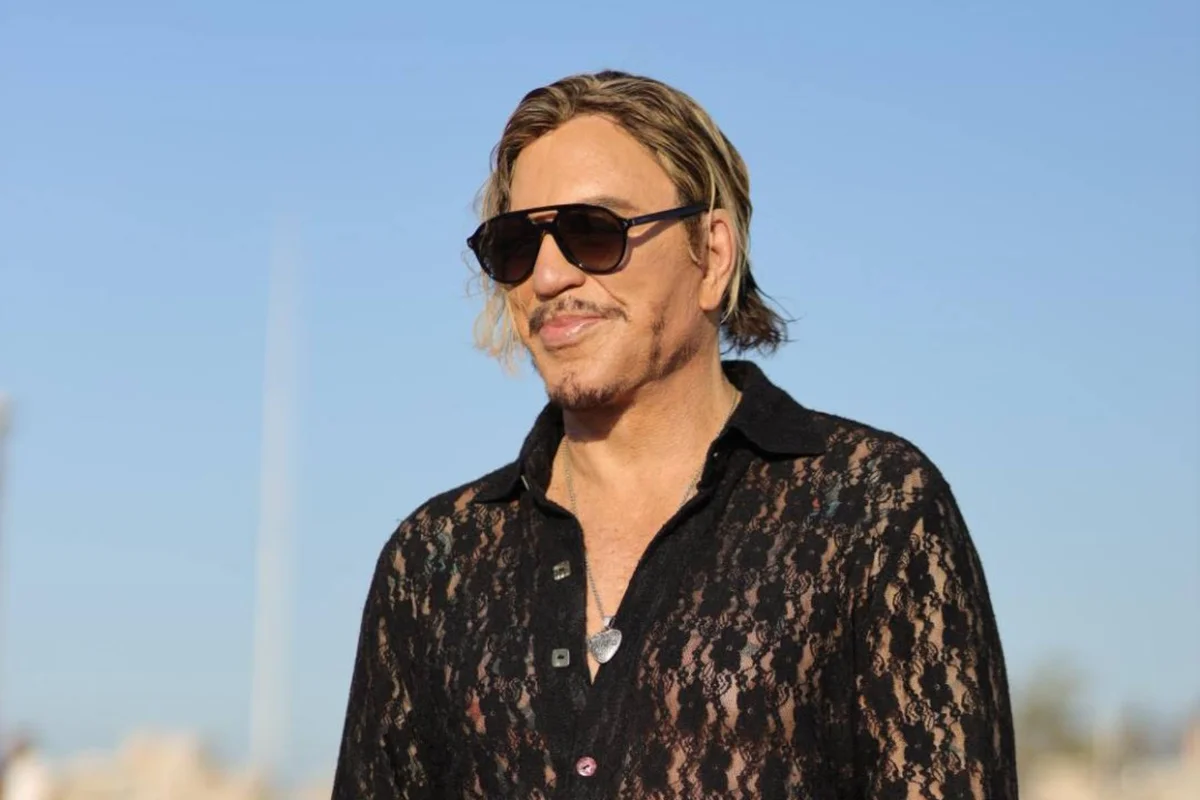
His financial troubles have rent themselves into the public eye amidst a tumultuous news cycle, with events like global political crises somewhat overshadowing his dire circumstances. Over the past year alone, Rourke endured two evictions: one in London’s Celebrity Big Brother House due to behavioral issues, and another from a modest Los Angeles rental where he now contends with claims of uninhabitable living conditions, including mold and broken appliances.
Evictions, Legal Battles, and Public Support
Mickey Rourke’s recent eviction from his L.A. residence triggered a GoFundMe campaign set up by his manager, Kimberly Hines, to cover his back rent. The campaign quickly raised over $100,000 to pay off a $59,000 debt on a property renting for what appeared to be $1,500 a month. However, Rourke publicly distanced himself from the fundraiser, denying his involvement and calling it a scam, despite his manager’s repeated assertions that he was aware of and approved the effort.
Among the donors to the campaign were fans contributing modest amounts and a few higher-profile figures, such as producer Brett Ratner, who gave $2,000. Rourke’s refusal to accept the assistance was highlighted in a video posted on his website where he expressed vehement opposition to receiving money in this manner. Following this, he relinquished a shotgun to local authorities as a precautionary safety measure.
“It’s an old shotgun he didn’t use anymore,”
said Kimberly Hines.
“It wasn’t because he was suicidal. To him, just doing the right thing. I told him it wasn’t the greatest of timing. The public saw the admonition as a red flag. But Mickey does what he does. His friend Frenchie took the shotgun from the Marquis to the Sheriff’s Department in Hollywood.”
In further posts, Rourke warned of serious consequences toward those involved in the fundraiser’s set up.
“There will be severe repercussions to [the] individual who did this very bad thing to me,”
he declared.
“And anyone who knows me knows payback will be goddamn severe!!!!!!”
Manager Kimberly Hines’ Commitment Amid Challenges
Kimberly Hines, a seasoned industry professional with decades of experience representing major actors and managing film productions, has been shoulder-to-shoulder with Rourke during this turbulent period. She has personally covered expenses including hotel stays, moving costs, rent, security deposits, pets’ needs, and even multiple storage units containing Rourke’s belongings. Though their relationship has faced strain, Hines remains dedicated to helping him navigate these difficulties.
“Mickey is a very emotional person and this is not the first or last time he will throw me under the bus and not even realize what he did,”
she said.
“I’m not going to acknowledge this noise, as I did nothing wrong. I’m in the midst of negotiating three deals for Mickey and we are in constant touch all day long. The money was meant to help him.”
Hines has struggled to persuade Rourke to live within his means, noting his reluctance to accept the funds raised on his behalf and his insistence on demanding unusually high pay for film roles, reportedly at least $200,000 per day. Her efforts continue as she works to bring structure back to his professional and personal life.
Mickey Rourke’s Complex Relationship with Money and Stability
Mickey Rourke’s complicated financial history stretches back decades. Born and raised partly in upstate New York and Liberty City, Miami—a high-crime, low-income neighborhood—his early life was marked by hardship and abuse, which contributed to a lifelong emotional struggle. Rourke has often shared that encouragement was scarce in his formative years, shaping his sporadic and sometimes unstable path in adulthood.
Before breaking into acting, he worked menial jobs, including washing dishes on cruise ships and handing out flyers for massage parlors in Miami’s rough areas. Rourke’s initial ambition to leave the Miami area was fueled as much by self-preservation as by dreams of Hollywood, as he recounted his struggles to pay rent even while in acting school.
Throughout his career, he cycled through phases of expensive acquisitions, such as gold-plated Rolls-Royces and custom motorcycles, and periods of financial hardship, including multiple evictions and court defaults on rent. His living situations mirrored this instability—shifting from lavish homes and meticulously designed apartments to cramped and sometimes deteriorating rentals.
A Life Between Lavishness and Chaos
Despite his financial struggles, Rourke’s flair for the extravagant was never far from view. From a Manhattan brownstone decorated with lush reds, chandeliers, and eccentric items, to a Tribeca loft where he left behind unpaid rent and property damage, his lifestyle often fluctuated between extremes. He also owned a luxurious Upper West Side pied-à-terre designed by a renowned interior decorator, which he later sold for nearly $14 million.
Rourke’s penchant for unique and personalized living spaces extended to his purchase of Bella Vista, a Mediterranean Revival estate with a storied history, including a connection to Hollywood legend John Barrymore. Yet, homeownership never brought Rourke the comfort or stability he sought.
“I’ve never lived in a house I’ve felt comfortable in,”
Rourke admitted.
“Yet I always feel creative and comfortable in special hotels … My mind works differently. In my movie contracts I always put it in that I can pick my own hotel.”
He has often expressed a strong attachment to New York and a disdain for Los Angeles, lamenting his isolation in L.A. and the lack of genuine neighborly connections. His manager notes his constant talking about returning to New York or moving to a Texas ranch, rather than settling where he currently resides.
The Support System and Unwavering Loyalty
In New York, Rourke once lived surrounded by longtime friends and loyal companions. His connections to his past remained vital to his identity; a close Miami friend would cook meals and care for Rourke’s dogs while he focused on work and life. Despite the chaos, Rourke’s generosity and spirit stood out. Hines reflected on his character:
“When Mickey is flush, he is extremely generous,”
she said.
“He loves his leather pants, his shirts, his hats, his jewelry. Maybe he should be a fashion designer. Nobody puts themselves together like him. On a plane once he gave me a ring he said David Bowie gave him. I looked it up. It was Bowie’s.
He will give you the shirt off his back.”
Her loyalty stems not from any illusion of normalcy but an appreciation for Rourke’s unique position in the entertainment world.
“If I wanted a normal job, I’d go work at a flower shop. It’s what I know to do. It’s hard to shake him, because he is one of the last iconic actors.”
New Projects Offer Glimmers of Hope
Despite his financial and personal turmoil, recent developments suggest that Mickey Rourke may be preparing for a professional resurgence. Hines revealed that he has signed on to two upcoming films, one already greenlit. This project, directed and written by Frank Perluso, will feature Rourke playing a complex character who, beneath a hardened exterior, displays unexpected vulnerability—drawing comparisons to roles like Clint Eastwood’s in “Gran Torino.” The pay for this film reportedly meets Rourke’s often demanding financial expectations.
This new phase could provide Rourke with the stability and renewed momentum he desperately needs. Yet, his ongoing struggles suggest that balancing a career comeback with personal and financial stability remains a formidable challenge.
A Career Marked by Talent and Turmoil
Rourke’s career arc stands as a testament to remarkable talent coupled with significant personal obstacles. Beginning in the 1980s with notable films such as “Body Heat,” “Diner,” “Rumblefish,” and starring roles in “9 1/2 Weeks,” “Angel Heart,” and “Barfly,” he cultivated a fierce reputation for both his on-screen presence and off-screen unpredictability. His comeback with “The Wrestler” earned critical acclaim, reigniting industry respect.
Over the years, those close to him have witnessed his struggles with addiction and emotional volatility, yet he avoided falling into some of the worse excesses that have engulfed other “trainwreck” actors. His candor, chivalry, and gritty charisma have continuously drawn both fans and industry insiders to him despite his issues.
Struggles with Stability Extend Beyond Finances
Mickey Rourke’s personal challenges stem not only from financial mismanagement but also deep-seated emotional scars originating in childhood. The violence within his family life and early trauma contributed to a lifelong difficulty in maintaining consistent relationships and financial security. His admissions reflect a man shaped by hardship, striving for stability but often undermined by himself.
“You can’t concentrate on hitting a curveball when you’ve got Halloween III going on at home,”
Rourke once shared, referring to the chaos in his early life.
“I’m not going to say dysfunctional, because it was beyond that. I can’t even put a word to it. I never got encouragement from anybody.”
These circumstances have continually affected his relationship with money, personal welfare, and career choices, making his current public financial troubles a continuation of longstanding struggles.
The Road Ahead for Mickey Rourke
As Mickey Rourke confronts ongoing financial woes and public scrutiny, his story serves as a cautionary tale about the pressures and pitfalls faced by Hollywood’s brightest stars. The exposure of his financial struggles underscores the fragility beneath celebrity fame. Despite setbacks, the arrival of new film projects and ongoing support from loyal allies like Kimberly Hines suggest that Rourke may still find a path forward.
His battle with money, health, and fame exemplifies the complexities many actors face behind the scenes, especially when early success gives way to instability. Whether Rourke can regain sufficient stability to reclaim his place both professionally and personally remains uncertain, but the renewed interest in his work offers a hopeful glimpse into what might come next.
Related semantic context: related coverage · external reference.
