
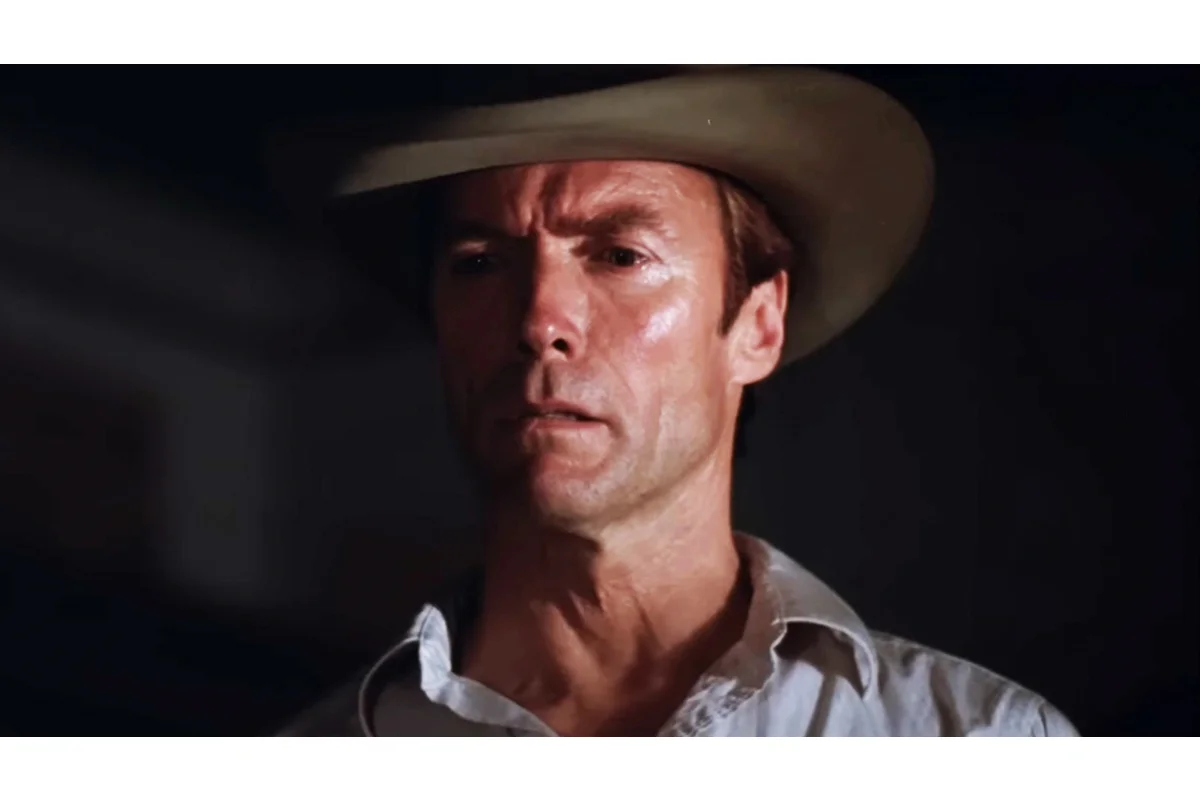
Clint Eastwood, widely acclaimed for redefining the Western genre and shaping a new kind of gritty action star, took an unexpected turn in 1982 with the release of Honkeytonk Man. This film marked a notable departure as Eastwood embraced a musical-comedy-drama, blending humor and pathos amid a Western backdrop. Though not a major box office hit, this movie demonstrated the remarkable versatility that defined Eastwood’s career and offered fans an unfamiliar yet compelling side of the actor-director.
Eastwood’s career had already seen surprising moves before this pivot. He had once stunned audiences by starring opposite an orangutan named Manis in the 1978 buddy comedy Every Which Way But Loose. The film’s success led to a sequel, Any Which Way You Can, in 1980, though it did not enjoy the same commercial acclaim. Nonetheless, these choices illustrated Eastwood’s willingness to challenge expectations and try unconventional projects, with Honkeytonk Man continuing this trajectory.
Eastwood’s Shifting Roles During the 1980s
The 1970s solidified Clint Eastwood’s status with iconic roles such as the tough police detective in Dirty Harry (1971) and gripping prison break thriller Escape from Alcatraz (1979). These films, along with Eastwood’s emerging work behind the camera, enabled him to remain relevant even as the popularity of Westerns waned. However, by the time the 1980s arrived, Eastwood, then in his early fifties, faced a challenging period of professional uncertainty.
The Western genre no longer held the cultural dominance it once enjoyed, and audiences’ expectations of Eastwood shifted. His attempts to revisit the Dirty Harry character in sequels received a mixed reception, suggesting some decline in his box office appeal. Yet, films like Tightrope illustrated that Eastwood was still capable of delivering gritty, compelling performances, maintaining his status as a relevant action star. Within this uneven decade, Honkeytonk Man emerged as a unique project where he combined production, direction, and leading roles, telling a narrative rooted in the Great Depression and inspired by the life of country artist Jimmie Rodgers.
A Deeply Personal Road Trip Story in Honkeytonk Man
Honkeytonk Man centers on Red Stovall, a tuberculosis-stricken musician played by Eastwood, who embarks on a challenging journey to perform at the Grand Ole Opry in Nashville, Tennessee. Accompanying Red is his young nephew Whit Wagoneer, portrayed by Eastwood’s son, Kyle Eastwood. This father-son dynamic lends a genuine emotional layer to the film, distinguishing it from Eastwood’s earlier, more rugged roles. Together, they navigate the hardships of a cross-country trip filled with misadventures and moments of warmth and tenderness.
The story’s emotional core explores Whit’s evolving respect for Red, initially seen as a luckless, hard-drinking uncle. This shift enriches the narrative with authenticity, which film critic Roger Ebert highlighted, stating the actor appeared
“to have a personal stake in this story,”
Roger Ebert, Film Critic which added depth to the character’s portrayal. Meanwhile, Eric Henderson of Slant acknowledged the film’s
veneer of nostalgic sentimentality,
but commended Eastwood for ensuring
Honkytonk Man never veer[ed] into maudlin territory.
Eric Henderson, Film Critic
Reception and Impact of Eastwood’s Musical-Drama Experiment
Though Honkeytonk Man earned a modest $4.4 million against a $2 million budget, it stood out as one of Eastwood’s better-reviewed efforts in the 1980s, solidifying his reputation outside his traditional action star image. The film’s blend of comedy, music, and drama revealed a softer aspect of Eastwood at a time when audiences mostly remembered him for his tough, no-nonsense roles like Harry Callahan. Unfortunately, his subsequent project, the 1989 comedy Pink Cadillac with Jim Carrey, did not receive the same critical support and diminished much of the goodwill generated by Honkeytonk Man.
Despite this setback, Eastwood’s career revival arrived with the 1992 Western Unforgiven, which restored his status as a serious filmmaker and performer. The earlier risk taken with Honkeytonk Man remains a significant moment, showcasing the range and willingness that have defined Eastwood’s enduring presence in cinema.
Related semantic context: related coverage · external reference.
