
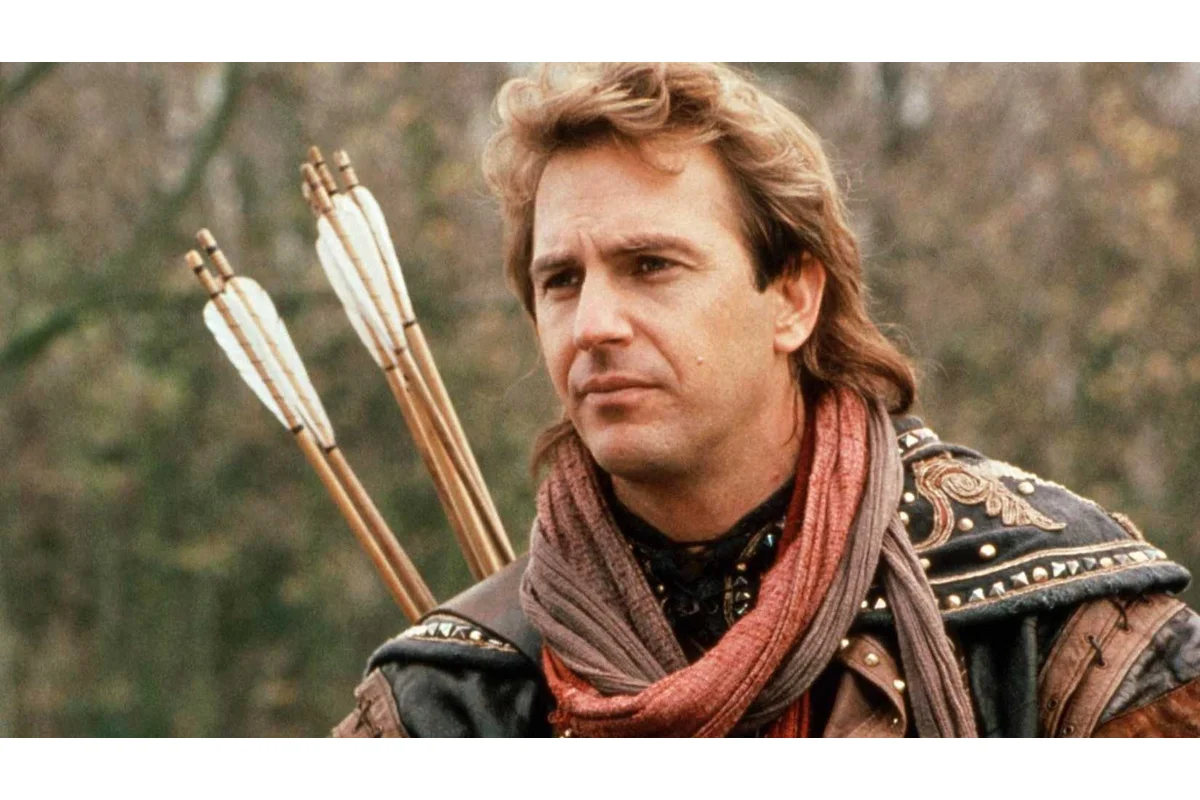
The legend of Robin Hood has seen countless adaptations across film and television, joining the ranks of timeless figures like King Arthur and Sherlock Holmes. The outlaw with a heart of gold continues to inspire new versions, from the 2025 MGM+ dark retelling to an upcoming A24 production starring Hugh Jackman. Among these variations, Kevin Costner’s 1991 film Robin Hood: Prince of Thieves stands out as an underrated piece of storytelling that deserves renewed attention.
Initial Reception and Critical Disapproval of Prince of Thieves
Robin Hood: Prince of Thieves was directed by Kevin Reynolds, who had worked alongside Kevin Costner on multiple projects. The screenplay, written by Pen Densham and John Watson, brought the legendary figure back to the big screen after nearly 15 years, following the 1976 film Robin and Marian starring Sean Connery and Audrey Hepburn. Riding high on the success of Costner’s acclaimed role in 1990’s Dances With Wolves, expectations were intense but ultimately unmet for many viewers upon the film’s release.
Financially, the movie was a success, grossing over $390 million worldwide on a $60 million budget. Yet critical reception was lukewarm at best, reflected in a 51% score on Rotten Tomatoes. Noted critic Roger Ebert awarded it only two stars, describing it as
a murky, unfocused, violent and depressing version of the classic story
, citing desperate editing techniques as a major flaw.
Costner’s portrayal of Robin Hood drew mixed reactions, with many viewers criticizing his inconsistent English accent—a product of behind-the-scenes indecision regarding his vocal delivery during filming. This inconsistent accent became a source of ridicule, famously parodied in the comedy Robin Hood: Men in Tights, where Cary Elwes’ character joked,
Unlike some other Robin Hoods, I can speak with an English accent.
Costner earned a Golden Raspberry Award for Worst Actor, while Christian Slater, portraying Will Scarlet, received the Worst Supporting Actor award.
The film’s tone also drew criticism, as its violence and some sexual content conflicted with marketing that presented it as a family-friendly adventure. Although tame compared to more recent adaptations, the unexpectedly bloodier visuals unsettled some early 1990s audiences, contributing to its mixed reviews. Nevertheless, both critics and audiences may have underestimated its merits.
Strong Performances and Compelling Elements Within the Film
One of the film’s greatest assets was its cast, whose performances brought energy and depth to the story. Alan Rickman’s portrayal of the Sheriff of Nottingham stood out for blending theatrical villainy with genuine menace. His sharp delivery included memorable lines such as
Robin Hood steals money from my pocket, forcing me to hurt the public, and they love him for it? That’s it then! Cancel the kitchen scraps for lepers and orphans, no more merciful beheadings, and call off Christmas!
Rickman’s performance earned him the British Academy Film Award for Best Supporting Actor, establishing him as a highlight of the movie.
The film’s supporting cast further strengthened the story. Mary Elizabeth Mastrantonio appeared as Maid Marian, while Morgan Freeman took on the role of Azeem, a newly created character who added cultural depth. Sean Connery made a brief but notable cameo as King Richard the Lionheart, linking back to his previous Robin Hood portrayal in Robin and Marian.
Rather than relying on fantasy, Prince of Thieves framed Robin Hood within a historical context, beginning with his imprisonment during the Third Crusade in Jerusalem. This war experience informed his character’s motivations and behavior upon returning to England, grounding the tale in a more realistic setting. This approach influenced later adaptations seeking to blend history with legend.
The film’s visual style balanced darker, gritty environments with rich, vibrant locations. It avoided the dreariness common in medieval-level stories by contrasting lush forests, grand castles, and mysterious caves with the harsher realities of the era, maintaining the character’s whimsical charm amid a serious narrative.
Memorable Music and Growing Appreciation Over Time
Though Roger Ebert dismissed the film’s score as
standard rum-dummy-dum false epic dirge kind of stuff,
its composer, Michael Kamen, crafted a memorable soundtrack that contributed effectively to the movie’s atmosphere. Kamen’s work on this film preceded his acclaimed contributions to projects like The Iron Giant, the original X-Men series, and the television miniseries Band of Brothers. Additionally, the end credits featured Bryan Adams’
(Everything I Do) I Do It for You
, a chart-topping ballad that gained immense popularity in both the United States and the United Kingdom, ensuring the film’s soundtrack resonated with audiences.
In recent years, Robin Hood: Prince of Thieves has undergone reevaluation, fueled partly by nostalgia and partly due to disappointment with newer Robin Hood productions. Its audience score on Rotten Tomatoes now stands at 72%, surpassing the 2010 and 2018 adaptations, which are rated 58% and 40%, respectively. This shift suggests a growing recognition of the film’s qualities, including its storyline, performances, and production values.
The film remains accessible through various digital platforms, and it is even available on YouTube with advertisements, allowing new viewers to explore or revisit this interpretation of the beloved folk hero. Whether or not future Robin Hood adaptations replicate the challenges faced by Prince of Thieves, it is certain that the character’s enduring appeal will continue to inspire filmmakers worldwide.
Related semantic context: related coverage · external reference.
