Last January, Michael J. Fox was awarded the Presidential Medal of Freedom by outgoing President Joe Biden for his outstanding work advocating for Parkinson’s research. Since his diagnosis with the disease in 1991 at age 29, Fox has leveraged his platform to raise awareness and funding, with the Michael J. Fox Foundation contributing more than $2.5 billion toward research over 25 years, generating over $100 million annually. This sustained commitment underscores the importance of Harrison Ford Parkinson’s therapy initiatives and the broader fight against the disease.
Fox has emphasized the foundation’s significant role in driving Parkinson’s research, stating,
“Our foundation directs more money towards Parkinson’s research than the federal government,”
he told Vanity Fair. Reflecting on the first year of the Trump administration, Fox commented,
“He’s busy with Greenland. More pressing concerns, I guess.”
Engaging with Government and Exploring Research Challenges
Fox anticipates a forthcoming meeting with Robert F. Kennedy Jr., head of the Department of Health and Human Services, aiming to better understand and possibly influence government priorities related to brain research. He explained,
“I’m going to Washington next month and hopefully talk to Kennedy and find out what the government’s game plan is on addressing brain research in general and taking a more serious approach to some of these things that are soluble,”
emphasizing the complexity of Parkinson’s disease. To clarify its origins, Fox added,
“It’s just a weird disease. We always say genetics loads a gun and environment pulls the trigger. We’re trying to figure out what’s biological and what’s chemical.”
Collaboration Between Ford and Fox in New Television Series
In the third season of the TV series Shrinking, which premiered January 28, Michael J. Fox takes on a storyline centered around living with Parkinson’s disease, sharing the screen with Harrison Ford, who portrays a therapist managing the same condition. Ford acknowledges Fox’s extraordinary dedication:
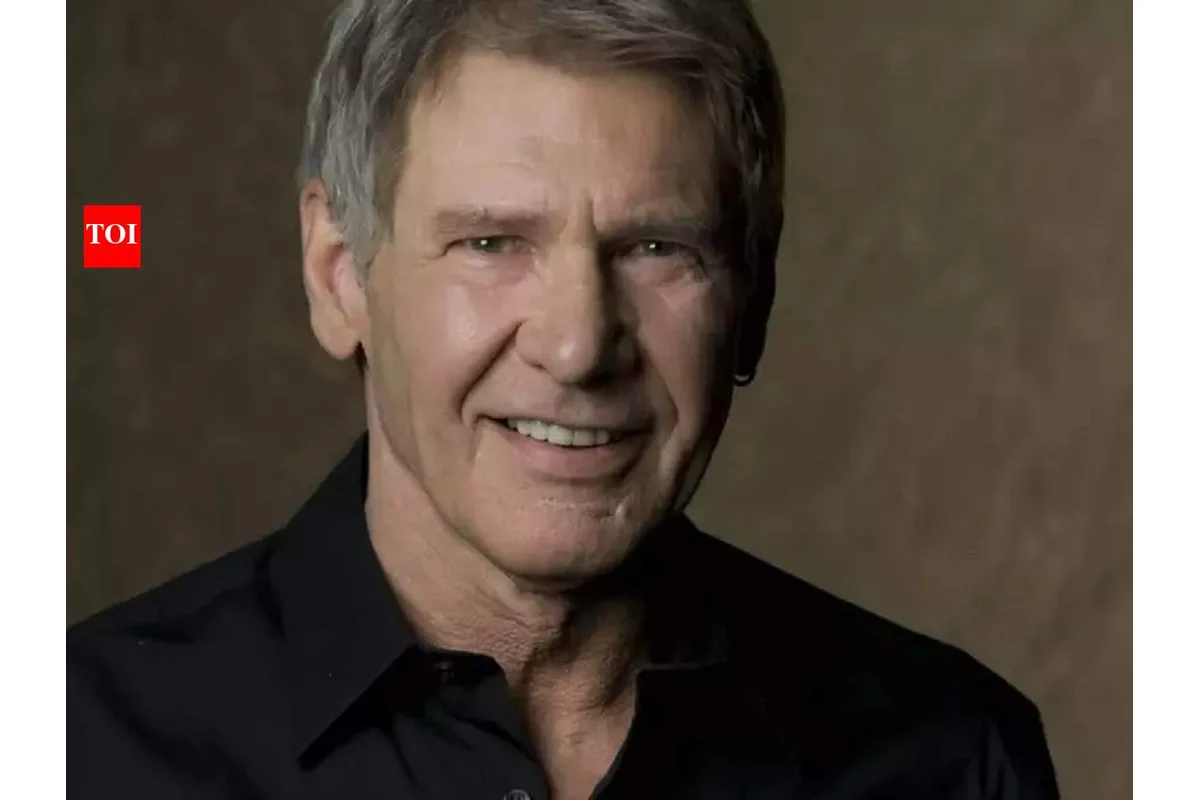
Image of: Harrison Ford
“Michael raises more money for and has done more Parkinson’s research than almost anybody in the world.”
Fox humbly credits the people involved in the foundation’s work:
“It’s a credit to our great people,”
but also voiced frustration about the government’s level of involvement.
“It’s frustrating to know we’re putting everything we can into it, and it would be nice to have the government behind us, but it seems that they’re involved in other things that have less impact on peoples’ lives.”
Historical Connections and Support for Stem Cell Research
Recollecting a 2004 charity event, Fox and Ford were seen together supporting causes such as stem cell research, championed by former First Lady Nancy Reagan, who advocated for treatments addressing diseases like Alzheimer’s. Fox shared his memories,
“I’m sure I was very excited to see Harrison,”
while acknowledging Reagan’s role as
“a force.”
Reagan’s backing of embryonic stem cell research was notable, especially as a conservative figure advocating beyond political divides. Fox emphasized the importance of this stance, saying,
“For someone like Mrs. Reagan to step outside of political or ideological groupings and just speak to what she believes…is tremendously valuable.”
Fox’s Return to Television and Dynamic with Creator Bill Lawrence
After portraying various roles earlier in his career, including a conservative son on Family Ties and a strategist in Spin City, Fox made a comeback on television with Shrinking. Harrison Ford’s first Emmy nomination from this series also underscores its critical success. Fox credits his long-time friendship with the show’s creator, Bill Lawrence, for drawing him back. He recounted a humorous exchange on joining the project:
“It was a short and profane conversation,”
Fox said.
“I said, ‘You’re doing a fucking show about Parkinson’s with Harrison fucking Ford, and you don’t call me?’”
Ford’s light-hearted chuckle followed the remark. Fox continued that Lawrence has
“a history of pulling me back out of retirement,”
recalling prior collaborations on Scrubs. He praised Lawrence’s talent despite his age:
“He always was a talented kid. Talented kid.”
Portraying Parkinson’s: Themes of Mortality and Therapy on Screen
Despite their age difference—Ford is 83 and Fox is 64—the actors portray characters confronting Parkinson’s and its impact on their lives. Fox’s character, Jerry, wryly remarks to Ford’s character, Paul,
“We’re on the same shitty train to sucksville,”
highlighting a shared struggle. As the season unfolds, Paul rediscovers enthusiasm for his work, providing therapy to others with Parkinson’s, including Jerry.
Fox discussed the complexity of therapy in relation to Parkinson’s, explaining,
“The thing about therapy is it’s a talking cure, but there’s no talking cure for Parkinson’s, so those two worlds have always had an uneasy relationship.”
He personalizes the experience:
“I couldn’t have gotten through Parkinson’s without therapy, but you find yourself educating the therapist as much as they’re educating you. You have to paint a picture of the ground you’re living on. And it’s very hard to explain to people.”
Significance and Future Directions in Parkinson’s Awareness
The collaboration between Harrison Ford and Michael J. Fox on Shrinking offers a compelling dramatization of Parkinson’s disease, blending personal experience with advocacy. Fox’s activism, combined with Ford’s empathetic portrayal, draws attention to the challenges faced by those with Parkinson’s, encouraging further public understanding and support for research. With ongoing discussions involving government health officials and continued philanthropic efforts, the hope remains to uncover new treatments and ultimately a cure for this complex disease.